Rio Grande Trail Albuquerque Neighborhoods: Why Open Space Is Driving Home Values in the North Valley
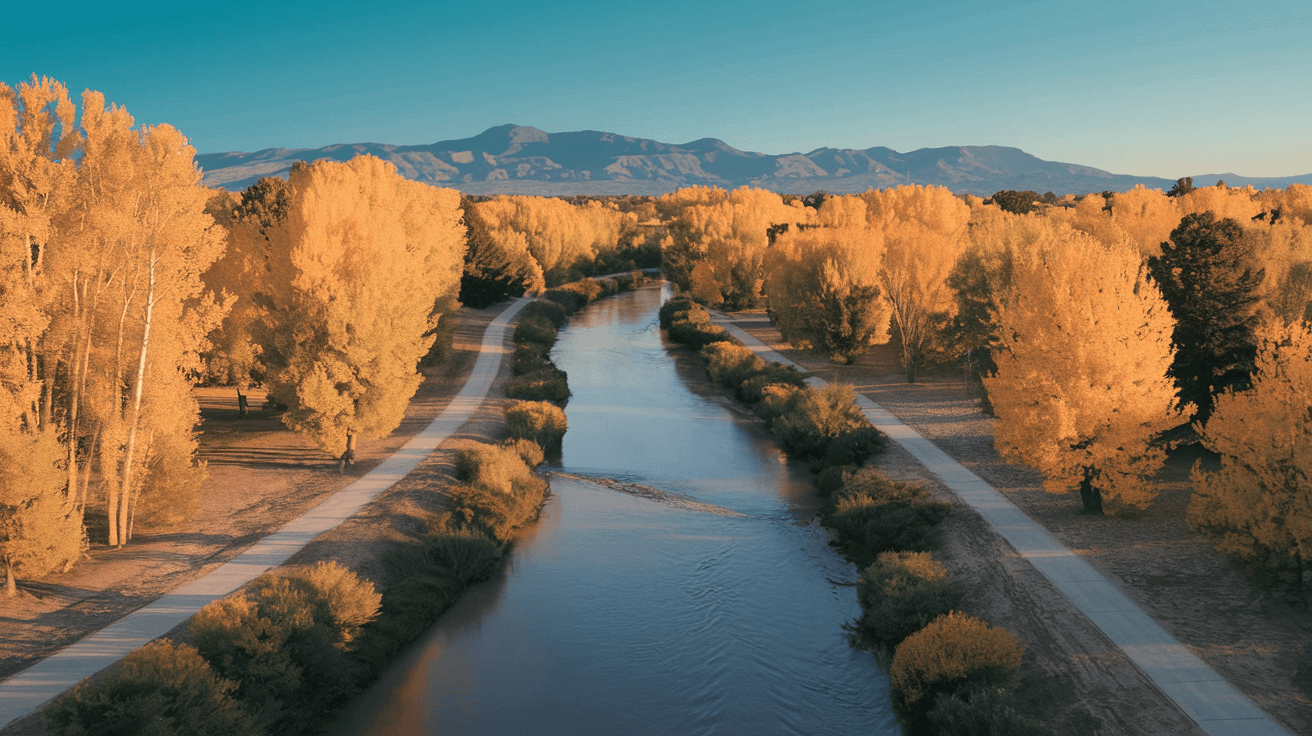
If you have spent any time walking the bosque on a cool October morning, cottonwoods turning gold overhead and the smell of the river cutting through the desert air, you already understand something that Albuquerque home buyers are increasingly figuring out: proximity to open space is not a lifestyle bonus here — it is a core part of what makes a property valuable.
The Rio Grande Trail Albuquerque neighborhoods have been drawing attention from buyers who want more than a house. They want a place where the backyard, in a sense, extends all the way to the water. And in the North Valley especially, that connection to the land is baked into the culture, the architecture, and yes, the price per square foot.
Rio Grande Trail Albuquerque Neighborhoods: What the Trail Actually Connects
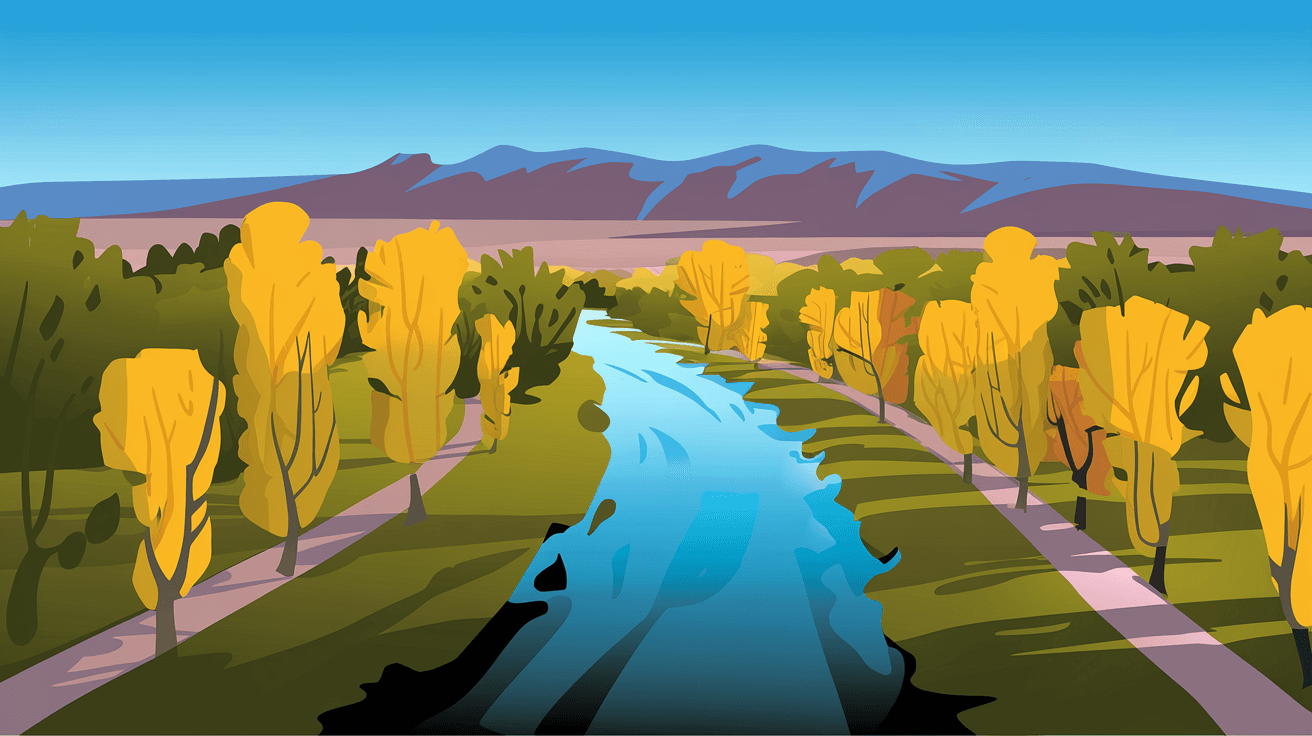
The Paseo del Bosque Trail runs roughly 16 miles along the Rio Grande, from Alameda Boulevard in the north down through the Nature Center near Coors and I-40. It is paved, well-maintained, and used year-round by cyclists, joggers, dog walkers, and families pushing strollers. But calling it just a trail undersells what it actually is.
This corridor is a living greenbelt that passes through some of the most sought-after residential areas in the city. The neighborhoods that back up to the bosque or sit within easy walking distance of trail access points have developed a particular character over the decades. They tend to be quieter. The lots are larger. The mature cottonwoods and Russian olives that line the river spill into neighboring yards, giving everything a lush, shaded feel that is genuinely rare in a high desert city.
Key trail access points that home buyers should know:
- •Alameda Open Space at Alameda and the river, with parking and a well-used entry point heading south
- •Candelaria Nature Preserve off Candelaria Road NW, a favorite for birders and a quieter stretch of trail
- •Rio Grande Nature Center State Park near Candelaria and Bosque Trail NW, one of the most visited natural areas in the city
- •Tingley Beach near Central and the river, connecting the trail system to the Albuquerque Biological Park
Each of these access points anchors a cluster of residential streets where open space home values in Albuquerque tend to run noticeably higher than comparable properties even a mile or two east.
North Valley Real Estate: The Neighborhood That Lives Closest to the Land
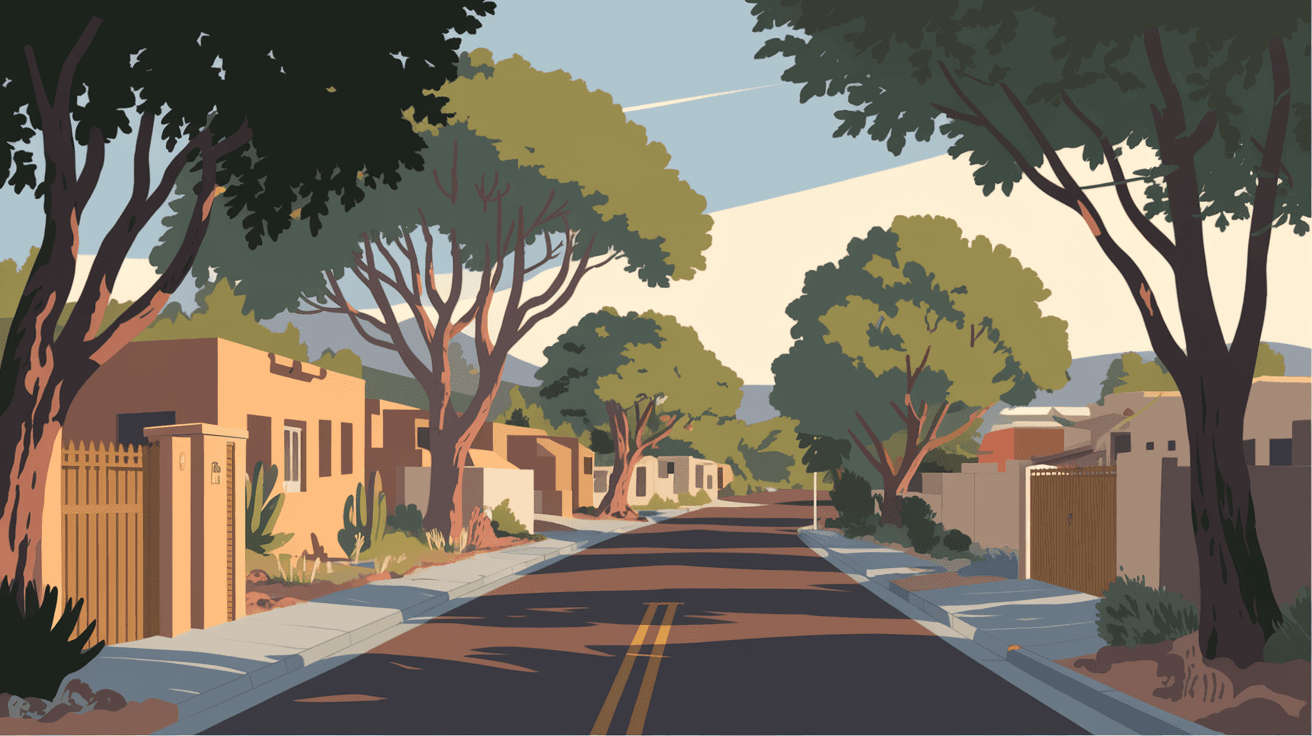
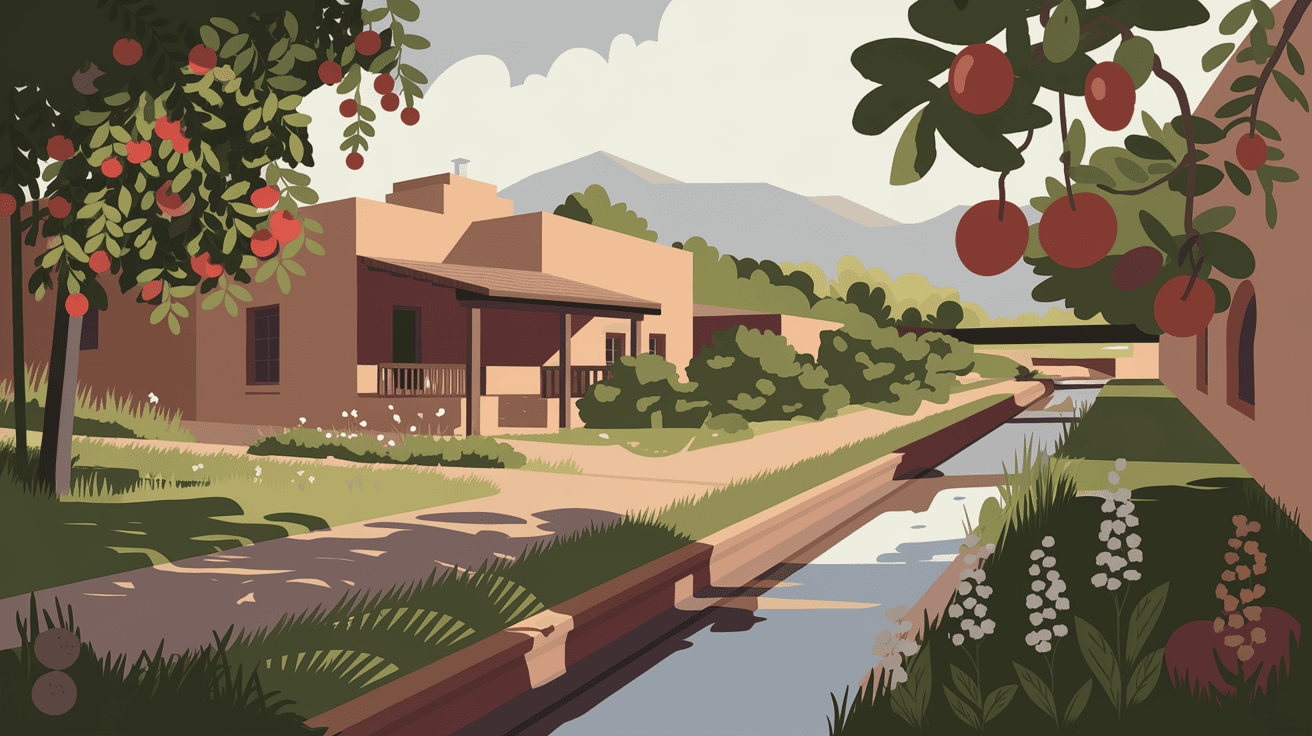
If there is one neighborhood in Albuquerque where the relationship between open space and home values is most visible, it is the North Valley. Roughly bounded by Montano Road to the south, Alameda to the north, the river to the west, and Fourth Street to the east, this is a part of the city that has resisted the pressure to densify. You still find horse properties here. You find long driveways, adobe walls, and the kind of silence at night that reminds you the city did not always look like a grid of subdivisions.
The median home price in the North Valley sits around $329,000, but that number tells only part of the story. What you get at that price point here is meaningfully different from what you get in, say, the Northeast Heights. Lots are larger. Many properties have acequia water rights, a holdover from centuries of agricultural use that gives land a quiet legal complexity and a connection to New Mexico's history that buyers from out of state often find fascinating.
“"In the North Valley, you are not just buying a house. You are buying into a way of life that has been here since before Albuquerque was Albuquerque."
Schools in the area fall under Albuquerque Public Schools, with various elementary options, Jefferson Middle School, and Valley High School serving the community. Valley High in particular has a strong local identity and a student body that reflects the genuine cultural diversity of this part of the city.
What North Valley Buyers Are Actually Paying For
When you look at what drives demand in this neighborhood, a few things stand out consistently:
- •Direct or near-direct bosque access, often within a short walk or bike ride from the front door
- •Lot size and agricultural heritage, including properties with mature fruit trees, irrigation ditches, and room for animals
- •Architectural character, with a high proportion of adobe and territorial-style homes that feel rooted in the landscape
- •Low traffic density on residential streets compared to most of urban Albuquerque
- •The Rio Grande Valley State Park as a de facto backyard for residents on the western edge of the neighborhood
These are not abstract amenities. They translate directly into buyer demand and, over time, into price appreciation that has outpaced several higher-profile Albuquerque neighborhoods.
How Open Space Affects Home Values in Albuquerque: The Data Behind the Feeling
Real estate professionals have long known what researchers have more recently confirmed: homes with walkable access to parks, trails, and open space consistently command a price premium over comparable properties without that access. In Albuquerque, that premium is particularly pronounced along the Rio Grande corridor.
Part of the reason is simple supply and demand. The bosque is not getting bigger. The trail is not getting longer in any meaningful way. The number of properties that sit within a half-mile of the Paseo del Bosque is fixed. As the city grows and more buyers prioritize outdoor access, that fixed supply pushes values upward.
But there is something more qualitative at work too. Open space home values in Albuquerque are also driven by what the bosque does to the experience of living nearby. The air quality is different. The noise level is different. There is wildlife — roadrunners, sandhill cranes migrating through in November, red-tailed hawks hunting in the afternoon light. These are things that do not show up in a listing description but that buyers feel the moment they walk the neighborhood.
The Insider Detail Most Buyers Miss
Here is something that does not come up in most property searches but matters enormously if you are buying in the North Valley or anywhere along the bosque corridor: the acequia system.
Albuquerque's North Valley is threaded with historic irrigation ditches, some of which are still active and maintained by neighborhood acequia associations. Properties with acequia water rights have access to surface water for irrigation that is separate from city water. In a state that is perpetually water-stressed, that is a genuinely valuable asset. It also means your yard can support the kind of lush, green landscaping that would cost a fortune to maintain on municipal water alone.
If you are seriously considering a North Valley property, ask specifically about acequia rights and the associated maintenance obligations. It is one of those only-in-New-Mexico details that a local agent will know to flag and that an out-of-state buyer might not think to ask about until after closing.
Best Neighborhoods Near Rio Grande Albuquerque: Beyond the North Valley
The North Valley gets most of the attention, but it is not the only neighborhood where bosque proximity is shaping the market. A few others worth knowing:
Corrales (Just Over the Line)
Technically a separate municipality, but so intertwined with the North Valley's character that it deserves mention. Corrales Road running north from Alameda takes you into a village that feels genuinely rural, with vineyards, farm stands, and the kind of neighbors who wave from their front porches. Home prices here run higher than the North Valley median, and inventory is perpetually tight.
Barelas and the South Valley
Further south, the bosque trail connects to the Barelas neighborhood and the broader South Valley. These areas are seeing renewed interest from buyers priced out of the North Valley, and the trail access is just as good. The cultural richness here, rooted in Albuquerque's oldest Hispanic communities, adds a layer of character that newer developments simply cannot replicate.
Los Poblanos Surroundings
The area around Los Poblanos Historic Inn and Organic Farm on Rio Grande Boulevard NW has become one of the most desirable micro-markets in the city. Properties near this landmark benefit from the open agricultural land that surrounds it and the neighborhood-scale preservation efforts that have kept the area from being subdivided into oblivion.
“"Buyers who understand Albuquerque's open space network do not just find better homes. They find better long-term investments."
If you are exploring best neighborhoods near Rio Grande Albuquerque, the common thread in all of these areas is not just the trail itself. It is the community ethos that tends to form around preserved open space. People who choose these neighborhoods generally intend to stay, and long-term owner occupancy tends to stabilize and strengthen markets over time.
What This Means If You Are Buying or Selling Near the Bosque
For sellers in the North Valley and surrounding bosque-adjacent neighborhoods, the open space premium is real, but it has to be communicated correctly. Buyers need to understand the trail access, the lot characteristics, the water rights, and the lifestyle that comes with the address. Generic listing copy does not capture any of that.
For buyers, the key is moving decisively when the right property appears. Inventory in these neighborhoods has historically been low, and well-priced homes with genuine bosque access do not sit long. Getting pre-approved, knowing your priorities, and working with someone who actually knows the difference between a property on Griegos Road and one on Rio Grande Boulevard NW will save you time and missed opportunities.
The Taylor Team works in these neighborhoods regularly and knows the nuances that matter when you are making a decision this significant. If you are thinking about buying or selling near the Rio Grande Trail, reach out and have a real conversation about what the market looks like right now.
The bosque is one of Albuquerque's great gifts. The fact that it also happens to be one of the city's most reliable drivers of home value is, for buyers who choose wisely, a pretty good deal on top of an already beautiful place to live.
Want more insider intel?
Subscribe to get market updates and new articles delivered to your inbox.