
Relocating to Albuquerque for Remote Work? How to Choose the Right Neighborhood for Your Lifestyle
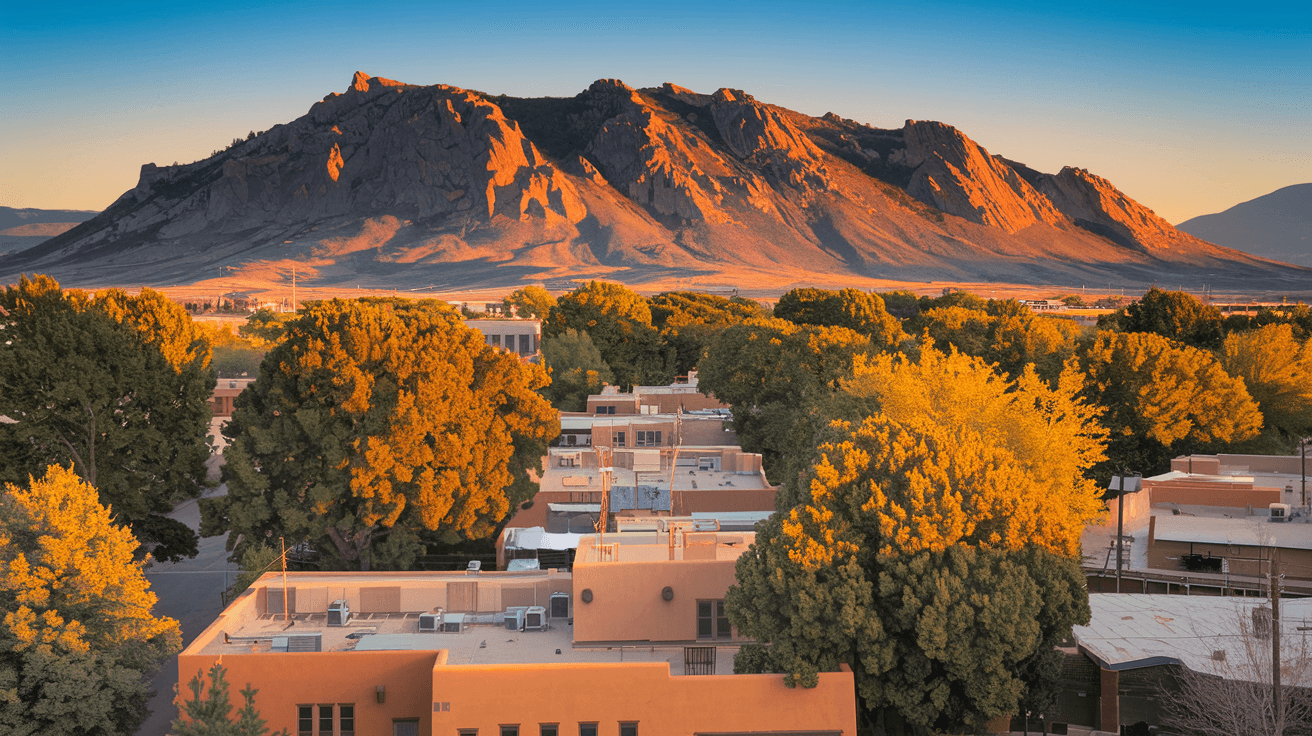
If you're relocating to Albuquerque for remote work, you've already done the math. Lower cost of living, 310 days of sunshine a year, and a housing market that still makes sense compared to the coastal cities where your employer is probably headquartered. What you might not have figured out yet is which part of this city is actually going to feel like home once the novelty of the mountains wears off and you're just trying to find a good coffee shop for your 9am Zoom call.
Albuquerque is not one city. It's more like six or seven distinct personalities stitched together by Central Avenue and the Rio Grande. The East Side feels nothing like the North Valley. Nob Hill and Rio Rancho share a zip code region but almost nothing else. Getting this choice right matters, because the neighborhood you land in will shape everything from your morning routine to your commute to the airport on the rare weeks you do have to travel.
This guide is written for people who are serious about moving to Albuquerque NM in 2026 and want real, specific information, not a listicle that could have been generated about any Sun Belt city.
Understanding Albuquerque's Layout Before You Start Neighborhood Shopping
Before you start bookmarking Zillow listings, it helps to understand how Albuquerque is organized. The city is divided into quadrants: Northeast Heights, Northwest, Southeast, and Southwest, with Central Avenue running east-west and the Rio Grande acting as a rough north-south dividing line on the west side. The Sandia Mountains define the eastern edge of the city and are visible from almost everywhere, which means you'll almost never feel disoriented.
The Big I, where I-25 and I-40 intersect, is the practical center of the metro. Most major destinations are within 20 to 30 minutes of it. For remote workers, this matters less for daily commuting and more for airport runs, Costco trips, and weekend access to hiking trailheads.
A few things to know before you tour a single house:
- •Elevation varies significantly across the city. The West Side sits lower and tends to be a few degrees warmer. The Heights neighborhoods near the Sandia foothills are cooler and windier in spring.
- •Sun exposure on your home office matters. West-facing rooms in Albuquerque can get brutally hot in the afternoon from April through October.
- •High-speed internet is widely available in established neighborhoods, but if you're looking at anything rural or near the East Mountains, verify fiber or cable availability before you fall in love with a property.
- •The Paseo del Norte corridor on the north side and Tramway Boulevard on the east are the two roads that will most affect your quality of life if you ever need to drive anywhere during peak hours.
Best Albuquerque Neighborhoods for Remote Workers Who Want Walkability
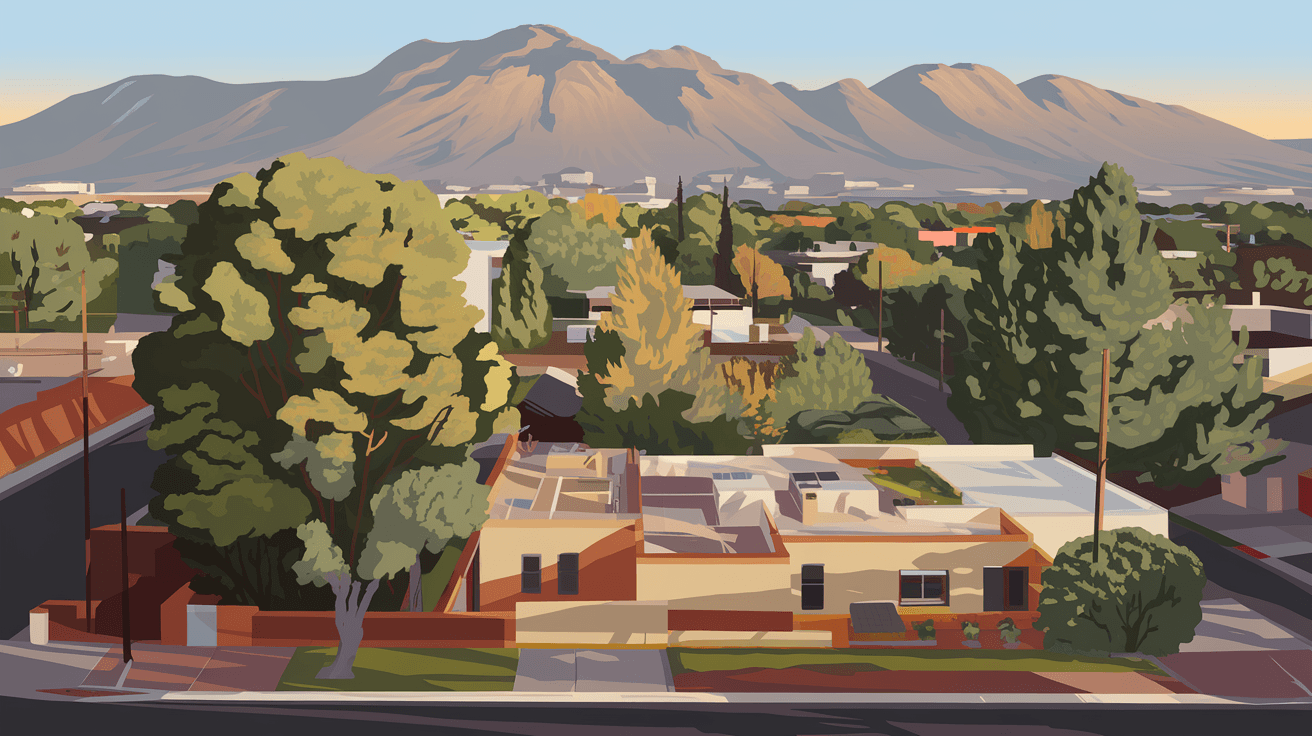
Most people relocating from larger cities want to be able to walk somewhere. Not everywhere, this is still a car-dependent Southwestern city, but somewhere. A coffee shop. A lunch spot. A place to decompress after a long afternoon of back-to-back calls. If that's on your list, Nob Hill deserves serious attention.
Nob Hill: The Neighborhood That Actually Has a Street Life
Nob Hill runs along Central Avenue between Girard and Washington, and it's the closest thing Albuquerque has to a genuine walkable urban neighborhood. The median home price sits around $368,000, which is remarkable when you consider what that buys you: older bungalows and pueblo-style homes with real character, mature trees, and front porches that actually get used.
For remote workers, the practical appeal is real. You can walk to Satellite Coffee on Central for a morning work session, grab lunch at Flying Star or Frontier Restaurant (the Frontier is technically just west of Nob Hill but close enough), and be back at your desk in under an hour. The neighborhood has enough foot traffic to feel alive without the noise and density that would make working from home miserable.
“Nob Hill is the kind of neighborhood where you'll run into your neighbor at the farmers market, recognize the barista at your regular coffee shop, and actually know the name of the person who owns the bookstore. That's not an accident. It's what happens when a neighborhood has had a real pedestrian culture for decades.
Schools in Nob Hill fall under Albuquerque Public Schools, with students feeding into Wilson Middle School and Highland High School. If you have kids or are planning to, it's worth researching specific school options and the APS magnet program system, which gives families more flexibility than the default attendance zone.
Insider tip: The stretch of Central between Carlisle and Washington gets busy on weekend evenings. If you're sensitive to noise, look for homes on the side streets one or two blocks off Central rather than directly on it. You'll get the walkability without the Saturday night bar traffic.
Nob Hill is not the right fit for everyone. The homes are older, which means more maintenance. Lot sizes are small. If you need a dedicated home office with real separation from your living space, you'll need to look carefully at floor plans. But if you want to feel like you actually live somewhere rather than just park your car somewhere, it's hard to beat.
Best Albuquerque Neighborhoods for Remote Workers Who Prioritize Space and Quiet
If your work style runs more toward long, uninterrupted blocks of focus time and you want a house with a real yard and room for a proper home office, the calculus shifts.
Northeast Heights: Reliable, Established, and Close to Everything
The Northeast Heights is the broadest category on this list, covering a wide swath of the city east of I-25 and north of Central. Within it, neighborhoods like Tanoan, High Desert, and the areas around Tramway and Montgomery offer larger lots, quieter streets, and homes built from the 1970s through the 2000s that tend to have the kind of square footage that makes a dedicated home office actually feasible.
This is where a lot of Albuquerque's professional class has historically lived, and the infrastructure reflects that. Good grocery options, easy access to the Sandia Foothills Open Space trail system, and a reasonable drive to anywhere in the city. The tradeoff is that you will be driving. There's no walking culture here the way there is in Nob Hill.
For remote workers who travel occasionally for work, the proximity to Sunport International Airport via I-25 is a genuine quality-of-life factor. You can leave for a 7am flight without a 5am alarm.
North Valley: Green, Quiet, and Genuinely Unique
The North Valley is Albuquerque's best-kept secret for people who want space and character without paying Rio Rancho prices for a stucco subdivision. Running along the Rio Grande between Montano and Alameda, this area is defined by its acequia system, old cottonwood trees, horse properties, and a pace of life that feels genuinely different from the rest of the city.
Homes here range from modest adobes to sprawling estates, and the prices reflect that range. What you're buying is land, privacy, and access to the Bosque Trail system, which is one of the most underrated urban nature corridors in the American Southwest.
The practical note for remote workers: Check your internet options carefully before committing to a North Valley property. Fiber availability is improving but not universal, and some of the older rural roads are still running on infrastructure that won't support serious video conferencing.
What Remote Workers Often Get Wrong About Moving to Albuquerque NM
People who are relocating to Albuquerque for remote work from cities like Austin, Denver, Seattle, or the Bay Area sometimes make the same set of mistakes. Not because Albuquerque is hard to understand, but because it requires you to recalibrate some assumptions.
The altitude is real. Albuquerque sits at roughly 5,300 feet above sea level. Most people adjust within a week or two, but your first few runs or bike rides will feel harder than they should. Stay hydrated. Your skin will also dry out faster than you're used to.
The monsoon season is not a metaphor. From roughly July through mid-September, afternoon thunderstorms roll in almost daily. They're dramatic, beautiful, and occasionally intense. Flash flooding is a real concern in arroyos and low-lying areas. If you're looking at a home near a drainage arroyo, ask specifically about flood zone status and drainage history.
Green chile is a food group, not a topping. You will be asked how you want your green chile within the first week. The correct answer is on everything. Hatch green chile season in late August and early September is a genuine cultural event, and you'll want to roast and freeze enough to last through the winter. Your neighbors will teach you how.
The West Side is bigger than it looks on the map. Rio Rancho and the Northwest neighborhoods have grown enormously over the past decade. New construction is abundant and prices are competitive, but the lifestyle is suburban in a way that surprises people expecting something more distinctly New Mexican. If you want adobe walls and vigas and a backyard that backs up to open desert, you'll find it more easily in the established East Side and Heights neighborhoods.
“The people who fall hardest for Albuquerque are usually the ones who stop comparing it to where they came from and start paying attention to what it actually is. The light here in the late afternoon, especially in October, is unlike anywhere else. You'll start understanding why Georgia O'Keeffe never left New Mexico.
Practical Checklist for Evaluating Any Albuquerque Neighborhood as a Remote Worker
Once you've narrowed your search to a few areas, here's how to stress-test a neighborhood before you commit:
- •Run an internet speed test at the specific address using the provider's coverage map. Don't assume. Ask the listing agent for confirmation of available service.
- •Drive the neighborhood at different times of day. Morning, midday, and evening will tell you very different things about noise levels, traffic, and who your actual neighbors are.
- •Walk to the nearest coffee shop or coworking space from the front door. Time it. If it's more than 15 minutes and you care about walkability, recalibrate your expectations.
- •Check the sun orientation of the home office room. In Albuquerque, a west-facing room without good window coverings becomes unusable in the afternoon from spring through fall.
- •Ask about HOA restrictions if you're in a planned community. Some neighborhoods in the Heights and Rio Rancho have rules that affect home-based businesses, signage, and even exterior modifications.
- •Research the nearest urgent care and grocery store. Not glamorous, but you'll thank yourself later. The difference between a 5-minute and a 25-minute grocery run adds up across a year.
- •Look at the arroyo and flood zone maps for any property near a drainage channel. FEMA flood maps are publicly available and your agent can help you interpret them.
Working With a Local Agent Who Knows These Neighborhoods from the Inside
The difference between a good real estate agent and a great one in a market like Albuquerque is almost entirely local knowledge. Someone who can tell you that a particular street in Nob Hill gets wind tunnel effects in March, or that a specific Northeast Heights subdivision has had drainage issues in the back lots, or that a North Valley property's acequia rights haven't been updated since 1987 is worth far more than someone who can just pull comps.
At The Taylor Team with Berkshire Hathaway HomeServices, we work in this city every day. We know which blocks on Central are genuinely walkable and which ones are more complicated. We know where the new fiber lines have been run and where they haven't. We know which school feeder patterns are worth paying attention to and which APS magnet programs have waitlists that require early planning.
If you're seriously considering relocating to Albuquerque for remote work and want to talk through neighborhoods before you start booking flights for tours, reach out to us. A 20-minute conversation can save you months of second-guessing.
Albuquerque rewards people who take the time to understand it. The city has a specific rhythm and a specific culture, and once you find the neighborhood that matches how you actually live and work, it has a way of feeling exactly right. The mountains help. The light helps. The green chile helps more than you'd expect.
The right neighborhood is out there. We can help you find it.
Want more insider intel?
Subscribe to get market updates and new articles delivered to your inbox.