Relocating to Albuquerque from Texas in 2026: What Dallas and Austin Buyers Find When They Trade Traffic, Heat, and Property Taxes for the Rio Grande Valley
Every few weeks, someone walks into a conversation with The Taylor Team after spending three days driving around Albuquerque with a rental car and a list of neighborhoods they found online. They flew in from Dallas or Austin, and by the time they sit down, the look on their face is always the same: surprised. Not disappointed. Surprised. The mountains are bigger than they expected. The city is quieter. The food is better. And the house they can actually afford here would cost them another $200,000 back home.
Relocating to Albuquerque from Texas is one of the most significant real estate moves happening in the Southwest right now, and it is only accelerating heading into 2026. If you are somewhere on that spectrum between "just curious" and "I already gave notice at work," this is the honest, street-level breakdown you need before you start scrolling Zillow at midnight.
Relocating to Albuquerque from Texas: The Property Tax Reality Check
This is where most Texas buyers stop mid-sentence and ask us to repeat ourselves. In Texas, property tax rates are doing a lot of heavy lifting to compensate for the lack of a state income tax. In the Dallas-Fort Worth metro, effective property tax rates routinely land between 2.1% and 2.5% of assessed value. Austin is not much better. On a $500,000 home in Plano or Round Rock, you could be writing a check north of $10,000 a year just in property taxes.
New Mexico works differently. The state has both a personal income tax and a property tax, but the property tax rates are significantly lower. Bernalillo County effective rates typically run between 0.75% and 1.0%. On that same $500,000 home here, you are looking at somewhere in the range of $3,750 to $5,000 annually. For buyers coming from Texas who have been conditioned to absorb those tax bills as just a cost of living, this recalibration changes the math on what they can afford and what their monthly payment actually looks like.
New Mexico also offers a property tax freeze for homeowners 65 and older who meet income requirements, which matters enormously for retirees making this move. If that applies to your situation, it is worth asking about early in the process.
Albuquerque Home Prices Compared to Dallas and Austin in 2026
The Albuquerque real estate market in 2026 is competitive but not the frenzied chaos that defined 2021 and 2022. The metro median home price sits at $401,000, homes are averaging 29 days on market, and there are currently around 102 active listings in many price brackets, with 3.92 months of inventory giving buyers a little more breathing room than they had a few years ago. The list-to-sale ratio of 98.3% tells you that well-priced homes are still moving close to asking, so coming in with lowball offers is not a winning strategy here.
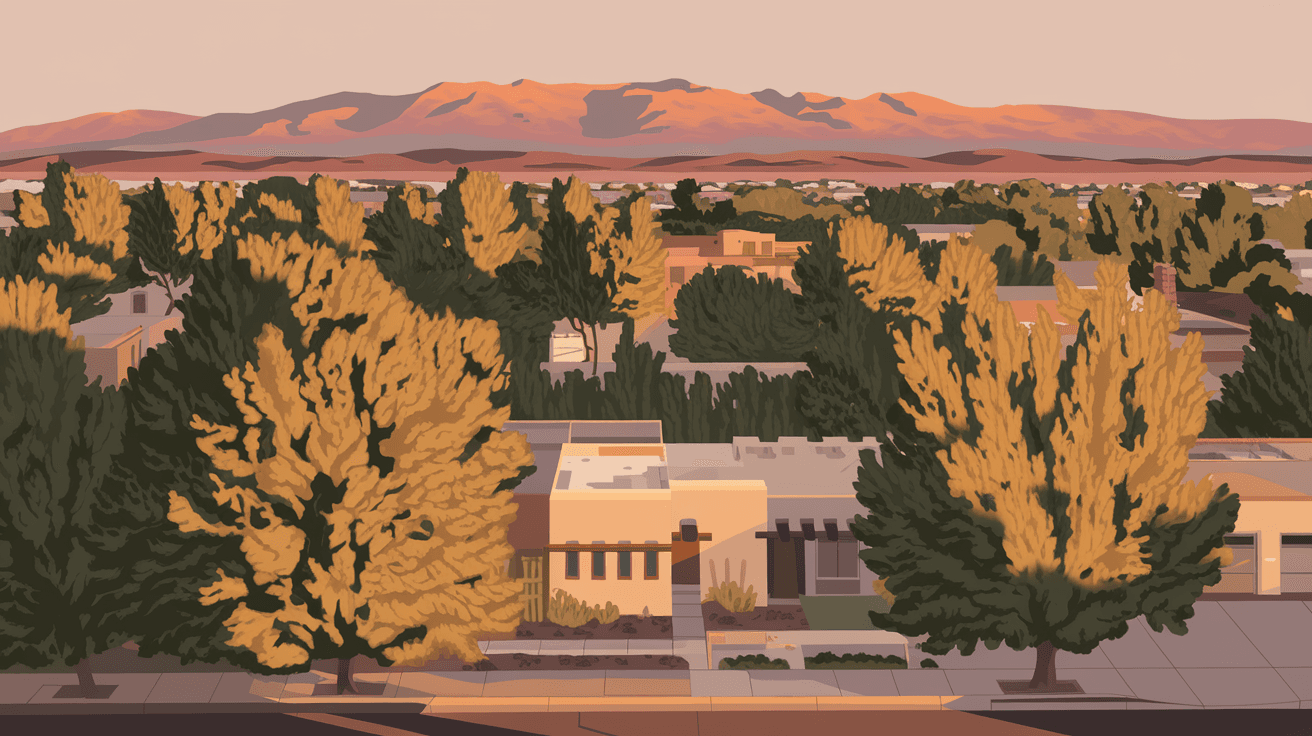
Now compare that to what buyers are leaving behind. The Dallas metro median has been hovering above $420,000 to $450,000 depending on the submarket, and Austin has been swinging between $530,000 and $580,000. More importantly, what $401,000 buys you in Albuquerque is genuinely different. We are talking three bedrooms, two bathrooms, a two-car garage, and a yard in established neighborhoods like Tanoan, Four Hills, or the North Valley. In some parts of Austin, that same budget puts you in a townhouse with a shared wall and a parking pad.
“"The number one thing I hear from Texas buyers after their first tour is that they keep waiting for the catch. There is no catch. The mountains are real, the food is real, and the price is real."
For buyers moving from Dallas to Albuquerque, the Northeast Heights tends to feel immediately familiar. It is suburban in scale, well-connected to major roads like Eubank and Juan Tabo, and has the kind of grocery store and coffee shop infrastructure that people who grew up in Plano or Frisco recognize. For Austin buyers who are used to a more urban, walkable lifestyle, Nob Hill along Central Avenue and the Barelas neighborhood near the Rail Yards have that creative, neighborhood-bar-and-local-bookstore energy that feels closer to home.
Neighborhoods Worth Knowing Before You Visit
- •North Valley along Rio Grande Boulevard: horse properties, mature cottonwoods, acequia culture, and a pace of life that genuinely slows you down
- •Tanoan and High Desert: gated and semi-gated communities in the Northeast Heights with Sandia Mountain views and proximity to Tramway Boulevard
- •Nob Hill: Central Avenue between Carlisle and Girard, walkable, local restaurants, close to UNM
- •Los Ranchos de Albuquerque: a separate municipality tucked inside the city, agricultural roots, larger lots, very little turnover
- •Ventana Ranch and Cabezon in the Northwest: newer construction, family-oriented, faster commute to the Westside job corridor
- •Ridgecrest and Four Hills on the Eastside: established mid-century homes, views, quiet streets, close to Kirtland Air Force Base
What the Climate Feels Like When You Actually Live Here
Texans know heat. But Albuquerque's climate is a different animal than the Gulf Coast humidity that makes a Dallas August feel like being inside a dog's mouth. At 5,312 feet of elevation, the city gets genuine seasons. Summers are warm, routinely reaching the mid-90s in July, but the low humidity and the near-daily afternoon monsoon thunderstorms rolling off the Manzano Mountains make it feel nothing like Houston or even Dallas. You will sleep with your window open in August. That is not a metaphor.
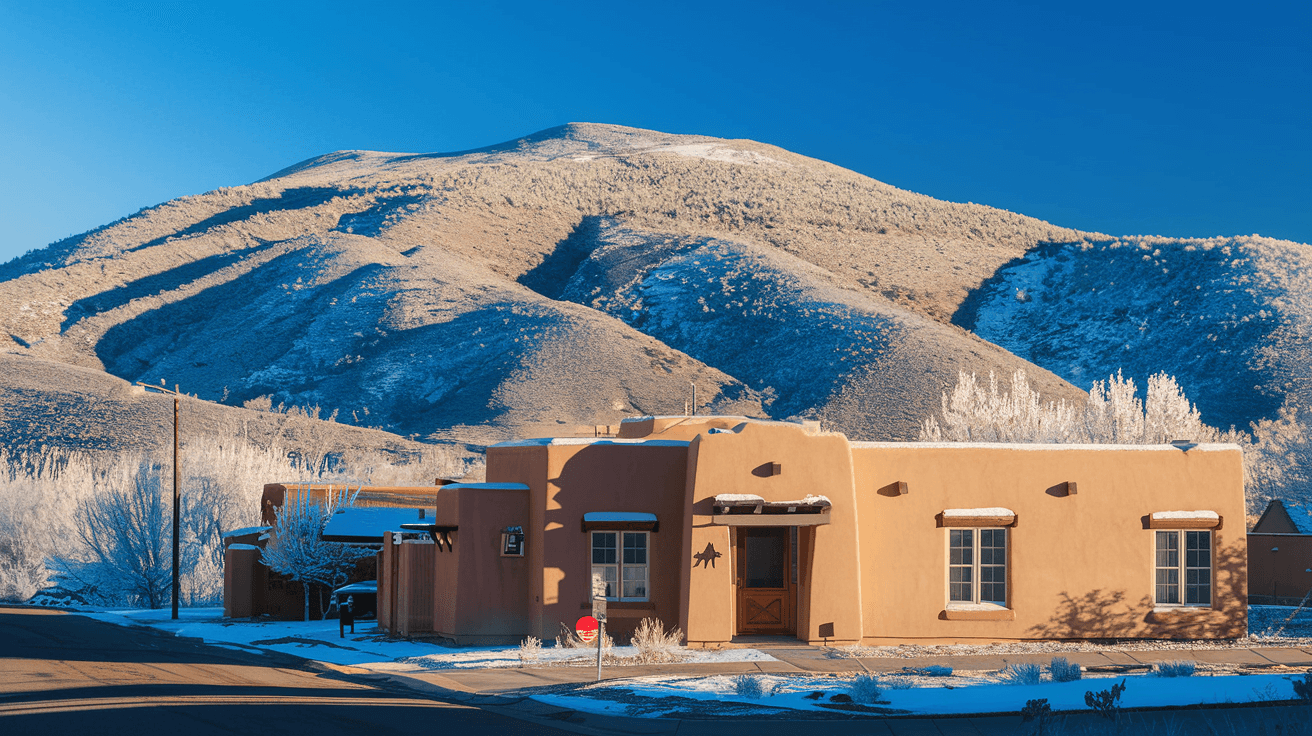
Winters are real but mild by most standards. Snow happens, usually a few times a year, and it is gone within a day or two. The 285 days of sunshine per year that New Mexico advertises are not marketing fiction. It genuinely is that sunny, and that matters more than people expect when they first move here.
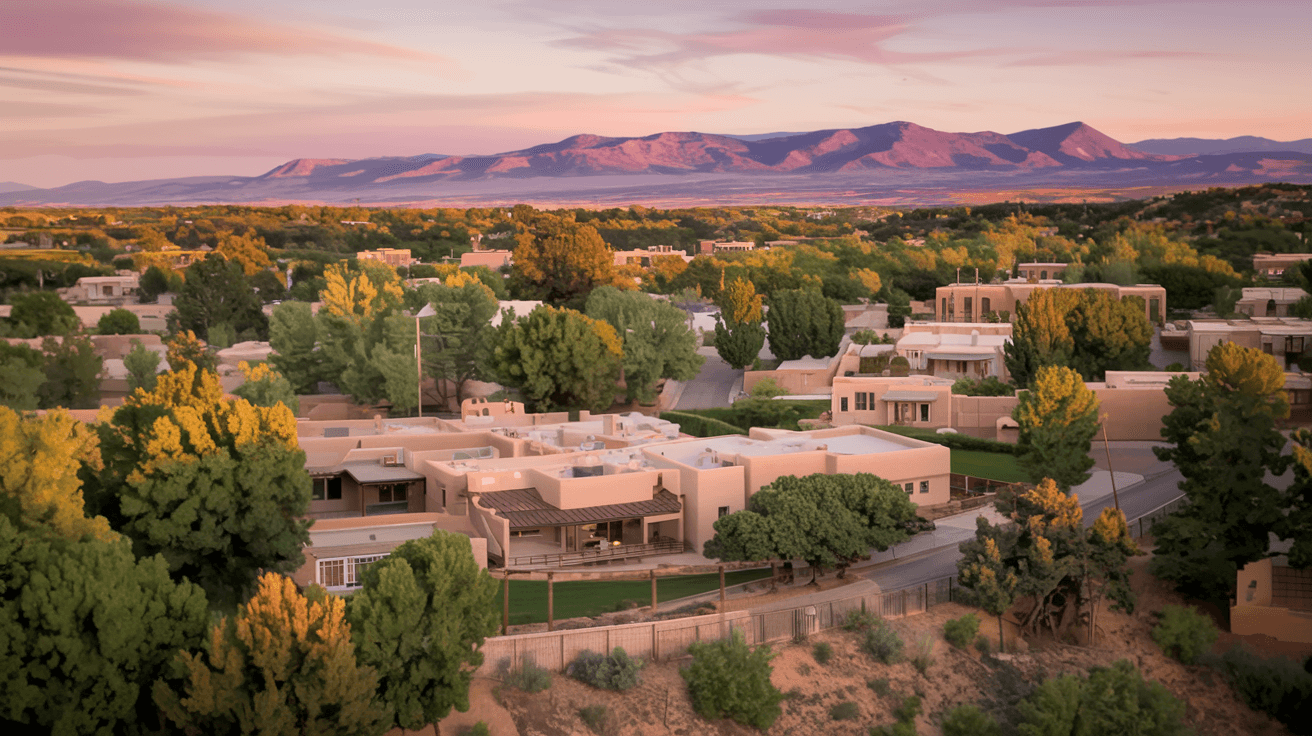
The Sandia Mountains are not just a backdrop. They are an amenity. Ski Sandia operates from late November into March with a tram ride from the Tramway terminal at the base of the mountains. The Bosque Trail along the Rio Grande is a flat, shaded cottonwood corridor that runs for miles through the city and becomes the social center of half the neighborhoods that border it on weekend mornings.
Austin to Albuquerque Relocation: The Lifestyle Shift Nobody Warns You About
For anyone making the Austin to Albuquerque relocation move, the adjustment is less about what you lose and more about recalibrating what you value. Austin has become a genuinely difficult city to live in without a significant income to match. The traffic on MoPac and 183 during rush hour is now competitive with anything in Dallas. The restaurant scene is world-class, but so is the cost of a dinner out. The music is legendary, but the venues are increasingly priced for a tech salary.
Albuquerque has its own cultural weight that is entirely its own. Green chile is not a condiment here. It is a food group, a seasonal event, and a point of local identity. Every September, the smell of roasting chiles drifts through the South Valley from the farms along the Rio Grande, and locals line up at roadside stands on Isleta Boulevard and in the parking lots of places like Barela's Coffee House on Broadway to get their year's supply. You will not understand this until you live through one Hatch chile roasting season, and then you will understand completely.
Meow Wolf opened its Albuquerque outpost at Expo New Mexico, adding to a cultural landscape that already includes the Indian Pueblo Cultural Center on 12th Street, the ABQ BioPark along the river, and the Albuquerque International Balloon Fiesta every October, which is the largest hot air balloon festival in the world and turns the entire city into something that looks like a dream sequence for nine days straight.
The food scene is not Austin, but it is not trying to be. Duran's Pharmacy on Central has been serving New Mexican plates since 1956. The Frontier Restaurant across from UNM is open until 1 a.m. and has a line at midnight. Sadie's on 4th Street is the kind of place that has been packed for forty years for a reason. These are not trendy spots. They are institutions, and that is a different kind of value.
“"Albuquerque does not need to be Austin or Dallas. It has been itself for a very long time, and that is exactly what makes it work for people who are tired of cities trying too hard."
The Insider Detail Most Texas Buyers Miss
Here is something that does not show up in any relocation guide: Albuquerque's traffic is real but it has a hard ceiling. The I-25 and I-40 interchange, known locally as the Big I, can back up during morning and evening rush, and Paseo del Norte heading east toward the Northeast Heights gets congested. But the city is not built in a way that creates the cascading, city-wide gridlock that makes leaving Dallas at 5:30 p.m. feel like a punishment. Most people living in the Northeast Heights or the North Valley can get to most places in the city in under 20 minutes outside of peak hours. That is not marketing. That is just the geometry of a 600,000-person city that has not yet outgrown its road network.
The insider tip: if you are buying in the Northeast Heights and you work anywhere in the Uptown corridor or the Journal Center area off Jefferson, look at homes north of Montgomery. The Paseo del Norte connection to I-25 will change your commute quality significantly compared to fighting Lomas or Central to get downtown.
Working with a Local Real Estate Team When You Are Buying from Out of State
Buying a home remotely from Texas is completely doable in today's market, but it requires a team that knows the difference between a house on a good block in Four Hills and one that backs up to a busy arroyo drainage channel. Those details do not show up in listing photos, and they matter.
The Taylor Team at Berkshire Hathaway HomeServices works with out-of-state buyers regularly, which means we are used to doing the work that makes a two-day visit to Albuquerque count. That includes pre-trip neighborhood consultations, honest conversations about which areas are appreciating and which are stagnant, and the kind of local knowledge that only comes from actually living and working in this city.
If you are in the early stages of an Austin to Albuquerque relocation or a move from Dallas to Albuquerque, the best first step is a conversation before you book flights. Understanding the market, the neighborhoods, and the realistic timeline for your situation will make your visit exponentially more productive. Reach out to The Taylor Team and let's figure out what your move actually looks like.
What to Expect from the Albuquerque Market as a Texas Buyer in 2026
The market is not a buyer's market in the classic sense, but it is more balanced than anything Texas transplants have been dealing with at home. With 3.92 months of inventory, you have time to be thoughtful. With a 98.3% list-to-sale ratio, you do not have time to be slow when the right house comes up.
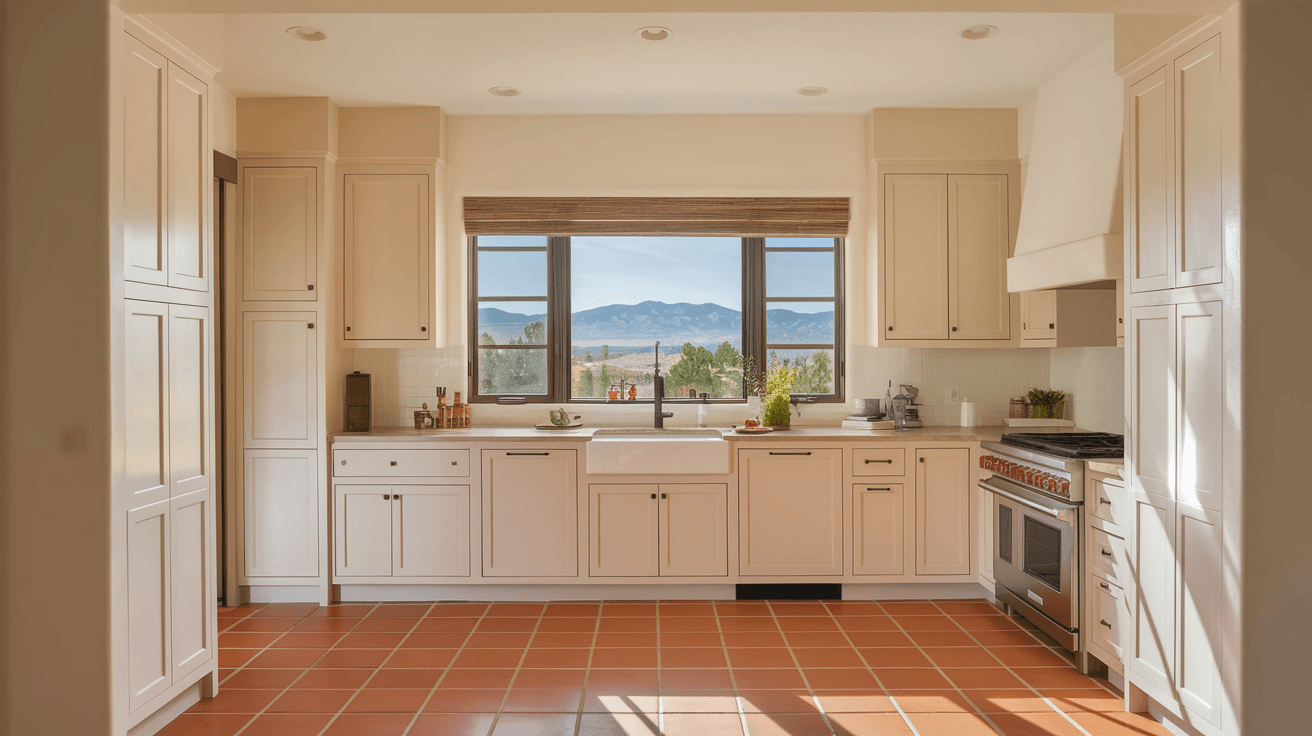
For buyers coming from Dallas or Austin with equity to deploy, the purchasing power shift is real and significant. If you are selling a home in the Austin metro for $600,000 and buying in Albuquerque at the median of $401,000, you are either carrying significantly less mortgage or buying up into a tier of the Albuquerque market that gives you something genuinely special: a North Valley property with an acequia, a High Desert home with a Sandia view, or a fully renovated territorial-style home in Ridgecrest that would be unreachable on a Texas budget.
The key things to understand before you arrive:
- •Cash offers still win in competitive situations, but financed offers with strong pre-approvals are closing successfully at very close to list price
- •HOA situations vary widely by neighborhood, and some of the most desirable communities in Tanoan and High Desert carry monthly fees worth understanding upfront
- •Well and septic properties exist in the North Valley and parts of the South Valley, which is a different buying process than a city-connected home
- •Albuquerque's topography means elevation changes between neighborhoods are real, and a home at 6,200 feet in the foothills feels different in winter than one at 5,000 feet near the river
- •New construction is active in the Northwest on the Westside and in some Rio Rancho corridors just north of the city, which gives buyers another option if existing inventory is tight
Albuquerque is not a city that needs a sales pitch. It has been here, doing its thing, for hundreds of years before any of us showed up to write blog posts about it. But for the specific kind of Texas buyer who is tired of paying $12,000 a year in property taxes on a house with a postage-stamp yard, sitting in traffic on 635, and watching their Austin neighborhood turn into something unrecognizable, this city has a particular kind of appeal that is hard to put back in the box once you have seen it.
The mountains are not going anywhere. The green chile is not going anywhere. And the math on what your housing dollar buys here is not going anywhere either.
Want more insider intel?
Subscribe to get market updates and new articles delivered to your inbox.