Relocating to Albuquerque from California in 2026: What Bay Area and Los Angeles Buyers Find When They Trade Cost of Living, Wildfires, and Density for the Rio Grande Valley
If you have been watching your Zillow alerts from a San Jose condo or a Culver City rental, you already know the math does not work in California anymore. What surprises most people making the move is that relocating to Albuquerque from California in 2026 is not a compromise. It is a recalibration. The city sitting at 5,300 feet between the Sandia Mountains and the Rio Grande is not trying to be Los Angeles or San Francisco. It is doing something entirely its own, and once you understand what that means on the ground, the decision gets a lot easier.
This is not a listicle of fun facts. This is what we see every week working with California buyers who call us from their cars on the 405 or the 101, ready to make a change but nervous about landing somewhere unfamiliar. We walk these neighborhoods. We know which streets flood in monsoon season, which coffee shops have the best parking off Central, and which zip codes are quietly appreciating faster than the headlines suggest.
Albuquerque vs Los Angeles Cost of Living: The Numbers That Change Everything
The conversation usually starts with price per square foot, and it should. The Albuquerque metro median home price sits at $385,000 as of early 2025, and that number has been remarkably stable. For a buyer coming out of the Bay Area, where a teardown in Fremont can list north of $900,000, or out of the Westside of LA where a two-bedroom condo in Santa Monica routinely clears $1.2 million, that figure lands like a glass of cold water on a July afternoon in the South Valley.
But the cost story goes deeper than the purchase price. New Mexico has no estate tax, property taxes that average well under one percent of assessed value, and a state income tax structure that treats retirees particularly well. When California buyers do a full financial comparison, including utilities, insurance, and commute costs, the monthly savings are often in the range of $2,500 to $4,000 depending on where they were renting or owned before.
Days on market in Albuquerque average around 34 days, which means the market is active but not the frenzied, waive-everything, no-inspection chaos that defined coastal California for the better part of a decade. With 4.9 months of inventory and 3,850 active listings across the metro, buyers have real choices. The list-to-sale ratio of 97.8 percent tells you this is a healthy, competitive market where homes are priced to sell, not priced to generate bidding wars that leave buyers emotionally wrecked.
For California buyers used to losing five or six offers before going $200,000 over ask, this feels almost surreal.
“"The first time we made an offer and it was accepted at list price, my wife and I just sat there in the car not knowing what to do. We kept waiting for something to go wrong." That is a near-verbatim quote from a buyer who relocated from Palo Alto last spring.
High Desert Albuquerque: Where California Buyers with Equity Land First
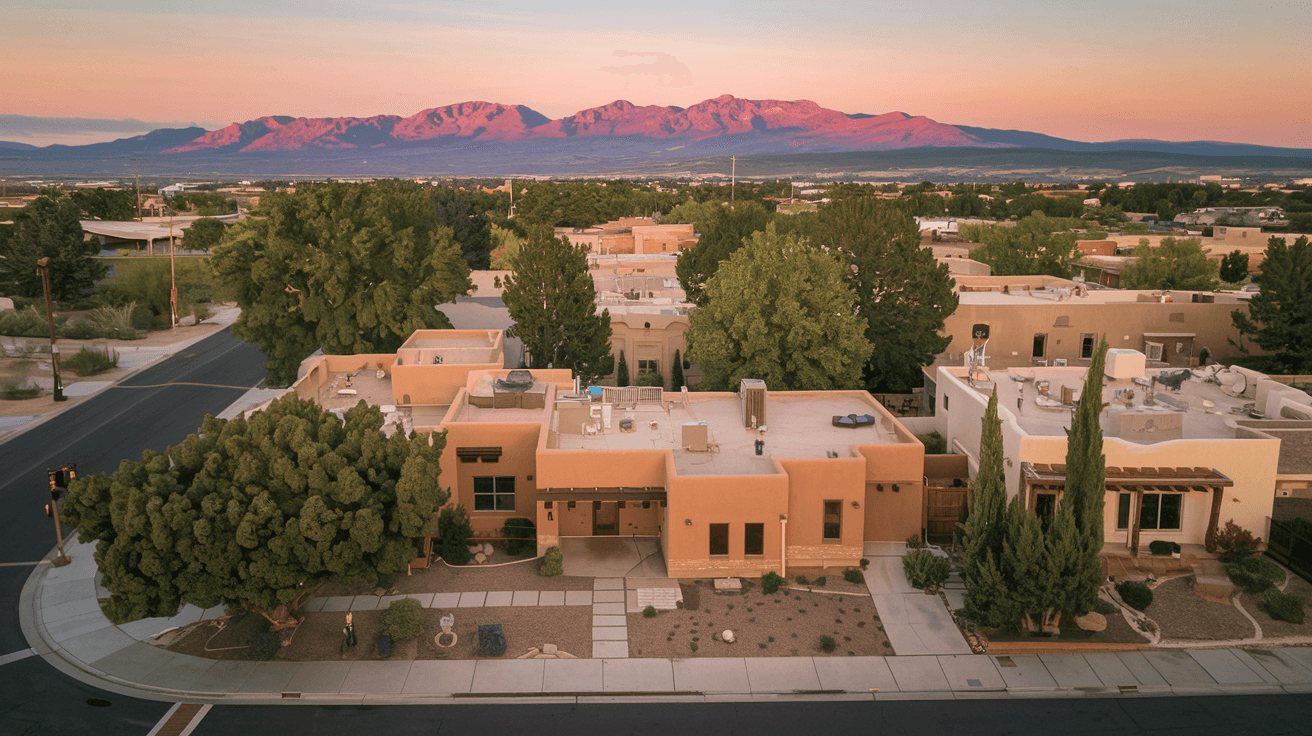
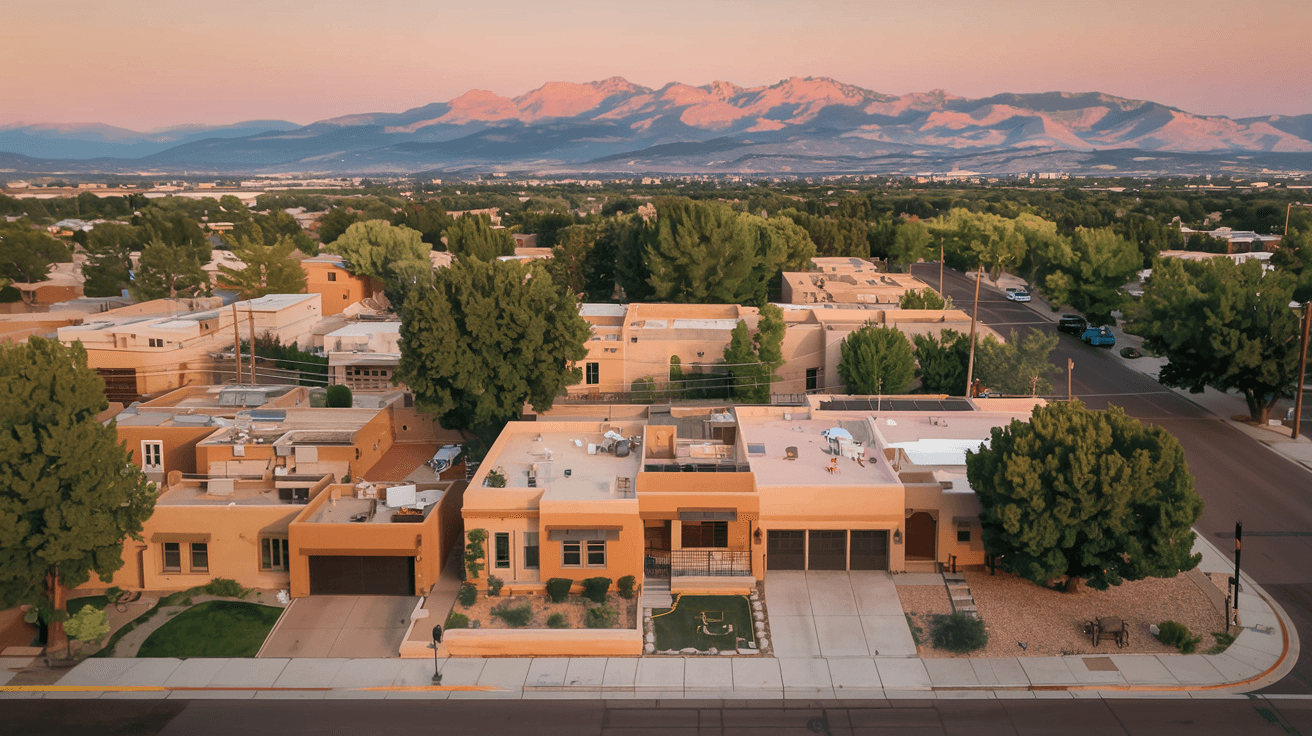
If you are coming from a neighborhood like Los Feliz, Marin County, or Saratoga, the first Albuquerque neighborhood that tends to stop the scroll is High Desert. Tucked into the northeastern foothills off tramway, High Desert sits at an elevation that gives you unobstructed views of both the Sandias to the east and the full sweep of the Rio Grande valley to the west. On a clear morning, and most mornings here are clear, you can see the volcanoes on the West Mesa from your back patio.
The High Desert median home price runs around $780,000, which sounds like a lot until you compare it to what that same buyer left behind. These are custom and semi-custom homes on larger lots, often with passive solar design, vigas, and the kind of architectural intentionality that takes cues from the landscape rather than ignoring it. The neighborhood sits within the APS La Cueva High School district, which is one of the consistently highest-performing public high schools in New Mexico and a real draw for families relocating with teenagers.
High Desert is not the only option for buyers with California equity to deploy. Tanoan, Ventana Ranch, and parts of Rio Rancho adjacent to Intel's campus also attract buyers coming in with significant down payments. But High Desert has a character that resonates particularly well with buyers from places like Marin or the East Bay hills: it feels earned, not generic.
Neighborhoods California Buyers Should Also Put on Their List
- •Nob Hill along Central Avenue near Girard is the closest thing Albuquerque has to a walkable urban neighborhood with genuine independent retail, and the 1940s bungalows here are still attainable in the $350,000 to $500,000 range
- •North Valley along the Rio Grande bosque offers horse property, enormous cottonwoods, and an agricultural quietness that buyers from Marin often find immediately familiar
- •Four Hills on the east side gives you mesa views, larger lots, and a price point that still shocks people coming from Orange County
- •Corrales just north of the city proper is technically a village, not Albuquerque, but it has become a first-stop for California buyers who want acreage, a slower pace, and still want to be twenty minutes from Whole Foods on Montgomery
Wildfire Risk, Air Quality, and Climate: The Honest Conversation
California buyers bring trauma with them. If you spent summers in the Bay Area watching the sky turn orange, or you evacuated from the Palisades or the hills above Pasadena, the wildfire question is not abstract. It is the first thing many clients ask, sometimes before they ask about schools or commute times.
Albuquerque's relationship with fire is real but different. The Cibola National Forest and the Sandia Mountains do experience wildfire, and 2022's Calf Canyon and Hermits Peak fires in northern New Mexico were a genuine regional trauma. But the urban core of Albuquerque, the neighborhoods where most buyers are actually purchasing homes, sits in a high desert basin with relatively low tree density and a fire risk profile that is meaningfully different from the wildland-urban interface zones that have devastated parts of California.
The Rio Grande bosque, the ribbon of cottonwood forest running through the city, does carry fire risk in dry years and has burned in sections historically. Buyers looking at North Valley or Corrales should understand that. But the broad strokes comparison holds: Albuquerque's wildfire exposure for most residential neighborhoods is substantially lower than what buyers are leaving behind in the Santa Cruz Mountains, the Malibu hills, or the Sierra Nevada foothills.
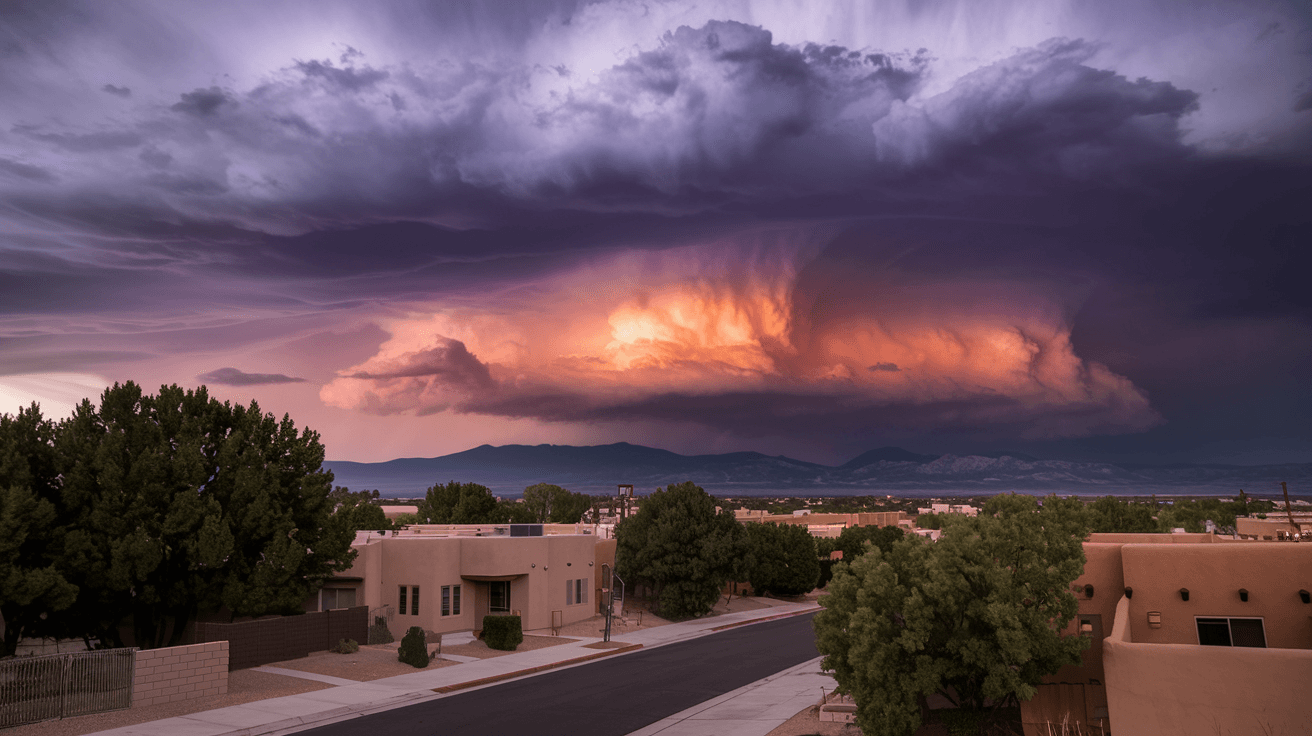
Air quality is genuinely good here most of the year. The city sits at altitude, gets consistent wind, and does not have the inversion layer problem that traps pollution in the LA basin. Monsoon season, which runs roughly July through September, cleans the air so thoroughly that the post-rain smell on a late July evening near the bosque is one of those things people mention years later.
“The monsoon is not a weather event here. It is a cultural one. Locals stop what they are doing to watch the clouds build over the Sandias every afternoon in August.
What California to New Mexico Relocation 2026 Actually Looks Like on the Ground
The practical logistics of a California to New Mexico relocation in 2026 are more straightforward than most buyers expect, but there are things worth knowing before you show up.
Albuquerque is served by Sunport International Airport, with direct flights to LAX, SFO, SJC, and OAK on multiple carriers. The flight to the Bay Area is about two hours. Most California transplants are surprised to find that staying connected to family or work ties back west is genuinely easy.
The city is laid out on a grid anchored by Central Avenue, the old Route 66 corridor, and I-25 running north-south. Once you understand that the mountains are always to the east and the river is always to the west, you are never lost. Locals use the Sandias as a compass the way people in Manhattan use the grid.
For daily life, the infrastructure that California buyers tend to worry about is better than the reputation suggests. Trader Joe's on Carlisle, Whole Foods on Montgomery, Sprouts in multiple locations, and a farmers market at the Railyards on Saturdays that has been running long enough to have its own regulars and its own rhythms. The Nob Hill stretch of Central has independent restaurants that have survived for decades: Antiquity, Zinc Wine Bar, Duran's on Central near Old Town for the real red and green chile experience.
The Insider Detail Most California Buyers Miss
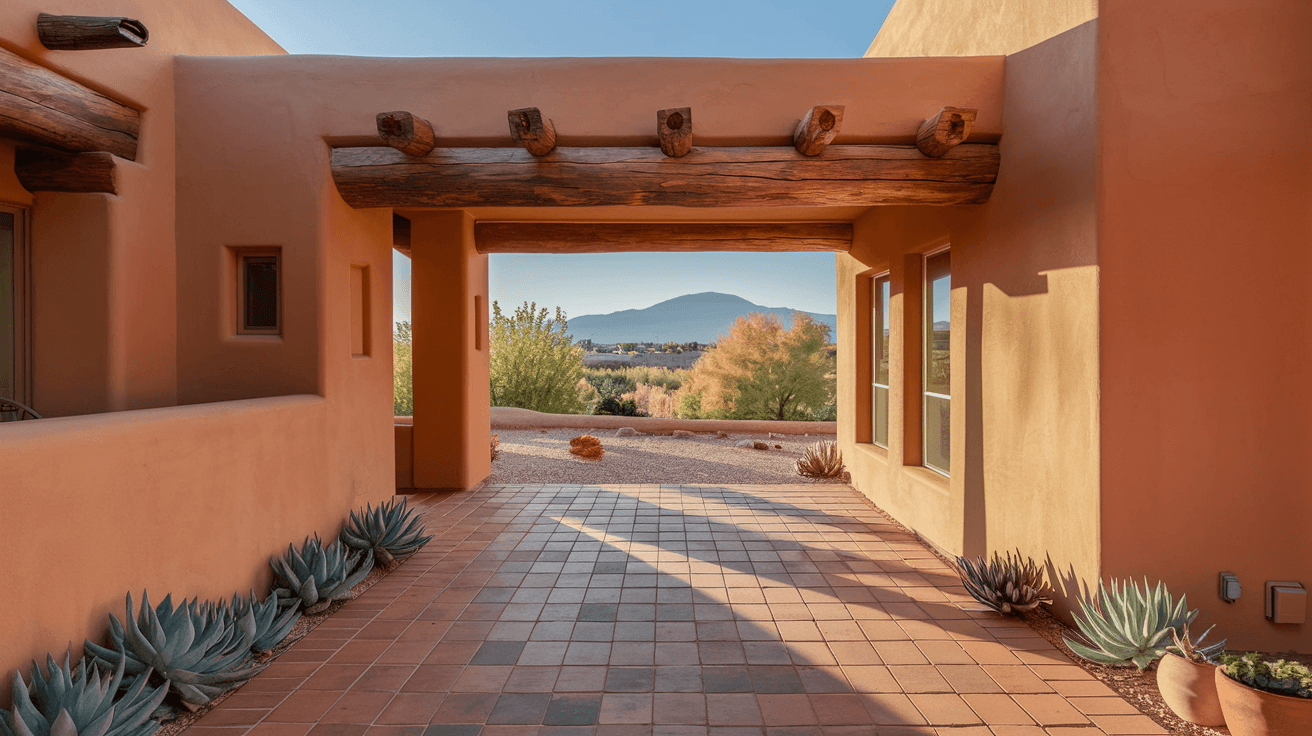
Here is something that does not show up in any relocation guide: when you are house hunting in Albuquerque and a listing says it has a portal, that is not a tech metaphor. It is a covered outdoor patio, usually on the north or east side of the house, designed to give you shade during the brutal afternoon sun of May and June. A good portal is worth more than most square footage upgrades in this climate, and buyers who grew up in California often overlook it entirely until their first summer here teaches them otherwise. When you are touring homes, look at the portal orientation before you look at the kitchen countertops.
Schools, Healthcare, and the Things Families Actually Ask About
Albuquerque Public Schools is a large district with significant variation between campuses. That is the honest version. The better version is that within APS, there are magnet programs, STEM academies, and dual-language schools that are genuinely excellent, and the district's high-performing schools in the northeast heights and foothills draw families who do their homework.
La Cueva High School in the High Desert and Tanoan corridor is the most consistently cited school for families arriving from high-performing California districts. Eldorado High School and Sandia High School both have strong programs and long community roots. For families interested in private options, Albuquerque Academy on Wyoming Boulevard is a legitimately elite independent school with a national reputation that surprises people who assume Albuquerque cannot compete at that level.
Healthcare is anchored by Presbyterian Hospital and the UNM Health Sciences Center, which is a teaching hospital and research institution that gives the city medical depth beyond what its size might suggest. Lovelace Health System operates multiple facilities across the metro. For California buyers used to the density of options in the Bay Area, the healthcare landscape here requires some adjustment, but the core infrastructure is solid.
Working with a Local Team When You Are Buying from 1,000 Miles Away
The mechanics of buying a home in Albuquerque while still living in California are something we navigate constantly. Video walkthroughs, detailed neighborhood context calls, and being honest about what a listing photo is hiding are all part of the process. The 34-day average days on market here means you are not making panicked same-day decisions the way California buyers often had to. You have time to ask questions, do a second showing on video, and understand what you are buying.
If you are starting to think seriously about relocating to Albuquerque from California in 2026, the most useful first step is a conversation before you have a specific property in mind. Understanding the tradeoffs between neighborhoods, the nuances of the eastside versus the North Valley versus the West Mesa, and what your California equity actually buys here in real terms, that context makes every subsequent decision cleaner.
The Taylor Team at Berkshire Hathaway HomeServices works with California buyers regularly and knows the questions you are going to have before you ask them. Reach out when you are ready to talk specifics.
Albuquerque is not perfect. The traffic on Paseo del Norte at five o'clock is real, the public transit system requires a car, and the summer before the monsoon arrives in July can feel relentless. But for buyers who have spent years watching California become financially and logistically harder, what this city offers is something that sounds simple and turns out to be rare: a place where the math works, the sky is yours, and the green chile at the end of the day makes the whole thing feel like the right call.
Want more insider intel?
Subscribe to get market updates and new articles delivered to your inbox.