How Much House Can You Actually Afford in Albuquerque in 2026? A Realistic Budget Breakdown by Neighborhood
If you have been plugging numbers into online mortgage calculators and staring at the results wondering what they actually mean for real life in Albuquerque, you are not alone. The gap between what a calculator spits out and what buying a home here actually feels like is wider than most people expect. So let's talk about how much house you can afford in Albuquerque in honest, street-level terms, because this city has a cost of living and a housing market that does not behave like Phoenix or Denver, and the rules that apply there do not always apply here.
The metro median home price as we move into 2026 sits around $385,000, which sounds manageable until you factor in today's interest rates, HOA fees, property taxes, and the reality that homes here are receiving offers at 97.8% of list price on average. Sellers are not panicking. With only 4.3 months of inventory across the metro and about 3,850 active listings, this is still a market where being financially prepared before you start touring homes makes a real difference.
How Much House Can I Afford in Albuquerque: Starting With the Real Numbers
Before we get neighborhood-specific, it helps to anchor yourself to what the math actually looks like for a typical Albuquerque buyer in 2026.
The standard guidance is that your total housing payment (principal, interest, taxes, insurance, and any HOA) should not exceed 28% of your gross monthly income. A more flexible ceiling some lenders will approve is 36% of your gross when you factor in all debt. Here is what that looks like in practical terms:
- •Household income of $65,000/year: You are looking at roughly $180,000 to $220,000 in purchasing power, depending on your down payment and existing debt load
- •Household income of $90,000/year: Budget range of approximately $280,000 to $340,000
- •Household income of $120,000/year: You are realistically shopping in the $380,000 to $450,000 range
- •Household income of $150,000+: The $500,000 to $600,000 bracket opens up, including some Rio Grande corridor and foothills properties
These ranges assume a 20% down payment and a rate environment hovering around 6.5% to 7% on a 30-year fixed. If you are putting down less, your purchasing power shrinks accordingly, and you will likely be paying private mortgage insurance, which adds anywhere from $100 to $250 per month on a typical Albuquerque purchase.
One thing that catches buyers off guard: Bernalillo County property taxes are genuinely reasonable compared to most metros. The effective rate runs around 0.79% of assessed value, which on a $385,000 home translates to roughly $250 per month in taxes. That is real savings compared to what buyers in Texas or California are absorbing.
Albuquerque Home Affordability 2026: What Each Budget Gets You by Neighborhood
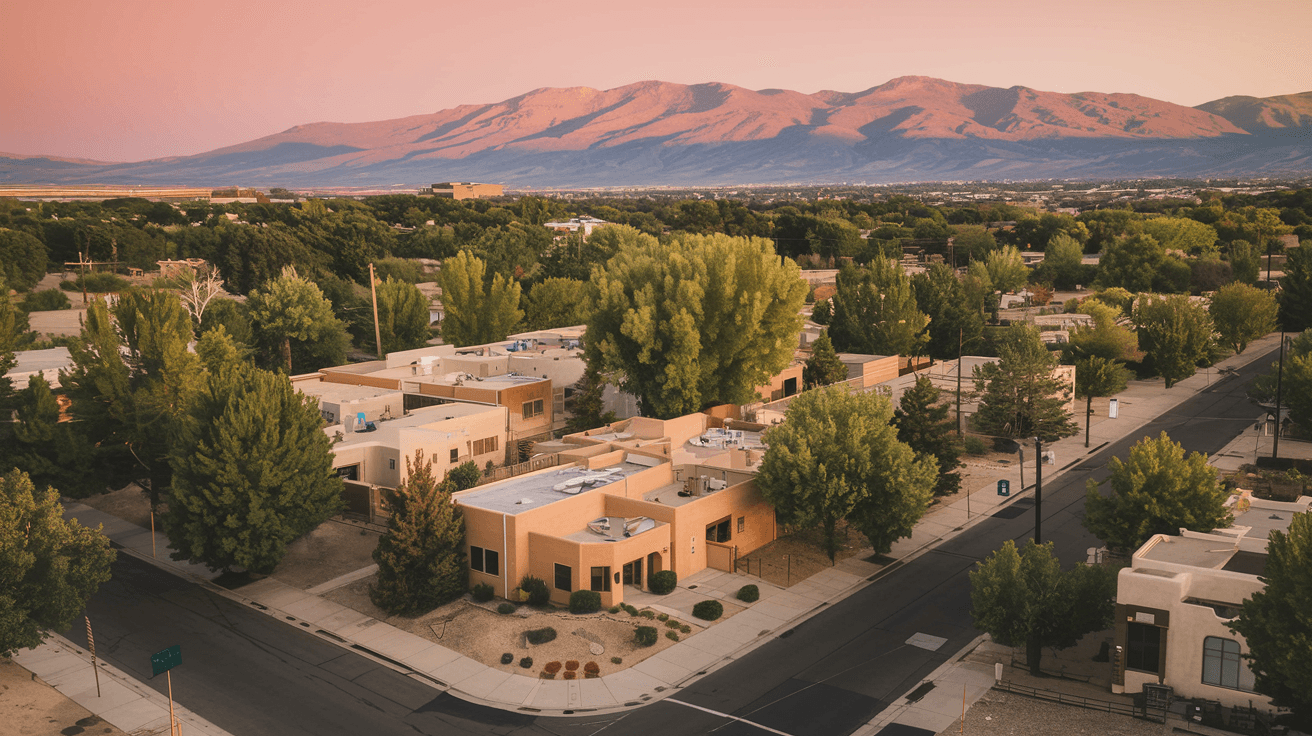
Albuquerque is not one market. It is a collection of very distinct neighborhoods, each with its own pricing rhythm, character, and buyer pool. Here is what your Albuquerque home buying budget actually buys you depending on where you want to land.
Under $250,000: The South Valley and Barelas
This price range is shrinking, but it still exists. In the South Valley, particularly along Isleta Boulevard and the streets radiating off Bridge Boulevard, you can still find older adobe homes on larger lots. These are often properties that need work, and buyers here need to go in with eyes open about deferred maintenance. Barelas, just south of downtown near the National Hispanic Cultural Center, occasionally surfaces inventory in this range, though it is moving fast. With average days on market at 34, hesitation is expensive.
The tradeoff for the price is that you are likely looking at homes built before 1980, which means potential issues with plumbing, electrical, and roof systems. Budget an additional $10,000 to $30,000 for near-term repairs if you are buying in this range.
$280,000 to $380,000: The Broad Middle of the Market
This is where most Albuquerque buyers are actually shopping, and it covers a surprisingly wide geographic range.
- •The War Zone/Kirtland area near Gibson and Louisiana has seen significant reinvestment and offers solid 3-bedroom homes for buyers willing to bet on continued neighborhood improvement
- •Four Hills on the east side offers mid-century ranches with mountain views and a quiet, established feel
- •Ventana Ranch on the west side delivers newer construction, good schools, and master-planned amenities for families prioritizing those features
- •Nob Hill adjacent streets, particularly east of Carlisle and south of Central, offer bungalows and craftsman homes with walkability to the restaurants and shops on Route 66
At $350,000, you are often looking at 3 bedrooms, 2 bathrooms, somewhere around 1,400 to 1,800 square feet. Do not expect a garage and a yard and a renovated kitchen all at once in this range. Usually you are picking two of those three.
$380,000 to $500,000: Where Albuquerque Home Affordability Gets Interesting
This bracket is where the Albuquerque home affordability 2026 story gets genuinely compelling compared to peer cities. For what buyers in Denver or Austin spend on a townhouse, you can buy a real house here with room to breathe.
- •North Valley properties along Guadalupe Trail or near Rio Grande Nature Center offer adobe charm, mature cottonwoods, and the kind of land that simply does not exist in most western metros at this price
- •Tanoan and High Desert on the northeast side deliver newer homes, HOA-maintained common areas, and proximity to Tramway for quick Sandia Mountain access
- •Corrales Road corridor starts to open up at the upper end of this range, though true Corrales village homes usually push above $500,000
- •Downtown lofts and historic Huning Highland condos and row homes appeal to buyers who want to walk to Sawmill Market or catch a show at Popejoy without getting in a car
“At $425,000 in Albuquerque, you are not compromising. You are choosing. That is a fundamentally different position than buyers in most major western cities find themselves in.
$500,000 and Above: The Foothills, North Valley Estates, and East Mountains
Once you cross $500,000, Albuquerque starts showing you its most distinctive real estate. The Sandia Foothills neighborhoods like High Desert, Tanoan East, and the custom homes tucked along Elena Gallegos open up. These are properties where the backyard is essentially the Sandia Mountains, and you can be on a hiking trail within minutes of your front door.
The North Valley in this range delivers genuine horse property, acequia water rights, and historic adobe compounds that feel like something out of a Santa Fe magazine spread, but at a fraction of Santa Fe pricing.
For buyers who want land and privacy, the East Mountains, particularly Tijeras and Cedar Crest along the I-40 corridor, offer 1 to 5 acre properties in the $450,000 to $650,000 range. The commute into the city is real, roughly 25 to 35 minutes to Uptown or the University area, but buyers who make that tradeoff tend to stay for decades.
Hidden Costs That Affect Your Albuquerque Home Buying Budget
The purchase price is only part of the affordability equation. Here are the line items that regularly catch buyers off guard.
Closing costs in New Mexico typically run 2% to 4% of the purchase price. On a $385,000 home, that is $7,700 to $15,400 out of pocket on top of your down payment. Some of this can be negotiated as seller concessions, and in the current market with 4.3 months of inventory, there is modest room to ask, though you are not going to get everything you want.
HOA fees vary wildly. Ventana Ranch runs around $30 to $50 per month. Some High Desert properties are closer to $150. Gated communities in the foothills can reach $300 or more. Always ask for the HOA financials and reserve fund status before making an offer.
Swamp cooler versus refrigerated air is an Albuquerque-specific cost conversation that buyers from out of state almost never think to have. Many homes in the city still rely on evaporative cooling, which works beautifully during dry summer months but struggles during monsoon season in July and August when humidity climbs. Converting a home to refrigerated air runs $8,000 to $15,000 depending on the size of the house. If you are buying an older home, factor this into your budget.
Water and irrigation costs matter more here than in most cities. If you are buying in the North Valley with acequia access or a larger lot, irrigation costs during the growing season add up. And if you want a green lawn in the high desert, you will pay for it on your water bill.
The insider tip worth knowing: the City of Albuquerque's Affordable Homeownership Program and New Mexico Mortgage Finance Authority both offer down payment assistance and below-market rate products that many buyers never explore because their lender does not bring them up. If your household income is at or below 80% of area median income, these programs can meaningfully change what you can afford. Ask specifically about them.
How to Know If You Are Actually Ready to Buy in Albuquerque Right Now
The market is not in a frenzy, but it is not soft either. With homes selling in 34 days on average and offers landing at 97.8% of list price, sellers have enough leverage to be selective. That means buyers need to show up prepared.
A few honest questions worth sitting with before you start touring homes on Zillow at midnight:
- •Is your credit score at 680 or above? Below that, your rate environment changes significantly and some programs close off entirely
- •Do you have 3 to 6 months of reserves after your down payment and closing costs? Lenders increasingly want to see this, and it protects you from a water heater replacement or roof repair immediately after closing
- •Have you gotten a pre-approval letter, not just a pre-qualification? In this market, sellers and their agents take pre-approvals seriously and pre-qualifications less so
- •Are you clear on the difference between what you are approved for versus what you are comfortable paying every month? Those two numbers are often not the same
“Getting pre-approved tells you what a lender will give you. Knowing your actual comfort number tells you what you should spend. The second conversation is the one that matters most.
If you are working through these questions and want to talk through what the numbers look like for your specific situation, the Taylor Team works with buyers across every Albuquerque neighborhood and price point. A 30-minute conversation can save you months of guessing.
What the 2026 Albuquerque Market Means for Buyers Right Now
Albuquerque home affordability in 2026 sits in an interesting position nationally. This city is not cheap the way it was five years ago, but it remains genuinely accessible compared to the metros most people are relocating from. The combination of reasonable property taxes, no state income tax on Social Security for retirees, and a lifestyle that includes 310 days of sunshine, the Bosque trail system, green chile on everything, and a 15-minute drive to world-class skiing makes the value proposition real.
The $385,000 median reflects a market that has matured but not broken. Inventory is rising slowly, which gives buyers more options than they had in 2022 or 2023. But it is not a buyer's market in the traditional sense. Well-priced homes on Griegos Road, in Nob Hill, or along the foothills are still moving quickly.
The buyers who navigate this market best are the ones who have done the budget work honestly before they fall in love with a house. Know your number. Know your neighborhood. And know that Albuquerque, for all its quirks and its green chile debates and its eternally construction-disrupted I-25, is still one of the more livable and affordable cities in the American West.
That is worth something. Probably more than the calculators give it credit for.
Want more insider intel?
Subscribe to get market updates and new articles delivered to your inbox.