
High Desert Albuquerque Homes: What Buyers Need to Know About the Luxury Foothills Market
If you've ever driven up past Tramway Boulevard as the city lights start to fall away behind you and the terrain shifts to juniper, boulder, and open sky, you already understand the pull of Albuquerque's foothills. The air is different up here. The silence is different. And the real estate market? That's different too.
High Desert Albuquerque homes occupy a category all their own in this city's housing landscape. We're talking about a neighborhood where the median sale price sits at $1,290,000, where homes are designed to frame the Sandia Mountains like living art, and where the competition among serious buyers is real and consistent. Paired with the adjacent Sandia Heights community just to the north, this stretch of the Northeast Heights foothills represents the most concentrated pocket of luxury homes in Albuquerque east of the Rio Grande.
This isn't a market you want to walk into cold. So let's talk about what's actually happening here, what makes these two neighborhoods worth the price tag, and what you need to know before you make a move.
High Desert Albuquerque Homes: Understanding the Neighborhood
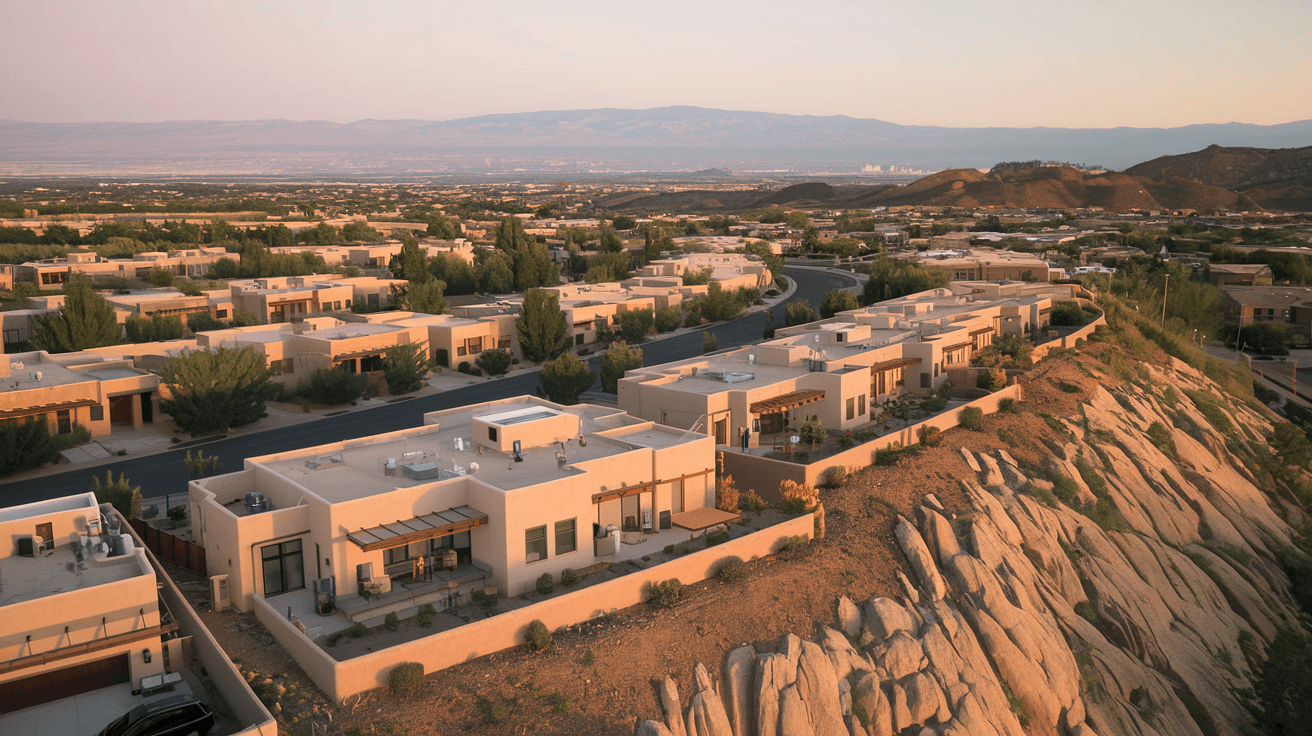
High Desert is a master-planned community that was developed with intentionality from the start. The whole neighborhood sits at the base of the Sandia Mountains, tucked into the foothills east of Tramway, and every street feels like it was laid out with views in mind. The architecture leans toward Pueblo Revival and contemporary Southwestern styles, with flat or low-pitched rooflines, stucco exteriors in warm earth tones, and interior courtyards that blur the line between inside and outside living.
The community itself is gated, and that matters here not just for security but for the overall feel of the neighborhood. Streets like Broken Arrow Drive NE and High Desert Place NE wind through the terrain in a way that feels organic rather than gridded, following the natural contours of the land. Mature desert landscaping, including chamisa, Apache plume, and native grasses, gives the whole area a settled, organic quality that newer developments in the city simply don't have yet.
School access is a major draw for families. High Desert falls within the APS La Cueva High School district, which consistently ranks among the highest-performing schools in New Mexico. For buyers with kids, that single fact moves the needle significantly.
- •Gated community with controlled access
- •Architecture rooted in Pueblo Revival and contemporary Southwestern design
- •La Cueva High School district (APS)
- •Proximity to the Elena Gallegos Open Space and Piedra Lisa Trail system
- •Active HOA that maintains community standards and common areas
- •Typical lot sizes that allow for meaningful outdoor living space and privacy
“Buying in High Desert isn't just a real estate decision. It's a lifestyle decision. The people who live here chose it because they want the mountain at their back and the city at their feet.
Sandia Heights Real Estate: The Neighbor Worth Knowing
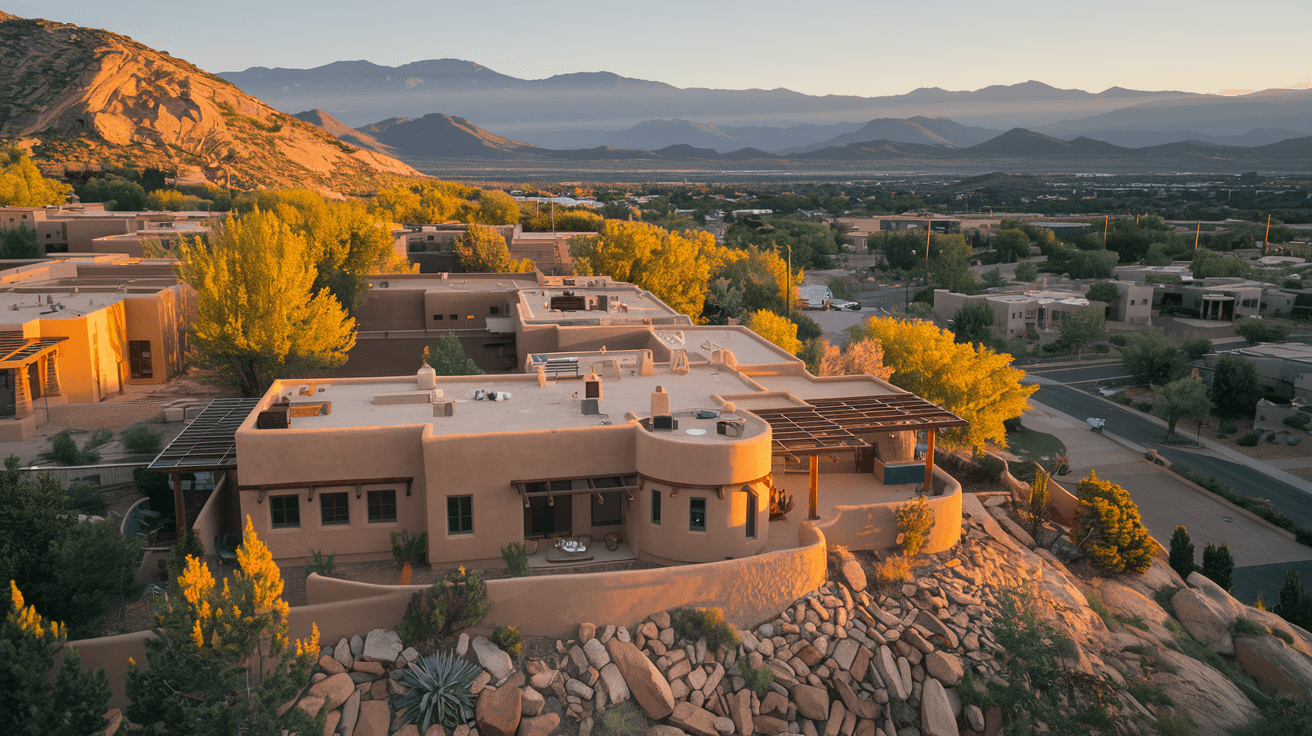
Just north of High Desert, Sandia Heights has a slightly different personality. It's older, less formally planned, and in some ways more eclectic. Homes here range from mid-century builds that have been dramatically updated to brand-new custom construction that pushes architectural boundaries. The streets, including Tramway Lane NE and Sandia Heights Road NE, feel more open, and the lots tend to be larger and more varied.
What Sandia Heights shares with High Desert is the view. From up here, you're looking west across the entire Rio Grande Valley. On a clear day, which in Albuquerque is most days, you can see the West Mesa volcanoes, the faint outline of Mount Taylor near Grants, and the full sweep of the city laid out below you. At night, it's one of the best light shows in the Southwest.
Sandia Heights real estate tends to attract buyers who want a little more individuality in their property. Because the neighborhood developed more organically over decades, you'll find a wider range of architectural styles and lot configurations. That variety can work in your favor as a buyer if you know what you're looking for and have an agent who knows the specific blocks.
The proximity to the Sandia Peak Tramway is genuinely meaningful here, not just as a tourist attraction but as a lifestyle amenity. Residents use the tram for hiking access, for dinner at the top (Ten 3 restaurant at 10,378 feet is worth the trip), and for the simple pleasure of having one of the world's longest aerial tramways basically in their backyard.
What Separates Sandia Heights from Other Northeast Heights Neighborhoods
The Northeast Heights has a lot of good neighborhoods, from Tanoan to Four Hills to the streets around Osuna, but Sandia Heights sits in a different tier. The elevation alone changes the experience. You're above the inversion layer that settles over the city on still winter days. You're closer to the forest. And the homes that sit at the upper edges of the neighborhood feel genuinely remote in a way that's hard to replicate anywhere else inside city limits.
- •Larger and more varied lot sizes than High Desert
- •Custom and semi-custom architecture dominant
- •Direct access to Sandia Peak Tramway
- •Views of the full Rio Grande Valley
- •Mix of property ages creates opportunity for buyers willing to renovate
- •Strong long-term appreciation history
Luxury Homes Albuquerque: What the Market Data Is Telling Us Right Now
The broader Albuquerque market is sitting at a metro median home price of $445,000, with average days on market around 22 days and roughly 2.7 months of inventory across active listings. That context matters because it shows you the baseline. High Desert and Sandia Heights operate well above that baseline in every metric.
With only 48 active listings across the luxury segment and a list-to-sale ratio of 98.5%, this is not a market where buyers have the luxury of extended deliberation. Homes priced correctly in these foothills neighborhoods move. When a well-presented property comes to market on a street with good views and updated finishes, it doesn't sit. The buyers who are ready, pre-approved, and working with an agent who already knows the neighborhood are the ones who win.
The $1,290,000 median price point in High Desert reflects real value rather than speculation. You're getting square footage, quality of construction, land, and setting that simply doesn't exist at that price anywhere else in Albuquerque. Comparable properties in Santa Fe run significantly higher. Phoenix has nothing with these mountain views at this elevation. Denver's foothills market is in a completely different price stratosphere.
“The foothills market rewards buyers who do their homework and move with confidence. Hesitation is expensive here.
What Your Dollar Buys in High Desert vs. the Rest of the City
At the $1.2 to $1.5 million range in High Desert, buyers are typically looking at:
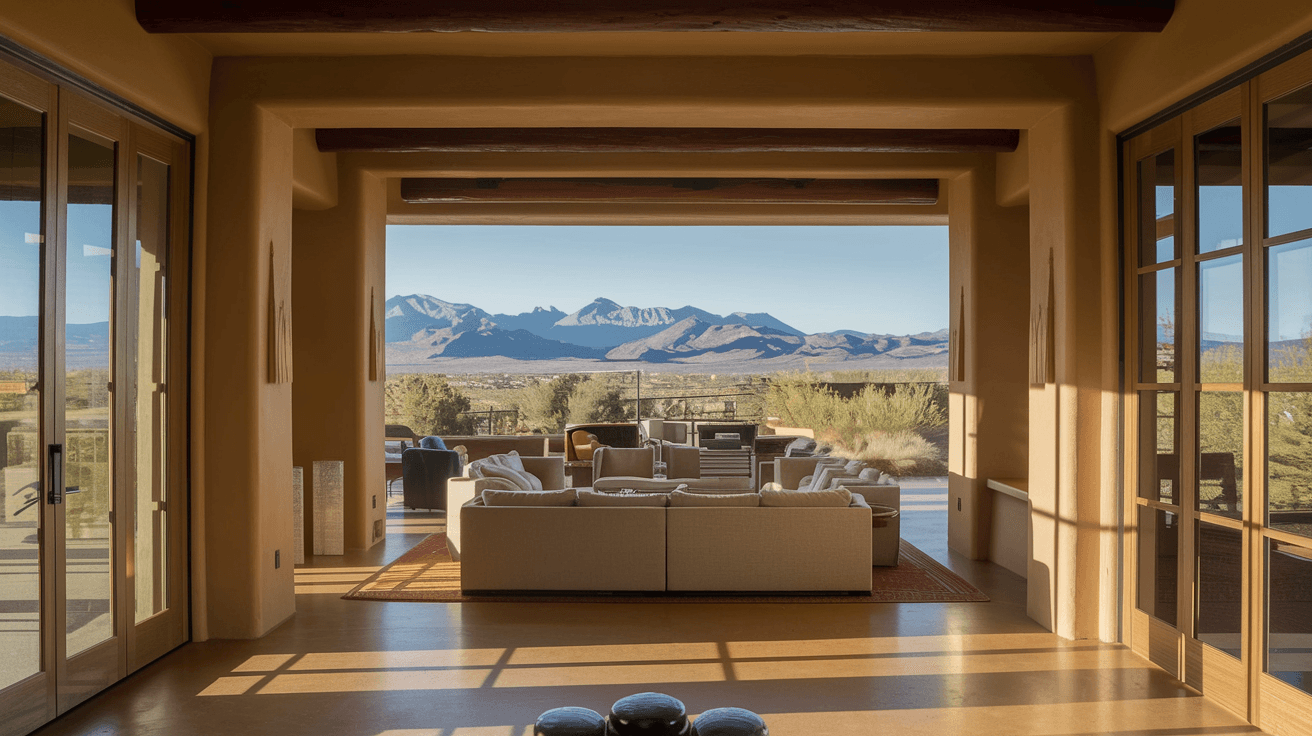
- •Four to five bedrooms with primary suites that open to private patios or mountain-facing balconies
- •Chef's kitchens with high-end appliances, large islands, and custom cabinetry
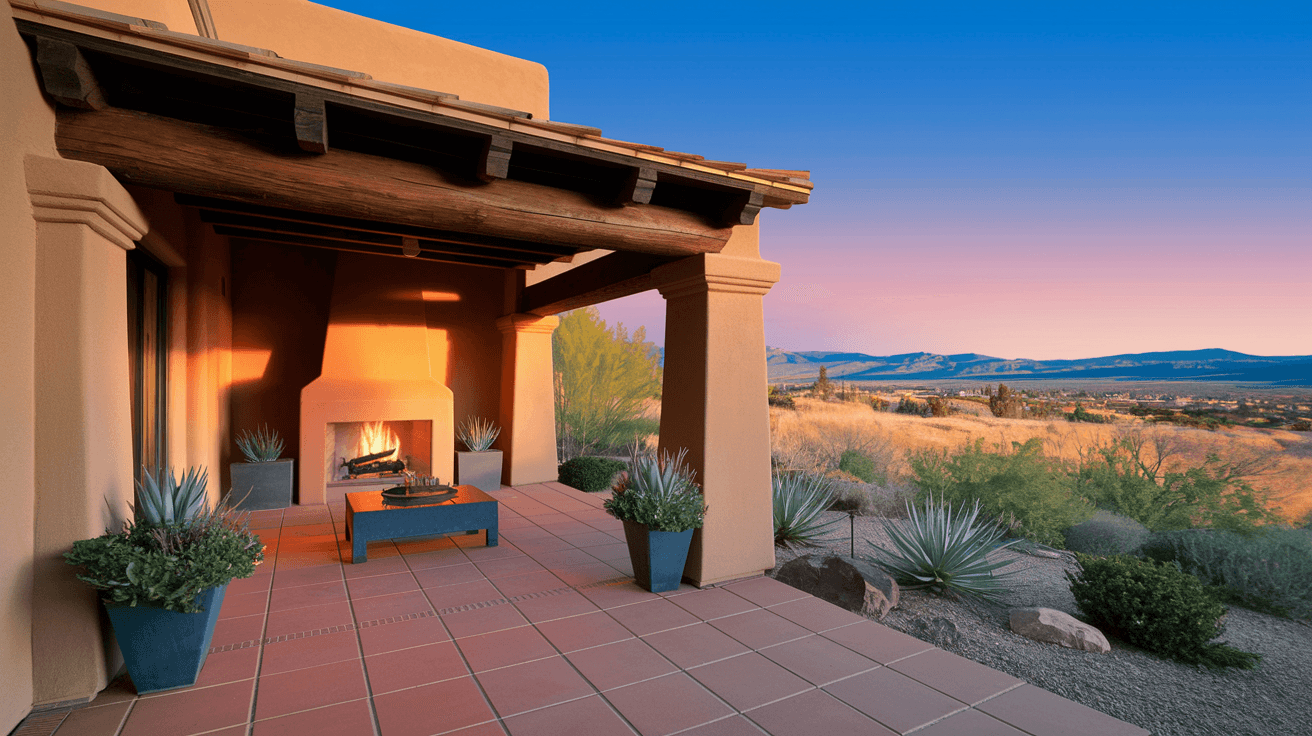
- •Outdoor living spaces designed for Albuquerque's 310-plus days of sunshine, often including covered portals, outdoor kitchens, and fire features
- •Three-car garages, which matter in a neighborhood where many residents have recreational vehicles, motorcycles, or simply value the storage
- •Smart home systems and energy-efficient construction that reflects how thoughtfully these homes were built
- •Finished basements or casitas that serve as guest quarters, home offices, or rental income potential
That package, in this setting, at this price, is genuinely hard to find. The Taylor Team has walked hundreds of homes in these neighborhoods, and the value density in this price range relative to comparable markets is something we talk about with clients regularly.
Living in the Foothills: What Daily Life Actually Looks Like
One thing that doesn't always come through in listing descriptions is what it's like to actually live in these neighborhoods day to day. So here's the honest version.
Your mornings start with the Sandias turning pink. This is not a cliche, it is a daily phenomenon that residents in the foothills experience in a way that the rest of the city only glimpses. The Sandia Mountains catch the alpenglow at dawn and at sunset in a way that is genuinely arresting even after years of living here.
For coffee and errands, you're a short drive down Tramway to Lowe's on Montgomery, or heading south toward Uptown and the Coronado Center area. The Trader Joe's on Uptown Boulevard and Whole Foods on Louisiana are the typical grocery runs for foothills residents. For a proper breakfast or lunch, Flying Star on Tramway is the neighborhood spot that has earned its reputation over decades.
The trail access from these neighborhoods is exceptional. The Elena Gallegos Open Space at the end of Simms Park Road gives you direct access to the lower Sandia foothills trail network. From there, you can connect to the Pino Trail, the Embudo Trail, and eventually the crest trail system. Residents who are serious about hiking or trail running treat this access as a core part of their daily life.
The Insider Detail Most Buyers Don't Ask About
Here's something that only comes up in conversation with people who actually live in these neighborhoods: wind. The foothills, particularly the upper streets of Sandia Heights and the eastern edges of High Desert, can see sustained winds that the lower valley doesn't experience. Spring in Albuquerque is windy citywide, but up here it can be notably stronger. When you're evaluating a property, pay attention to the orientation of the outdoor living spaces. Homes with portals and patios on the south or west sides, sheltered from the prevailing westerlies, are meaningfully more comfortable for outdoor use nine months of the year. This is the kind of thing that doesn't show up in a listing but absolutely affects how you live in the home.
If you're working with The Taylor Team, this is exactly the kind of conversation we have before you ever write an offer.
How to Approach Buying High Desert Albuquerque Homes in This Market
Given the inventory levels and the pace at which well-priced homes move, preparation is everything. Here's what actually moves the needle for buyers in this segment:
- •Get your financing fully underwritten before you tour, not just pre-qualified. Sellers in this price range expect serious buyers to show up with serious documentation.
- •Know your non-negotiables before you start. In a market with limited inventory, waiting for the perfect combination of every feature will leave you watching other buyers close on homes you loved.
- •Understand the HOA in High Desert specifically. The covenants affect everything from exterior paint colors to landscaping to outbuildings. This is not a negative, it's what preserves the neighborhood's character and your investment, but you need to know what you're agreeing to.
- •Build in budget for a thorough inspection. Foothills homes deal with specific conditions including wind, UV exposure, and the expansion and contraction of adobe and stucco that demand attention.
- •Think about resale from day one. The homes that hold and grow value in these neighborhoods are the ones with the best view corridors, the most thoughtful outdoor living design, and the highest quality interior finishes.
The Taylor Team has been working this specific slice of Albuquerque real estate long enough to know which streets have the best views, which properties are priced to move versus priced to test the market, and which listings have been sitting because of fixable issues versus fundamental problems. If you're serious about buying in High Desert or Sandia Heights, reach out to us before you start touring on your own. The conversation costs nothing and it will save you time.
The Long View on Foothills Real Estate in Albuquerque
Albuquerque as a whole is in a period of real economic momentum. The expansion at Kirtland Air Force Base, the growth of Intel's presence in Rio Rancho, the film industry's continued investment in the city, and the steady in-migration from higher-cost Western cities have all contributed to a housing market that is fundamentally stronger than it was a decade ago.
The foothills neighborhoods benefit from all of that growth while remaining insulated from the volatility that affects entry-level price points. Luxury homes in Albuquerque, and High Desert and Sandia Heights specifically, have demonstrated consistent appreciation that outpaces the metro median over long holding periods. The scarcity of buildable land in the foothills, constrained by the Sandia Mountain Wilderness to the east and the existing developed footprint to the west, creates a natural ceiling on new supply.
That supply constraint is part of what makes this market compelling for long-term holders. There are only so many addresses with these views at this elevation inside the city limits of Albuquerque. That number is not going up.
For buyers who are ready to move from thinking about the foothills to actually living there, the current market offers real opportunity alongside real competition. The homes are out there. The value is real. The lifestyle is everything residents say it is. The question is whether you're positioned to act when the right property comes to market.
That's where we come in.
Want more insider intel?
Subscribe to get market updates and new articles delivered to your inbox.