High Desert Albuquerque Homes: Custom Builds, Gated Streets, and What Buyers Actually Pay for Views
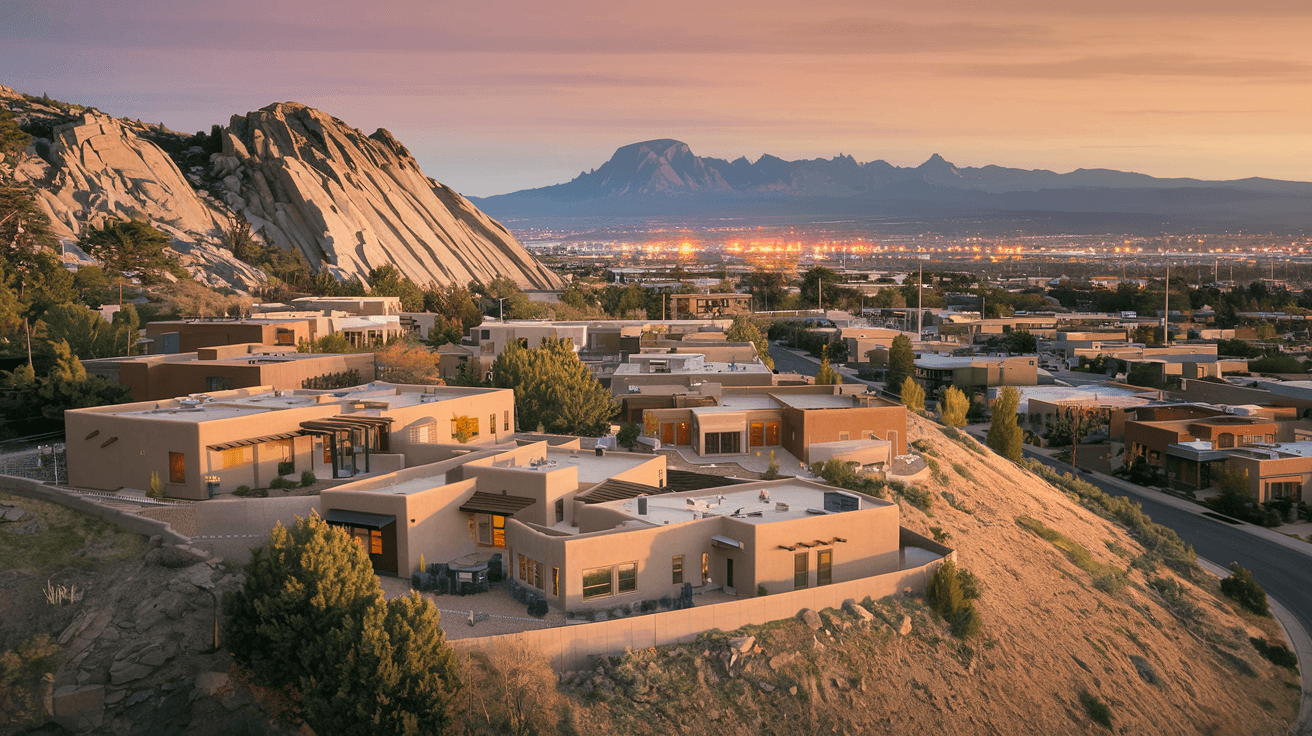
There is a moment that happens to almost every buyer who visits High Desert for the first time. They turn off Montgomery Boulevard, wind up through the foothills on Glenwood Hills Drive, pass through a gated entrance, and then they stop talking mid-sentence. The Sandia Mountains are right there, filling the windshield, and the city spreads out below like someone spilled light across the valley floor. It happens every time.
High Desert Albuquerque homes occupy a category that is genuinely different from the rest of the city's real estate market. This is not a marketing claim. The numbers, the architecture, the land, and the lifestyle all point to the same conclusion: buyers who choose High Desert are making a specific, considered decision to live differently in Albuquerque. Understanding what they are actually buying, and what they are paying for, is what this post is about.
High Desert Albuquerque Homes: Location, Layout, and What Makes This Neighborhood Different
High Desert sits in the northeast foothills, tucked between the Sandia Mountain Open Space and the more established neighborhoods of Tanoan and Glenwood Hills. The development itself began in the late 1990s and continued building through the 2000s, which means the architecture reflects a particular era of custom homebuilding: generous square footage, Pueblo Revival and Territorial styles done with real intention, and lots that were planned around view corridors rather than just maximizing density.
The neighborhood is managed through a homeowners association that maintains the gated entries, the extensive trail system, and the overall aesthetic standards. There are multiple gated sections within High Desert, and buyers often do not realize this until they start touring. The gates on Mirehaven and the entries deeper into the foothills feel different from each other, and the price points reflect those differences.
What the physical location actually delivers:
- •Immediate access to the Paseo de las Montanas trail, which connects directly into the Elena Gallegos Open Space
- •Elevation that puts most homes between 6,000 and 6,800 feet, meaning cooler summers than the valley floor
- •East-facing orientation for the Sandia views and west-facing orientation for Rio Grande valley and volcano views, depending on the specific lot
- •Proximity to Tramway Boulevard corridor without being on it
- •About 15 minutes to Uptown, 20 minutes to Nob Hill, and a straight shot down Tramway to I-40
The school district assignment is APS with La Cueva High School, which consistently ranks among the strongest public high schools in New Mexico. For families, that is a significant part of the value calculation.
High Desert Neighborhood NM Real Estate Prices: What the Numbers Actually Look Like
The median home price in High Desert sits around $760,000. To put that in context, the Albuquerque metro median is approximately $385,000. Buyers in High Desert are paying roughly double the metro median, and the question worth asking honestly is whether the premium is justified or whether it is purely psychological.
The honest answer is: it depends on the specific property, and the range within High Desert is wide enough that you need to look carefully.
At the lower end of the market, you will find townhome-style attached units and smaller single-family homes in the $500,000 to $600,000 range. These tend to be in sections with less dramatic views or with more constrained lot sizes. They still carry the gated access, the trail connectivity, and the La Cueva school assignment, which makes them genuinely competitive for what they offer.
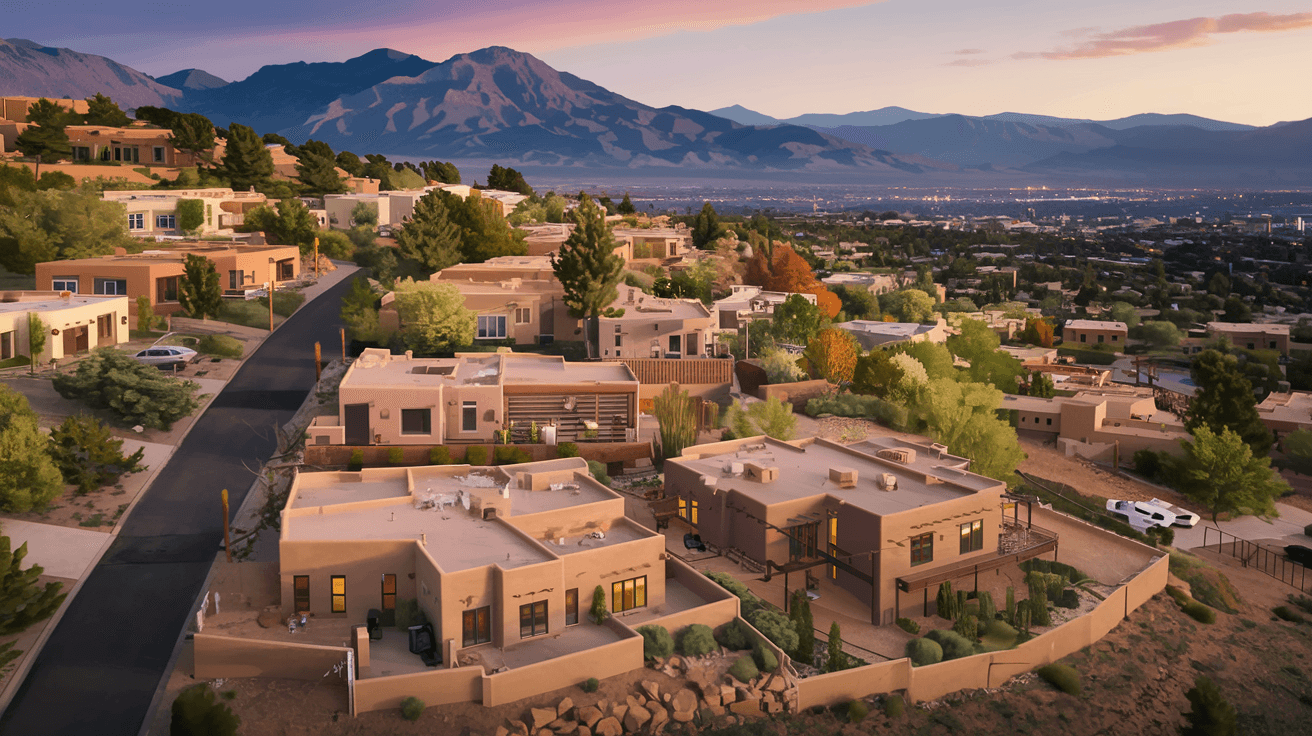
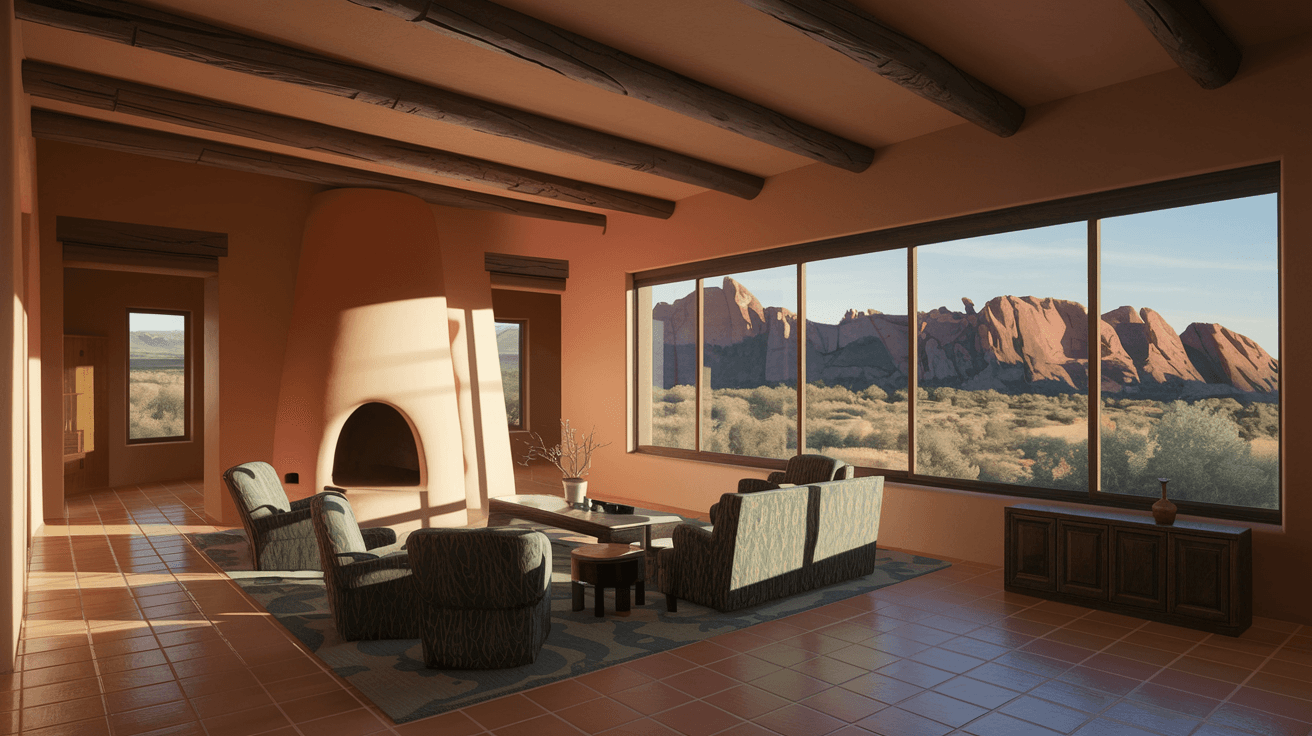
The mid-range, roughly $700,000 to $950,000, is where most of the custom single-family inventory lives. These homes typically run 3,000 to 4,500 square feet, sit on lots between a quarter acre and half an acre, and were built with specific attention to how the living spaces orient toward the views. Open-plan great rooms with floor-to-ceiling windows facing the Sandias are standard, not a selling point.
Above $1 million, the inventory thins out but does not disappear. There are estate-scale custom homes in High Desert that push past $2 million, and they tend to share a few characteristics: larger land, more aggressive architectural statements, and positions on the ridgeline that make the views genuinely extraordinary.
“The list-to-sale ratio across Albuquerque sits at 97.8%, meaning sellers are getting close to asking price. In High Desert, well-positioned homes with strong views often see that ratio hold or exceed it, because the buyer pool for this neighborhood comes in informed and motivated.
What drives price variation within High Desert:
- •View quality and orientation (Sandia-facing lots command a measurable premium)
- •Lot position relative to the ridgeline
- •Age and condition of the home, since some original builds are now 20-plus years old
- •Interior finish level, which varies enormously in custom construction
- •Proximity to the trail access points
- •Whether the home is in a section with additional gate layers
With about 34 days on market as the metro average, High Desert homes that are priced correctly and show well move in a similar timeframe. Overpriced listings, particularly those banking on view premiums without the condition to match, tend to sit.
Luxury Homes High Desert ABQ: Custom Architecture and What Buyers Are Getting
The word "custom" gets used loosely in real estate, but in High Desert it means something specific. A meaningful portion of the housing stock was designed by architects for individual clients, not built speculatively by production builders. That distinction shows up in the details.
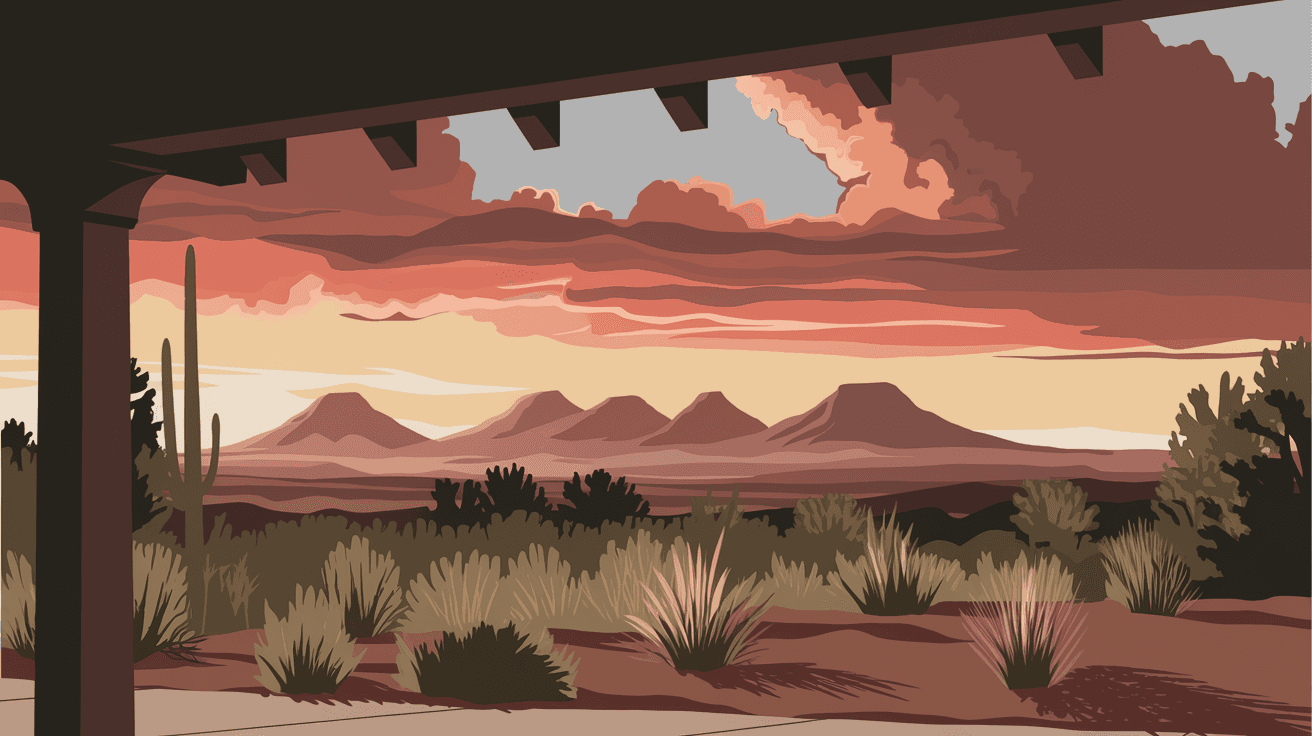
You will find homes here with passive solar design that actually functions, because the architect thought about the sun angles. You will find interior courtyards that create private outdoor living spaces protected from the afternoon wind. You will find portal designs that frame the Sandia Mountains the way a gallery frames a painting. These are not accidents.
The dominant architectural styles are Pueblo Revival and Territorial, with some Contemporary and Santa Fe Modern mixed in, particularly in the newer builds. The HOA guidelines maintain consistency without being oppressive, which is why the neighborhood has a coherent visual identity without looking like a theme park.
Common features in mid-to-upper range High Desert homes:
- •Vigas and latillas in great rooms and primary suites
- •Saltillo or large-format tile throughout main living areas
- •Kiva fireplaces, sometimes multiple per home
- •Outdoor portal spaces designed as true living rooms
- •Attached casitas or guest suites, popular with multi-generational buyers
- •Three-car garages as a standard expectation
- •Landscaping with native plants, desert willow, chamisa, and ornamental grasses that survive without heavy irrigation
One thing buyers sometimes underestimate is the maintenance profile of custom adobe and stucco construction at this elevation. The freeze-thaw cycles in the foothills are real, and stucco requires attention. Buyers coming from other regions sometimes expect a lower-maintenance situation than they find. A good inspection and a conversation with a local contractor before closing is worth the time.
The View Premium: What Buyers Actually Pay for Sandia Mountain Sightlines
This is the question that comes up in almost every High Desert conversation, and it deserves a direct answer. Views in High Desert carry a real price premium, and that premium is not small.
Comparable homes within the same section of the neighborhood, with similar square footage, age, and finish level, can vary by $75,000 to $150,000 or more based primarily on view quality. A home positioned on a lot where the Sandias fill the eastern horizon commands more than a home two streets over where the view is partially screened by other rooflines.
“Buyers who try to negotiate away the view premium on a well-positioned High Desert home usually do not win that negotiation. Other buyers who understand exactly what they are looking at will pay for it.
The west-facing lots, which look out over the Rio Grande bosque and the five volcanoes, have their own buyer pool. Watching the sun set over the West Mesa from a High Desert portal, with the volcanoes silhouetted against an orange sky, is a specific experience that Albuquerque does exceptionally well. Those lots are not priced as aggressively as the Sandia-facing ones, but they are not discounted either.
The insider tip worth knowing: The lots along the upper sections of High Desert Drive and the streets that branch off toward the open space boundary tend to have the cleanest unobstructed views, because the open space behind them ensures nothing will ever be built to block the sightlines. Buyers who are serious about protecting their view investment should ask specifically about what is adjacent to the eastern and northern boundaries of any lot they are considering. The Elena Gallegos Open Space is permanent. Another custom home is not.
High Desert Albuquerque Homes for Sale: What the Current Market Means for Buyers
The Albuquerque metro currently has around 3,200 active listings and roughly 3.9 months of inventory. That is a market that still favors sellers in most price ranges, though it has softened slightly from the intensity of 2021 and 2022.
In the High Desert neighborhood NM real estate market specifically, inventory tends to be constrained because turnover is low. People who buy in High Desert frequently stay for a long time. The neighborhood attracts a mix of established professionals, physicians and healthcare executives from the UNM Health campus and Presbyterian, retirees who want trail access and single-level living, and out-of-state buyers relocating from California, Texas, and Colorado who find the price-to-quality ratio genuinely surprising.
For buyers considering High Desert, a few practical points:
- •New listings in the desirable price bands move quickly; being pre-approved and ready to act is not optional
- •The HOA fees vary by section and are worth confirming early, as they affect the monthly cost picture
- •Some sections have rental restrictions, which matters for buyers considering short-term rental income
- •The elevation means snow in winter, which most buyers find charming until they are dealing with an icy driveway on a steep lot
- •Home warranties on custom construction can be harder to obtain than on production-built homes; factor that into due diligence
If you are serious about luxury homes in High Desert ABQ, the best move is to spend time in the neighborhood at different times of day before making any offers. Drive it at sunset. Walk the Paseo de las Montanas on a weekday morning. Sit on a portal facing east when the Sandias turn watermelon pink at dusk, which locals call the Sandia Watermelon and which happens reliably enough that you can plan for it. That experience is part of what you are buying, and it is worth understanding before you commit.
Working with a Real Estate Team Who Knows High Desert
High Desert is not a neighborhood where a general Albuquerque search is enough. The variation between sections, the nuances of view orientation, the HOA structure, and the custom construction considerations all require someone who has spent real time there.
The Taylor Team at Berkshire Hathaway HomeServices works in this market regularly and knows which lots are positioned for long-term view protection, which sections have the most active resale history, and how to evaluate custom construction quality in a way that protects buyers from expensive surprises. If you are starting to think seriously about High Desert Albuquerque homes, reach out and have a real conversation about what you are looking for. The neighborhood has a lot to offer, and matching the right buyer to the right property in a place like this makes a genuine difference.
High Desert is one of those neighborhoods that earns its reputation honestly. The views are real, the architecture is thoughtful, the trails are excellent, and the community has a stability that comes from people choosing to stay. At a median of $760,000 in a metro where the overall median is $385,000, buyers are paying a premium. But they are also getting something specific and irreplaceable, and that is the conversation worth having before you start your search.
Want more insider intel?
Subscribe to get market updates and new articles delivered to your inbox.