
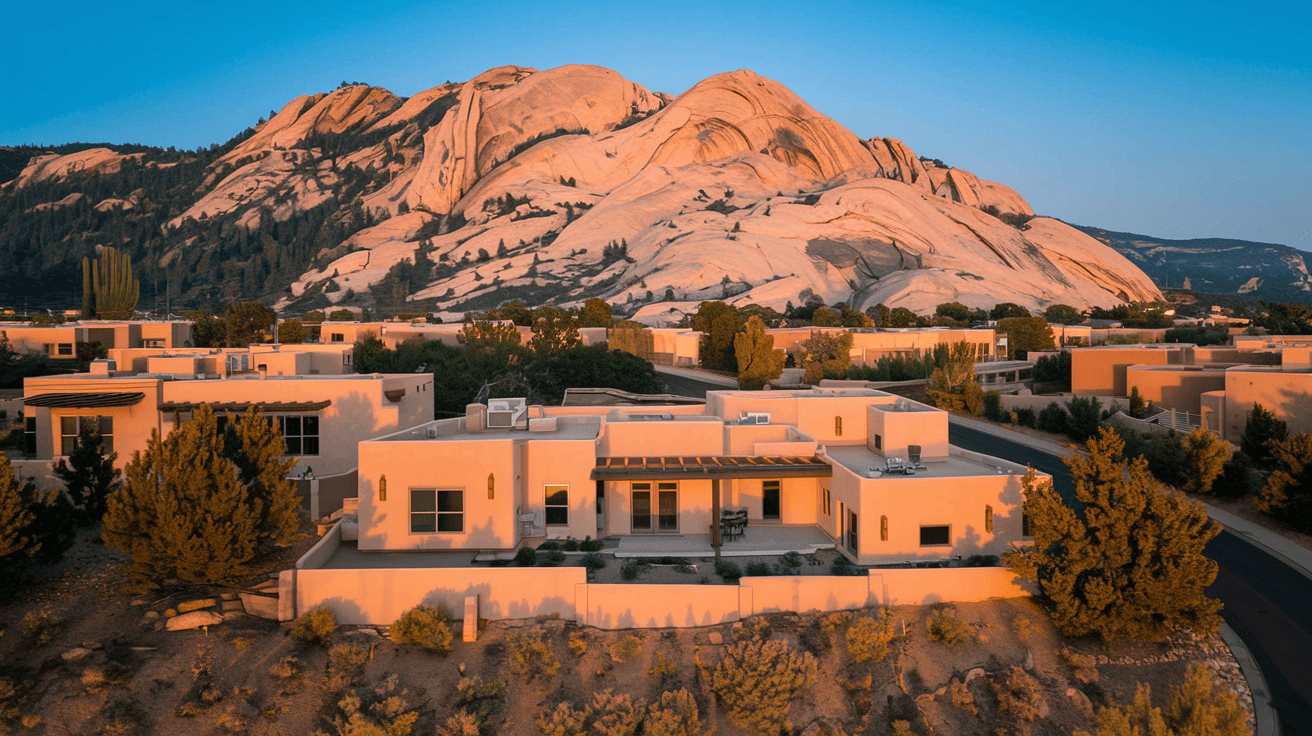
Buying a Home Near Sandia Mountains: Lot Size, Views, and Wildlife Easements in Albuquerque's Foothills
If you have spent any time driving up Tramway Boulevard as the morning light turns the Sandias that famous watermelon pink, you already understand the pull. Buying a home near the Sandia Mountains is not just a real estate decision. It is a lifestyle shift, a daily relationship with one of the most dramatic natural backdrops in the American Southwest. But this part of Albuquerque comes with its own rulebook, and the buyers who walk in without reading it sometimes end up surprised in ways that cost real money.
This guide is for the buyer who is seriously considering the foothills, whether that means Sandia Heights proper, the estates tucked along Tramway Road, the neighborhoods off Copper Avenue NE that push toward the mountain, or the newer developments near the Elena Gallegos Open Space. Here is what actually matters when you are evaluating a property up here.
Lot Size in Albuquerque Foothills Homes: Bigger Is Not Always Better
One of the first things buyers notice when they start pulling comps in Sandia Heights is that lot sizes vary wildly, sometimes within the same street. You will see a half-acre parcel listed right next to a two-acre estate, and the price difference does not always reflect that gap the way you might expect.
Here is why that happens. A significant portion of the land up here is either constrained by slope, covered in protected rock outcroppings, or sits within a designated open space buffer. The City of Albuquerque's Foothills Protection Plan, which has been in place and evolving since the 1980s, places strict limits on how much of a lot can actually be disturbed during construction or landscaping. So when you see a listing advertising 1.8 acres, the question to ask is: how much of that is usable land?
A few things to look for when evaluating lot size in this area:
- •Slope percentage matters enormously. The city limits grading on slopes over 15 percent, and anything over 30 percent is generally considered undevelopable.
- •Rock outcroppings on the lot may be protected under the Foothills Zoning Overlay and cannot be removed.
- •Setback requirements in the foothills are often more generous than in the valley, which eats into buildable square footage.
- •Some lots have deed restrictions from the original subdivision that go beyond city code, particularly in older parts of Sandia Heights established in the 1970s.
- •Water rights and drainage easements are common up here and can cut right through what looks like usable backyard on a plat map.
The practical takeaway: always pull the plat, always look at the topographic survey if one exists, and do not assume that a large lot number translates to a large usable yard. Your Taylor Team agent can help you read these documents before you fall in love with a property that cannot physically accommodate the pool or casita you are planning.
How View Corridors and Scenic Easements Affect Sandia Heights Real Estate
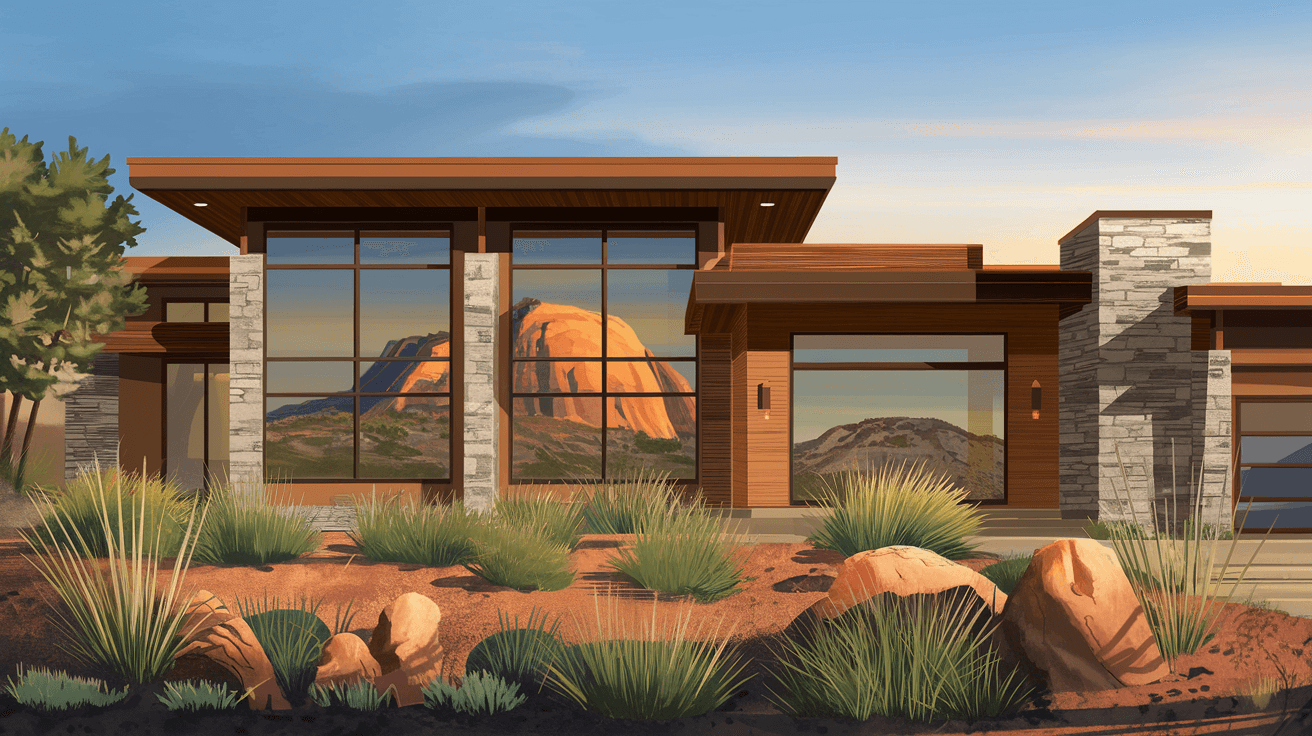
Views are currency up here. A home on Juniper Hill Road NE with an unobstructed west-facing view over the Rio Grande valley and the volcanic escarpment is worth meaningfully more than an identical home two streets over where a neighbor's addition has blocked the sightline. But views are not always protected, and buyers sometimes assume they are buying a permanent panorama when they are actually buying a snapshot of today's conditions.
View corridor easements do exist on some foothills properties, recorded in the deed and enforceable. These restrict what a neighboring property owner can build or plant in a defined zone that protects your line of sight. If the listing you are considering advertises protected views, the first thing to do is verify that claim in the title documents, not just take the seller's word for it.
“The Sandias change every hour of the day. Buyers who visit a property once at noon and make an offer have missed the show. Come back at sunset. Come back when it snows. The mountain will tell you whether this is your house.
Beyond formal easements, the Albuquerque Open Space Division controls a significant amount of land immediately adjacent to many foothills neighborhoods. The Elena Gallegos Picnic Area and the adjacent Embudo Canyon open space essentially function as a permanent view buffer for homes that back up to them. That is a genuine advantage, but it also means your backyard is a public trail corridor, which has its own implications for noise and privacy.
A few specific view-related considerations for foothills buyers:
- •West-facing views toward downtown and the West Mesa volcanoes are the most consistently dramatic and tend to command the strongest premiums.
- •East-facing homes that look directly into the mountain face get spectacular close-up granite views but lose direct afternoon light earlier in the day.
- •Mature native vegetation like chamisa, Apache plume, and juniper can grow quickly and eventually obstruct low sightlines, even on your own property.
- •The Sandia Peak Tramway corridor creates a defined zone of restricted development that indirectly protects views for homes near Tramway Road NE.
Wildlife Easements and Open Space Buffers Near the Sandia Mountain Foothills
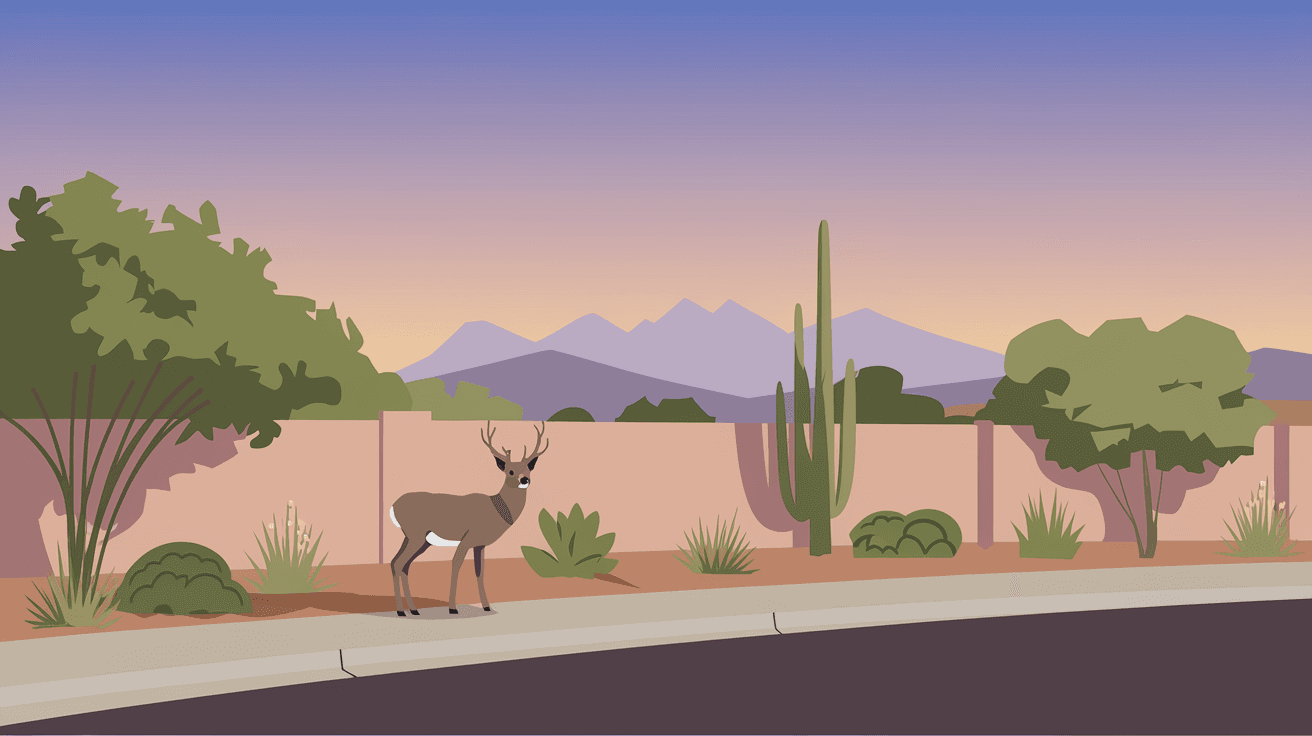
This is the section that surprises buyers most, especially those coming from out of state. The Sandia Mountains are home to black bears, mountain lions, mule deer, coyotes, and a healthy population of rattlesnakes. The New Mexico Department of Game and Fish, along with the City of Albuquerque Open Space division and the Cibola National Forest, all have overlapping jurisdiction over how development interacts with wildlife movement through this area.
Wildlife movement corridors are mapped and taken seriously in the foothills. Some properties have recorded easements that prohibit fencing configurations that would block wildlife passage. Others sit adjacent to mapped corridor land where you cannot build structures within a certain distance of the boundary. This is not hypothetical. Buyers have purchased properties here, started planning a perimeter wall, and discovered mid-permit that a wildlife easement restricted their design.
Here is the insider tip that most buyers do not hear until after closing: the City of Albuquerque's Open Space office maintains a free pre-consultation service where you can bring a plat and a proposed site plan before you buy, and they will tell you what wildlife or open space restrictions affect that parcel. Almost nobody uses this. The buyers who do use it either avoid a problem property or negotiate from a much more informed position.
Additional wildlife and easement considerations:
- •Bear-proof trash enclosures are required, not optional, in many foothills HOAs and some city zones. Budget for this if the property does not already have one.
- •Fencing restrictions are common. Many areas prohibit solid block walls above a certain height along the mountain-facing side of the property.
- •Lighting ordinances in parts of the foothills protect dark sky conditions and restrict certain types of exterior fixtures, which matters if you are planning significant outdoor lighting.
- •Some older properties have grandfathered improvements that a new owner cannot replicate under current rules. Know what you are buying and what you are not allowed to rebuild.
- •The Cibola National Forest boundary runs directly through some neighborhoods. Homes that appear to back up to private land sometimes actually border federal land, which changes the picture considerably.
Understanding Sandia Heights Real Estate Pricing and the View Premium
With a median price around $582,000, Sandia Heights sits comfortably above the broader Albuquerque market, and for good reason. But the price range within the neighborhood is wide. A modest three-bedroom on a flat lot without mountain views can trade close to the median, while a custom four-bedroom on a ridge lot with protected west views and a finished basement can push well past a million.
“In Sandia Heights, you are not just buying square footage. You are buying elevation, orientation, and access to a lifestyle that starts the moment you open your front door.
The variables that most consistently move the needle on price in this specific neighborhood:
- •Lot position on the slope and whether the home sits above or below Tramway Boulevard NE
- •View orientation and whether views are deed-protected
- •Proximity to Elena Gallegos trailhead, which adds significant walkability value for outdoor-oriented buyers
- •Custom construction quality, since Sandia Heights has a mix of 1970s-era ranch homes and contemporary custom builds, and they are priced very differently
- •HOA presence and restrictions, which vary significantly by sub-neighborhood
- •School feeder zone, with the Sandia High School feeder area being a consistent draw for families in APS
One thing worth knowing: the foothills market moves differently than the rest of Albuquerque. Inventory is genuinely limited because there is a finite amount of land up here, and the city's open space acquisitions over the past two decades have permanently removed developable parcels from the market. When a well-positioned home comes up in Sandia Heights, it tends not to sit long.
What the APS Sandia High School Feeder Zone Means for Buyers with Families
For buyers with school-age children, the Albuquerque Public Schools feeder zone for Sandia High School is a real factor. Sandia High has a strong reputation within APS, particularly for its athletics programs and its proximity to outdoor and environmental education opportunities given the school's location near the foothills.
Boundary lines in APS are worth double-checking before you close. The district has adjusted feeder boundaries over the years, and not every address in Sandia Heights feeds into the same middle school. A quick call to APS or a check of their current boundary map will confirm where a specific address lands. Your agent should be able to walk you through this.
For buyers considering private school options, Bosque School on Bosque School Road NW and Albuquerque Academy on Wyoming Boulevard NE are both reasonable commutes from Sandia Heights and are worth factoring into your location decision if that is relevant to your family.
Working with a Local Agent Who Knows the Foothills Before You Make an Offer
The foothills are not a market where a generalist agent serves you well. The combination of open space adjacency, wildlife easements, slope restrictions, view corridor questions, and custom construction variables means you need someone who has been inside these homes, walked these lots, and read enough foothills plat maps to know what the red flags look like.
When you are ready to start seriously looking at Albuquerque foothills homes for sale, the due diligence list is longer than it is for a comparable home in the Northeast Heights or Rio Rancho. That is not a reason to avoid the area. It is a reason to go in prepared.
The Taylor Team works this market regularly and knows which streets give you the best shot at genuine mountain views, which subdivisions have the most restrictive wildlife easement language, and where the best value pockets are hiding in a neighborhood that most buyers assume is uniformly expensive. If you are thinking about making a move toward the mountain, reach out and let us walk you through what we are seeing right now in the foothills market.
Buying near the Sandias is one of those decisions that, once made, people rarely regret. The morning light on the granite, the smell of pinon after a monsoon rain, the coyotes calling across the arroyo at dusk. It is genuinely unlike living anywhere else in Albuquerque. You just want to go in knowing exactly what you are buying, down to the last easement line.
Want more insider intel?
Subscribe to get market updates and new articles delivered to your inbox.