Albuquerque Outdoor Living Home Value in 2026: Covered Portales, Xeriscaped Yards, and Passive Solar Design in the New Mexico Market
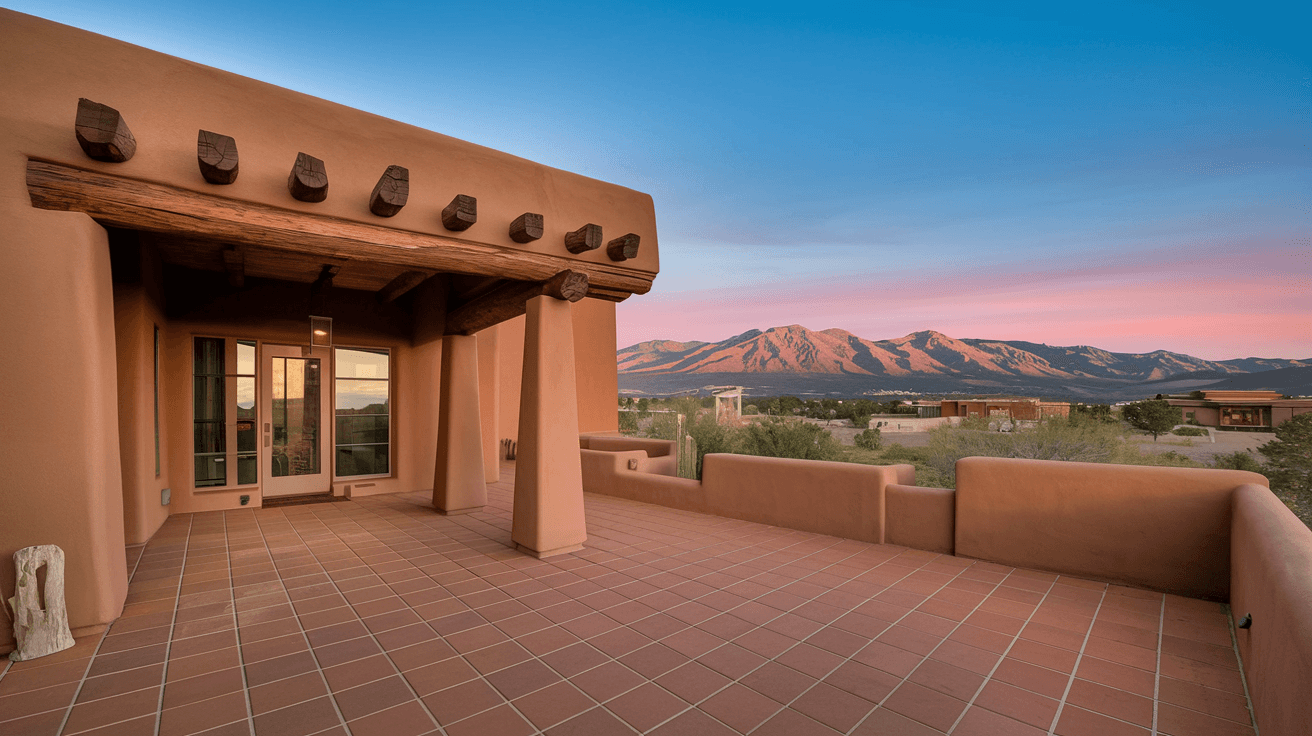
If you spend any time touring homes in Albuquerque's High Desert neighborhood or walking the trails off Tramway Boulevard near the Sandia foothills, you start to notice something. The homes that stop people mid-scroll, the ones that get multiple offers before the first open house, almost always share a few things: a deep covered portale that faces the right direction, a front yard that looks intentional and alive without demanding a gallon of water per square foot, and windows placed like someone actually thought about where the sun travels across the Sandia Mountains in December. Albuquerque outdoor living home value is no longer a soft concept. In 2026, it is measurable, it is real, and it is shaping what buyers in the $650,000 to $850,000 range are willing to pay.
This is not about curb appeal in the generic sense. This is about design choices that are specific to living in the high desert at 5,300 feet above sea level, where summer afternoons hit 98 degrees and January nights can drop to 18. The features that add real value here would not make the same sense in Houston or Portland. They make sense here because Albuquerque is Albuquerque.
Albuquerque Outdoor Living Home Value: What the 2026 Market Is Actually Rewarding
The Taylor Team has watched this shift accelerate over the past two years. Buyers coming from out of state, particularly from California and Texas, arrive with a checklist shaped by their previous climate. They want outdoor entertaining space. They want low-maintenance landscaping. What surprises them is how much more intentional that outdoor space has to be here to actually function well.
A patio without shade in Albuquerque is essentially unusable from late May through early September between noon and 4 p.m. A yard full of Kentucky bluegrass in a city where the Rio Grande water table is a genuine long-term concern is starting to feel like a liability rather than an asset to a growing number of buyers. The market is reflecting both of those realities.
In High Desert specifically, where median prices are hovering around $750,000, homes with professionally designed outdoor living spaces that account for climate are consistently outperforming comparable properties without them. We are talking about a measurable difference in days on market and in final sale price, not a rounding error.
Covered Portales in New Mexico Homes: More Than Aesthetic, It Is Functional Architecture
The portale is not a trend. It is a feature that has been part of New Mexico architecture since long before Albuquerque had a zip code. What has changed is the sophistication with which builders and remodelers are approaching them in 2026.
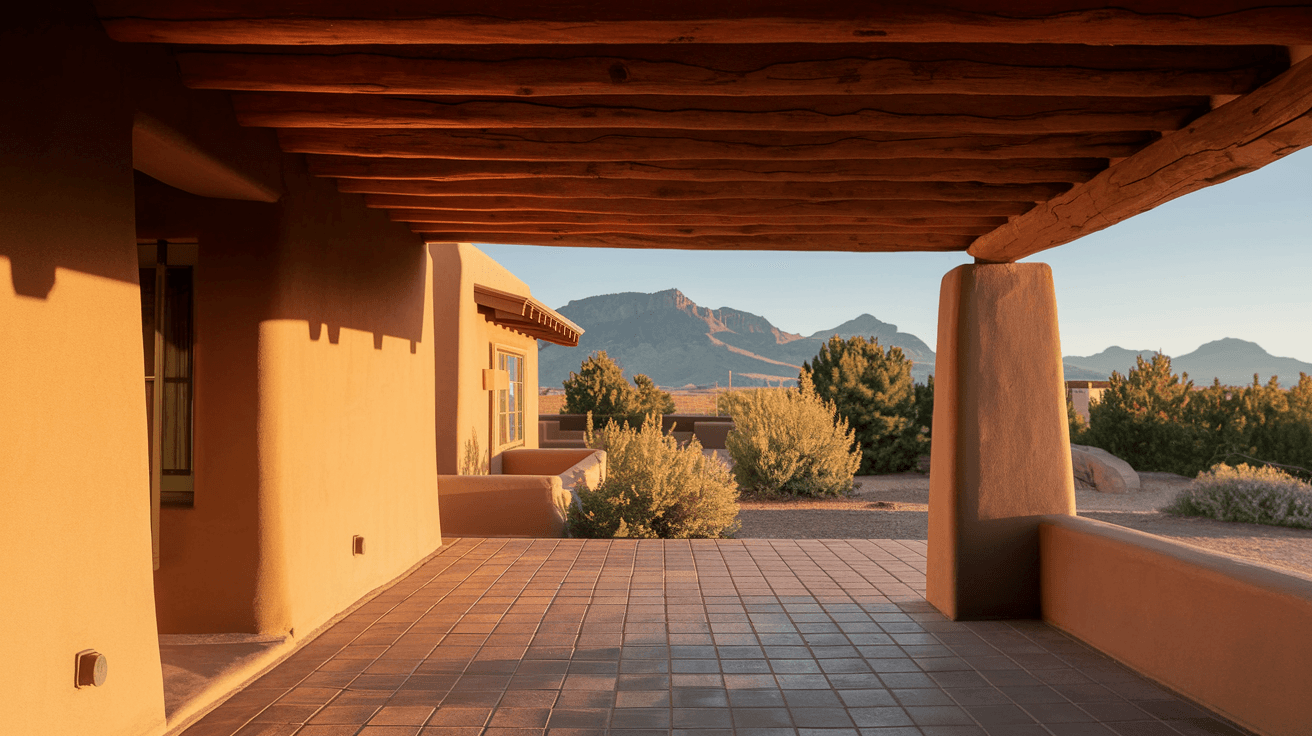
A well-built covered portale on the south or west side of a home in the Northeast Heights or High Desert does several things at once:
- •It blocks the high summer sun angle while allowing lower winter sun to warm interior spaces
- •It creates a transitional living zone that effectively extends the home's usable square footage for eight to nine months of the year
- •It protects exterior walls and windows from the UV exposure that degrades paint and seals faster here than almost anywhere in the country
- •It provides a sheltered spot during Albuquerque's monsoon season, which runs July through September and can drop an inch of rain in forty minutes
Buyers in the La Cueva High School district, which covers much of High Desert, are particularly attentive to outdoor space because families with kids are using these areas constantly. A portale with ceiling fans, an outdoor kitchen rough-in, and quality pavers is not a luxury finish at this price point. It is an expectation.
“"The covered portale is the feature I hear about most from buyers after they walk through a home. It either sold them or it was the thing they wished the house had."
The insider tip worth knowing: the orientation matters enormously, and most buyers do not think to ask about it. A portale facing due west with no shade trees catches the brutal late-afternoon sun from June through August and becomes nearly unusable. A portale with a slight south-southwest orientation, combined with a mature desert willow or two planted strategically, is comfortable well into the evening almost year-round. When you are evaluating homes in High Desert or anywhere along the Sandia foothills, walk the outdoor space at 3 p.m. on a summer day if you can. It tells you everything.
Xeriscape Yard Albuquerque Homes: Why Drought-Tolerant Landscaping Is Now a Selling Feature
There was a time not long ago when a xeriscaped front yard in Albuquerque signaled that the previous owners had given up on the property. Gravel and a cactus. That era is over.
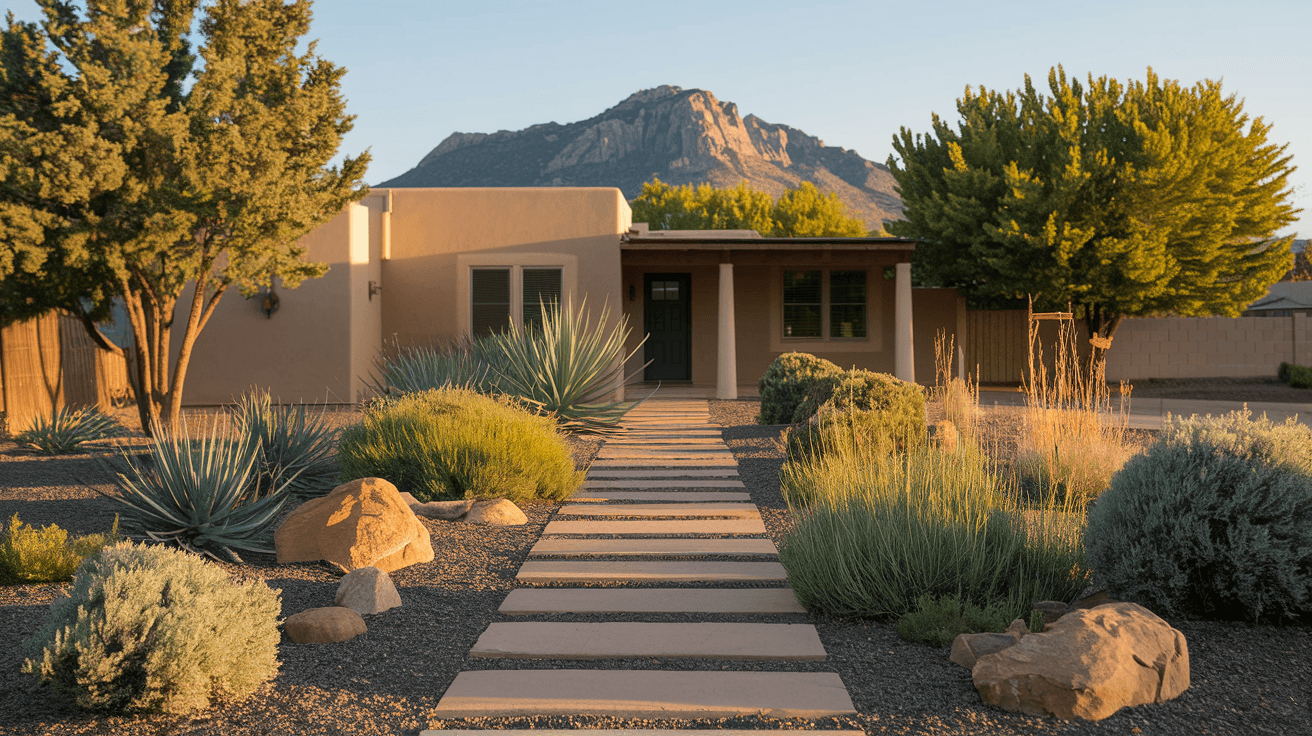
Xeriscape yard Albuquerque homes in 2026 look nothing like that. The best ones feel lush and designed. They use layered plantings of native and adapted species: Apache plume, desert marigold, blue grama grass, threadleaf sage, and globe mallow. They incorporate decomposed granite in warm earth tones that complement adobe and stucco exteriors. They have drip irrigation systems on timers that use a fraction of the water a traditional lawn requires.
The Albuquerque Bernalillo County Water Utility Authority has been running rebate programs for xeriscape conversions for years, and those programs have matured. Homeowners who completed conversions two or three years ago are now selling, and buyers are recognizing the value immediately. The practical math is not complicated:
- •A traditional Bermuda grass lawn in Albuquerque can consume 50,000 to 80,000 gallons of water per year
- •A well-designed xeriscape of the same square footage uses 20 to 30 percent of that
- •Water rates in Albuquerque have increased steadily and are expected to continue rising as aquifer pressures grow
- •Maintenance costs for a mature xeriscape are significantly lower than turf
For buyers who plan to stay in a home for ten years, the financial argument is real. For buyers who travel frequently or do not want to manage a lawn service, the lifestyle argument is equally compelling.
The design quality of xeriscaping has also improved dramatically. Landscape architects and designers working in the Northeast Heights and High Desert areas are producing front yards that photograph beautifully and hold their value through the seasons. A well-executed xeriscape in October, when the desert marigolds are still blooming against the backdrop of the Sandias turning pink at sunset, is genuinely stunning.
New Mexico Passive Solar Home Design 2026: The Feature That Pays You Back Every Month
Passive solar is not new to New Mexico. The state has been a leader in solar design research since the 1970s, and the climate here is nearly ideal for it. What is new in 2026 is how prominently New Mexico passive solar home design features in buyer conversations, especially among buyers relocating from markets where energy bills have become genuinely painful.
Passive solar in an Albuquerque context means:
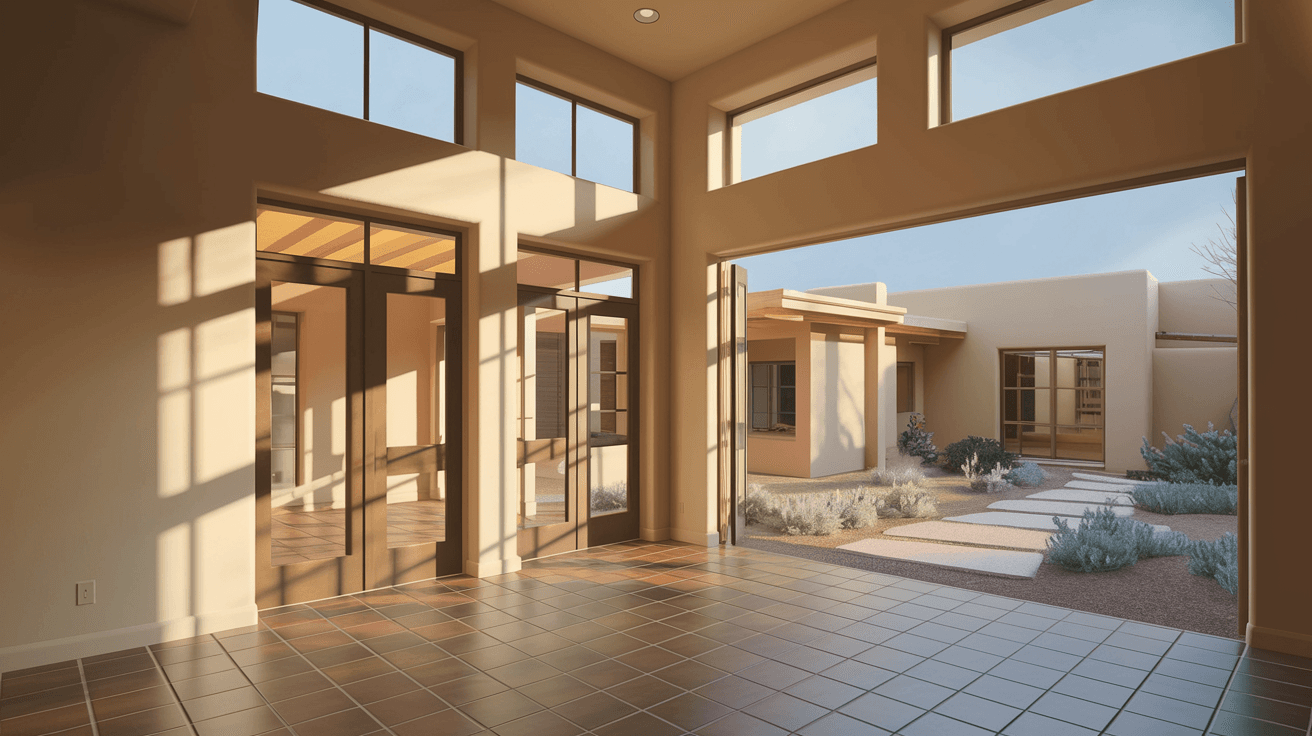
- •South-facing glazing that captures low winter sun to heat thermal mass floors, typically Saltillo tile or concrete
- •Deep roof overhangs or portales calibrated to block summer sun when the angle is high
- •Trombe walls or thick adobe and rammed earth walls that absorb heat during the day and release it slowly overnight
- •Strategic placement of deciduous trees on the south and west sides that provide summer shade and lose their leaves to allow winter sun penetration
- •Minimal north-facing glazing to reduce heat loss during cold nights
A home in High Desert that was thoughtfully designed with passive solar principles can maintain comfortable interior temperatures with significantly less mechanical heating and cooling than a comparable home that ignored orientation. In a market where buyers are increasingly sophisticated about operating costs, that matters.
“"Passive solar is not a niche feature anymore. When buyers see the utility bills on a well-designed home versus a comparable one that ignored solar orientation, the conversation changes fast."
The homes along the upper reaches of High Desert, particularly those with unobstructed southern exposures toward the Sandia foothills, are almost perfectly positioned for passive solar performance. When you combine that orientation with quality insulation, thermal mass flooring, and a covered portale that doubles as a solar shading device, you have a home that performs well in every season without asking its mechanical systems to work overtime.
If you are considering a renovation before selling, adding or improving south-facing glazing with proper overhang depth is one of the higher-return investments you can make in this market. It is also something The Taylor Team can help you evaluate and position correctly when it comes time to list.
How These Features Work Together in High Desert Albuquerque Real Estate
What makes the High Desert neighborhood particularly interesting is that these three elements, covered portales, xeriscaped yards, and passive solar design, tend to appear together in the homes that perform best at sale. They are not coincidentally linked. They are expressions of the same underlying design philosophy: build for the climate you are actually in.
A home on a street like Tramway Court or up near the Domingo Baca Arroyo trail access that has all three features tells a coherent story to buyers. It says the home was designed or updated by someone who understood Albuquerque. That coherence has value beyond the sum of the individual features.
Buyers in the La Cueva district at the $700,000 to $800,000 price point are often comparing two or three homes in the same week. The ones with outdoor spaces that are genuinely usable, yards that look intentional and require less water, and homes that stay cooler in summer and warmer in winter without running the HVAC constantly are winning those comparisons consistently.
What Sellers in Albuquerque Should Know Before Listing in 2026
If you are preparing to sell in High Desert or the broader Northeast Heights area this year, the outdoor and passive solar features of your home deserve as much attention in your listing strategy as the kitchen and bathrooms.
A few practical considerations:
- •Photograph your portale at golden hour, not midday. The warm light hitting the wood beams and the Sandias in the background is the shot that stops the scroll.
- •Document your water usage if you have a xeriscape. Year-over-year utility data is a real selling tool in this market.
- •Get an energy audit if your home has passive solar features. Being able to show buyers actual performance data, not just describe design intent, is increasingly valuable.
- •Invest in the details of outdoor spaces before listing: fresh stucco on portale columns, clean decomposed granite, functioning drip irrigation, and a few blooming native plants in pots near the entry make a significant first impression.
The buyers coming to High Desert in 2026 are doing their homework. They are reading about water scarcity in the Southwest. They are comparing energy costs. They are asking about HOA rules regarding xeriscape. Coming to market with clear answers and well-presented outdoor spaces positions your home in a category above the competition.
The Taylor Team works with sellers throughout the High Desert and Northeast Heights areas and can help you identify which pre-listing investments will move the needle in the current market. Reach out before you start spending money on updates and let us walk the property with you first.
Albuquerque outdoor living home value is not a trend heading for a correction. It is a permanent shift in how buyers in this market evaluate homes, driven by climate reality, rising utility costs, and a growing appreciation for design that is actually suited to where we live. The portale, the xeriscape, and the south-facing window are not selling points borrowed from somewhere else. They are ours, and they are worth building right.
Want more insider intel?
Subscribe to get market updates and new articles delivered to your inbox.