
Albuquerque Monsoon Season Home Buying: How Flash Flooding and Drainage Should Drive Your 2026 Purchase Decision
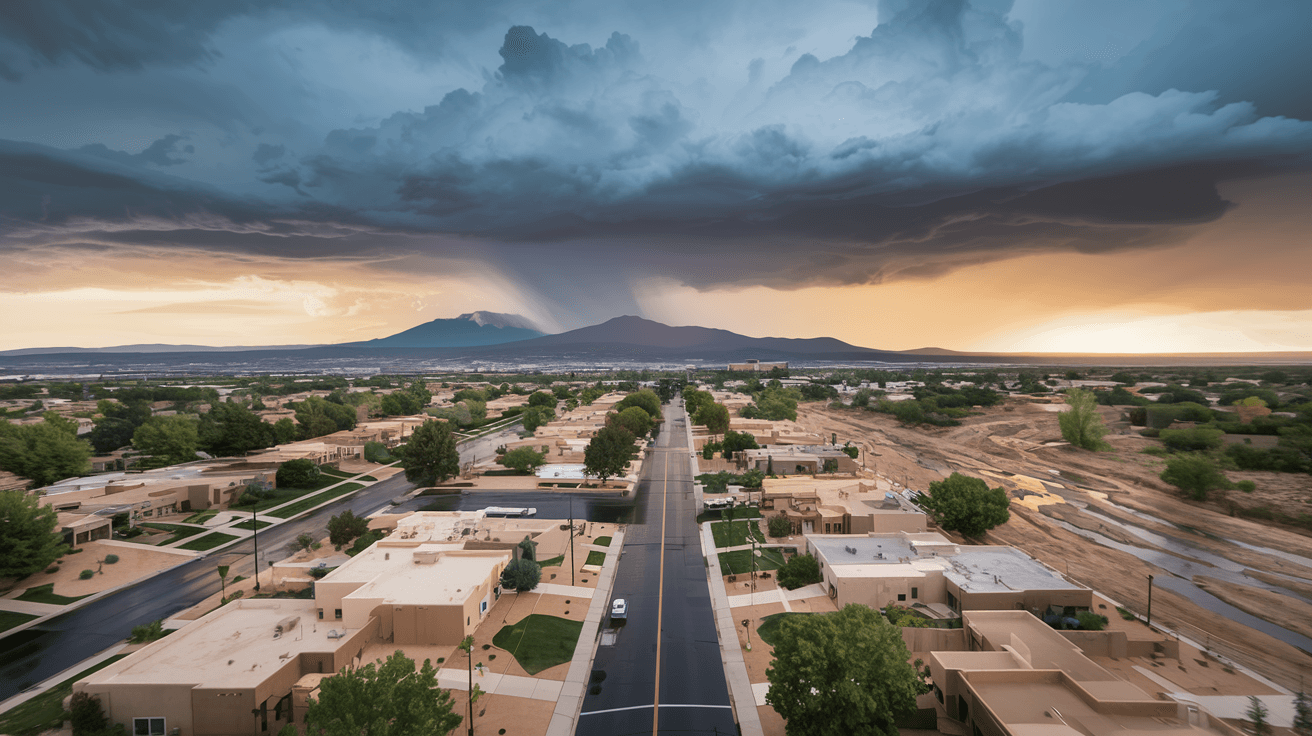
Every July, Albuquerque transforms. The sky goes from that relentless turquoise blue to a bruised purple-gray in about forty minutes, and then the rain hits like someone flipped a switch. If you have lived here long enough, you know the smell before you see the clouds. That petrichor mixing with desert dust is one of the best things about living in the high desert. But if you are shopping for a home this year or planning to buy in 2026, Albuquerque monsoon season home buying deserves serious attention before you fall in love with a backyard or a Saltillo tile floor.
The monsoon is not just a weather event here. It is a real estate variable. Where water goes when it pours two inches in ninety minutes tells you a lot about a neighborhood, a lot, and sometimes it tells you more than any inspection report will.
Albuquerque Monsoon Season Home Buying: What the Rains Actually Do to Properties
The North American Monsoon typically arrives in Albuquerque between late June and mid-July, and it sticks around through September. During peak season, afternoon storms can drop between one and two inches of rain in under two hours. On hardpacked desert soil and paved surfaces, that water has nowhere to go except downhill, fast.
Flash flooding in Albuquerque is not a fringe event. The City of Albuquerque maintains an extensive network of arroyos, those concrete-lined and earthen channels you see cutting through neighborhoods, specifically to manage this runoff. But the system is only as good as the grading, the maintenance, and the elevation of the property in question.
Here is what buyers need to understand about how the monsoon interacts with homes:
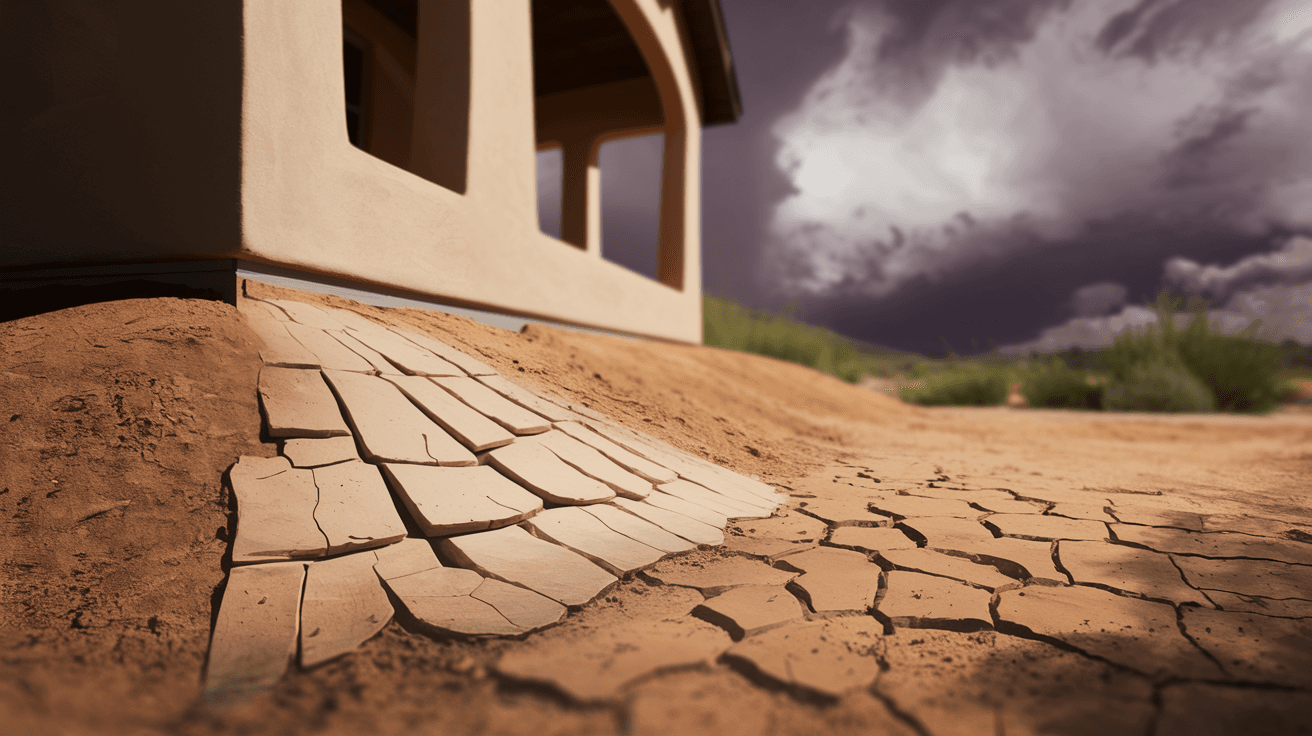
- •Soil expansion: Albuquerque's clay-heavy soils in many areas swell when wet and shrink when dry, which is a primary driver of foundation cracking and door frame shifting
- •Roof drainage failures: Flat and low-slope roofs common in adobe and pueblo-style homes can pool water if scuppers or drains are clogged with debris from cottonwood trees
- •Window and door seal degradation: The cycle of extreme heat followed by sudden cold rain accelerates the breakdown of caulking and weatherstripping
- •Stucco cracking: Water infiltration through hairline stucco cracks is one of the most underreported issues in older Albuquerque homes
- •Evaporative cooler vulnerabilities: If a swamp cooler has not been properly covered or the roof penetration is not sealed, monsoon rain finds a way inside
“"The monsoon does not care about your listing photos. It cares about your grading, your drainage, and whether the previous owner ever bothered to clean the roof drains."
Flash Flood Risk Albuquerque Neighborhoods: The Areas That Need Extra Scrutiny
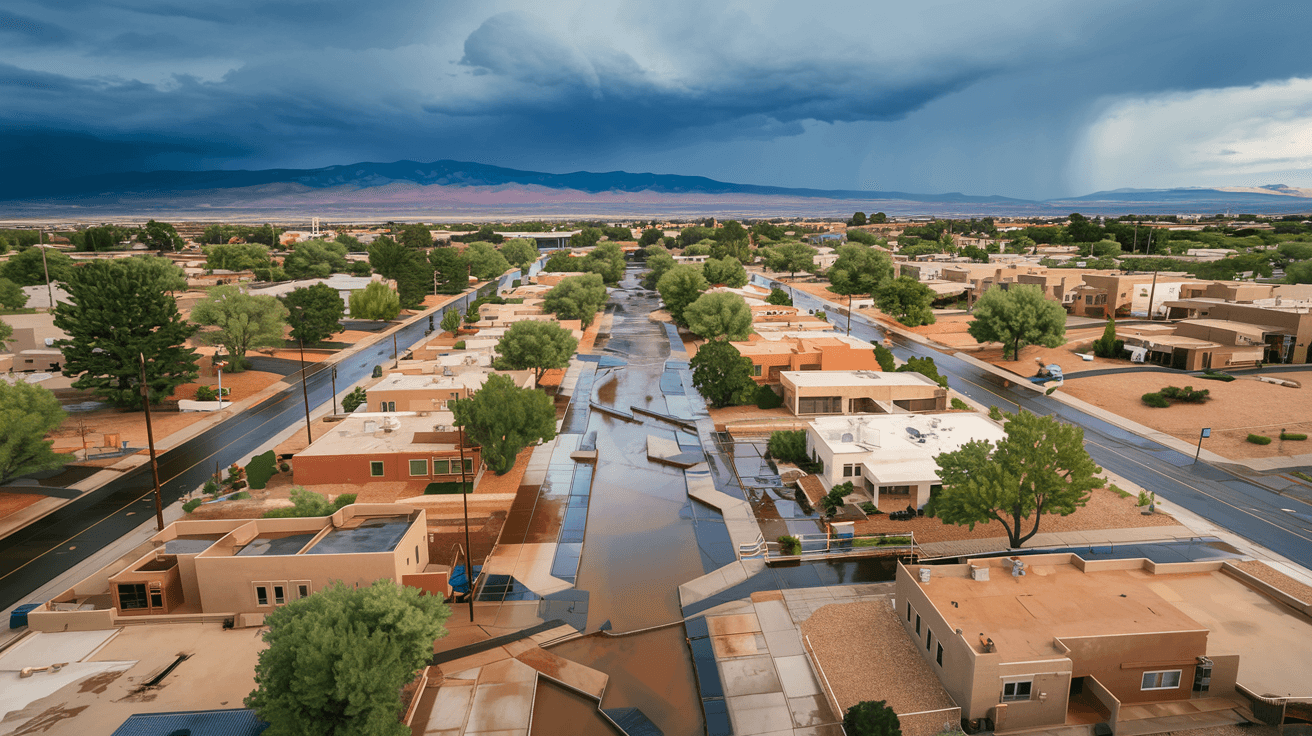
Not all Albuquerque neighborhoods carry the same flash flood risk. Elevation, proximity to arroyos, and the age of the drainage infrastructure all factor in. Knowing the terrain before you make an offer is the kind of homework that saves you from a very expensive surprise.
South Valley and Low-Lying West Side Areas
The South Valley is one of Albuquerque's most culturally rich and affordable communities. With a median home price around $265,000, it offers genuine value in a market where the metro median sits at $385,000. Families have been rooted here for generations, and the proximity to the Rio Grande bosque is genuinely beautiful.
But the South Valley's topography matters. Large portions sit in the Rio Grande floodplain, and while the Middle Rio Grande Conservancy District manages levees and irrigation infrastructure, buyers need to check FEMA flood zone maps carefully before purchasing. Properties in Zone AE carry mandatory flood insurance requirements that can add $800 to $2,000 or more per year to your carrying costs. That math changes the affordability picture significantly.
The Atrisco area along Arenal Road and properties west of the Rio Grande near Isleta Boulevard warrant particularly close attention. During heavy monsoon events, low points in these neighborhoods can see standing water that lingers for hours.
The North Valley and Corrales Road Corridor
Similar caution applies along Corrales Road and the North Valley near Rio Grande Boulevard. The lush, tree-lined character of these neighborhoods is part of their charm, but mature cottonwood roots can compromise older drainage lines, and the low elevation relative to nearby arroyos creates risk during high-volume rain events.
East Side Foothills: A Different Kind of Risk
The Foothills neighborhoods east of Tramway Boulevard face a different problem. Properties here sit at the base of the Sandia Mountains, and when the monsoon hammers the mountain slopes, water channels down through arroyos that feed directly into residential streets. The Copper Arroyo, the Embudo Arroyo, and others have all seen significant surge events that sent debris and water across roads and into yards.
If you are looking at homes in Tanoan, High Desert, or neighborhoods near Juan Tabo and Lomas, ask specifically about arroyo proximity and whether the property has experienced any water intrusion or drainage issues during prior monsoon seasons. A good seller disclosure will mention it. A great buyer's agent will ask even if it does not.
Albuquerque Summer Weather Real Estate: What to Look for During a Showing
The best time to truly evaluate a home's drainage and water management is right after a monsoon storm, but most showings do not happen that way. Here is how to read the signs even on a dry day in January when you are falling in love with the beam ceilings and the Sandia Mountain views.
- •Check the grading around the foundation: Water should slope away from the house at least six inches over the first ten feet. If the soil is flat or tilted toward the foundation, that is a red flag.
- •Look at the window sills and door frames for staining, efflorescence (white mineral deposits), or soft wood. These are signs water has been getting in.
- •Inspect the garage floor for water staining along the base of the walls or at the threshold. Garages are often the first place monsoon intrusion shows up.
- •Ask about the arroyo setback: Albuquerque has setback requirements for properties near arroyos, but older homes may predate current codes.
- •Look at the neighbor's yard: If the adjacent property is lower than the one you are buying, find out where their water goes during a storm.
- •Request the City of Albuquerque flood zone determination: Your lender will require this anyway, but getting it early saves time in a market where homes are averaging just 34 days on market and the list-to-sale ratio is running at 97.8%.
Insider tip: Pull up the City of Albuquerque's Wastewater Management Division arroyo map before you tour any home in the South Valley, the North Valley, or the Foothills. It is publicly available and shows you exactly which drainage channels are near a property and how they are classified. Most buyers never look at it. The ones who do are rarely surprised after closing.
Drainage Infrastructure and Home Insurance: The Financial Reality
Beyond the physical inspection, Albuquerque monsoon season home buying has real financial implications that buyers sometimes underestimate until they are sitting across from an insurance agent.
Standard homeowner's insurance policies in New Mexico do not cover flood damage. That requires a separate National Flood Insurance Program (NFIP) policy or a private flood insurance product. For homes in high-risk flood zones, that coverage is not optional if you have a mortgage. For homes in moderate or low-risk zones, it is technically optional but often wise.
Flood insurance costs vary significantly based on zone designation, elevation certificate findings, and the structure's first-floor elevation relative to the Base Flood Elevation. In some South Valley properties, buyers have been quoted $1,500 to $2,500 annually for NFIP coverage. That is real money layered on top of a mortgage payment in a market where inventory sits at roughly 3.9 months and competition for well-priced homes remains steady.
With 3,850 active listings across the metro, there are options. But the homes that look like bargains sometimes carry hidden carrying costs that only become visible when you factor in flood insurance, drainage repairs, or foundation remediation.
“"A $265,000 South Valley home is still a strong value. But add $2,000 in annual flood insurance and a $4,000 drainage correction and you are making a different financial decision than the listing price suggests."
How to Work with a Local Agent Who Knows These Streets
This is where having an agent who actually lives and works in Albuquerque makes a tangible difference. Someone who drives Coors Boulevard regularly knows which intersections pond after a storm. Someone who has walked listings in the Sawmill neighborhood or along Rio Bravo Boulevard understands what the lot grading looks like before the photos are taken.
At The Taylor Team, we have walked clients through neighborhoods during monsoon season specifically so they can see how a property behaves in real conditions. We have pointed out drainage issues that were invisible in listing photos but obvious from the street after a good July storm. That kind of local knowledge is not something you can replicate with an algorithm.
If you are planning a 2026 purchase and want to understand how flash flood risk in Albuquerque neighborhoods should factor into your search, reach out to us. We can walk you through flood zone maps, connect you with inspectors who specialize in water intrusion issues, and help you understand what the drainage infrastructure around a specific property actually looks like before you make an offer.
Albuquerque Monsoon Season Home Buying Checklist Before You Make an Offer
Before you write an offer on any Albuquerque home, especially in monsoon-sensitive areas, run through these steps:
- •Obtain a FEMA flood zone determination for the specific parcel
- •Request a flood insurance quote if the property is in Zone AE or X (shaded)
- •Drive the neighborhood after a rain event if at all possible
- •Ask the seller directly about any water intrusion history in the disclosure documents
- •Have your inspector specifically evaluate roof drainage, grading, and foundation for water-related issues
- •Check the age and condition of the stucco for hairline cracks that can let monsoon water in
- •Verify arroyo setback compliance for properties near drainage channels
- •Ask about the history of the HVAC and swamp cooler roof penetrations
Albuquerque is one of the best cities in the country to own a home. The culture, the food scene on Central Avenue, the views from anywhere in the city, the way the light hits the Sandias at sunset, none of that changes because of the monsoon. But buying smart here means buying with your eyes open to what the summer rains reveal about a property. The buyers who do that homework are the ones who call us six months after closing to say they love their home, not the ones calling with a wet garage and a repair estimate.
Want more insider intel?
Subscribe to get market updates and new articles delivered to your inbox.