Albuquerque Housing Market Report: May 2026 — Median Prices by Quadrant: Where the East Side, West Side, and River Corridor Are Heading This Summer
Albuquerque Housing Market May 2026: The Headline Numbers and What's Driving Them
The Albuquerque housing market arrived at May 2026 in a posture that defies easy labeling. It is not the frenzied seller's market of 2021 and 2022, nor is it the stalled, rate-shocked environment that briefly gripped late 2023. What we have right now is something more nuanced: a market with enough inventory to give buyers real choices, enough demand to keep prices moving upward, and enough geographic variation to make blanket statements nearly useless.
The metro-wide median sale price for May 2026 is $385,000, a 3.5% increase year-over-year from May 2025's $371,980. That headline number is stable and respectable, but it obscures meaningful divergence across Albuquerque's quadrants. The Northeast Heights and the emerging corridors near Nob Hill are behaving differently than Taylor Ranch or the North Valley. Rio Rancho is telling its own story entirely. Understanding those distinctions is what separates a smart real estate decision from an expensive one.
Active listings metro-wide sit at 3,200 homes, producing 4.1 months of supply — a figure that technically edges toward balanced market territory (traditionally defined as 5-6 months), though in practice the Albuquerque market has historically functioned as a seller's market at inventory levels well above that threshold. The average days on market is 31 days, and the list-to-sale price ratio is 97.8%, meaning homes are selling close to asking price but buyers are finding modest room to negotiate in a way that simply did not exist 18 months ago.
The macro driver remains the same one that has defined the national conversation for two years: mortgage rates. The 30-year conventional rate has been oscillating in the high-6% to low-7% range throughout spring 2026, which continues to suppress move-up buyer activity. Homeowners who locked in 3% rates in 2020 and 2021 are not listing. That rate lock-in effect is simultaneously the primary reason inventory remains constrained and the primary reason prices have not corrected meaningfully despite softer demand.
Albuquerque Housing Inventory: Is Supply Tightening or Loosening?
The inventory picture in May 2026 is genuinely mixed, and reading it correctly matters for both buyers and sellers.
Compared to May 2025, active listings are up approximately 18%. That is a meaningful increase and one that has shifted negotiating dynamics in certain price bands. Compared to April 2026, however, active listings are essentially flat — new listings coming to market are being absorbed by closed sales at a rate that is keeping the total count stable rather than building.
New listings in May: approximately 1,050 properties came to market across the metro. Closed sales: approximately 760. The gap between those two numbers is what sustains the current 4.1-month inventory figure. If closings accelerate into June — which seasonal patterns suggest they will — inventory could tighten modestly heading into the summer peak.
The $300,000 to $400,000 price tier is where inventory compression is most acute. In that band, effective months of supply drops closer to 2.8 months, and homes that are priced correctly and show well are still generating multiple offers within the first two weekends. Above $500,000, the story flips: inventory is running closer to 6.2 months, and sellers in that tier are competing for a narrower pool of buyers who have both the income to qualify and the down payment to absorb today's rates.
“The rate lock-in effect is simultaneously the primary reason inventory remains constrained and the primary reason prices have not corrected meaningfully despite softer demand. It is a paradox that defines the 2025-2026 Albuquerque market.
Year-over-year, the inventory increase has been most pronounced in the West Side — specifically in Taylor Ranch, Paradise Hills, and the newer subdivisions along Paseo del Norte west of Unser. Builders have been active in those corridors, and resale competition from new construction has lengthened days on market for existing homes priced above $380,000.
Albuquerque Home Prices by Tier: Where Competition Is Hottest
Breaking the median price down by tier reveals where buyers are concentrated and where sellers hold leverage.
$200,000 to $300,000
This tier has effectively compressed to a very narrow slice of the Albuquerque metro. Fewer than 9% of active listings fall in this range, concentrated primarily in the South Valley, portions of the International District along Central Avenue east of Wyoming, and select pockets of the West Side. Homes here move fast — average DOM under 18 days — and typically receive offers above asking. First-time buyers competing in this tier should be prepared to move within 48 to 72 hours of a new listing appearing.
$300,000 to $400,000
This is the engine of the Albuquerque market and accounts for the largest share of transactions. The median price per square foot in this tier runs approximately $192 to $215, depending on the quadrant. Northeast Heights ranch-style homes on the flatter streets between Candelaria and Montgomery are the prototypical property here: three bedrooms, two baths, a two-car garage, and enough lot for a covered patio and a patch of xeriscape. Multiple-offer situations remain common on move-in-ready homes. Dated kitchens and deferred maintenance are penalized more severely than they were in 2022, when buyers overlooked everything.
$400,000 to $500,000
This tier has absorbed much of the price appreciation from below. Buyers who were priced out of the $300s two years ago are now competing here, and the inventory is thin enough to keep conditions competitive. Average DOM in this tier: approximately 26 days. The North Valley and Nob Hill area command premium pricing per square foot in this range, as does anything within a reasonable walk of the Nob Hill stretch of Central Avenue between Carlisle and Washington.
$500,000 and Above
High Desert, Corrales, and the foothills east of Tramway anchor this tier. Demand exists but is rate-sensitive. Average DOM above $500K: 48 days. Sellers in this bracket who priced aggressively in early 2025 are finding they need to recalibrate. The buyers who can afford this tier are sophisticated, patient, and have options — including new construction in the High Desert master-planned area and custom lots along Corrales Road.
Days on Market in Albuquerque: What the 31-Day Average Tells Buyers
The 31-day average days on market for May 2026 is up from 24 days in May 2025 and represents a meaningful shift in buyer leverage — but that average is doing significant work to flatten a wide distribution.
In the $300K to $400K tier, correctly priced homes in Northeast Heights and Nob Hill are still going under contract in 10 to 16 days. In High Desert and Corrales, the same home might sit for 45 to 60 days before the right buyer appears. Averaging those two outcomes produces a number that is technically accurate and practically misleading for anyone trying to calibrate an offer strategy.
For buyers, the 31-day average means: do not assume you have a week to think about it on a well-priced home under $420,000. The homes that linger past 30 days are either overpriced, have a condition issue, or are in a location that the market is pricing at a discount. When a home crosses 45 days on market, that is when buyers have genuine leverage to negotiate — not just on price but on closing costs, repairs, and timeline.
For sellers, this data reinforces a message that the best agents have been delivering for 18 months: the first two weekends determine everything. Homes that do not generate serious interest in the first 14 days are almost always overpriced relative to current conditions, and price reductions after 30 days rarely recover the momentum lost.
Albuquerque Neighborhood Price Breakdown: East Side, West Side, and River Corridor
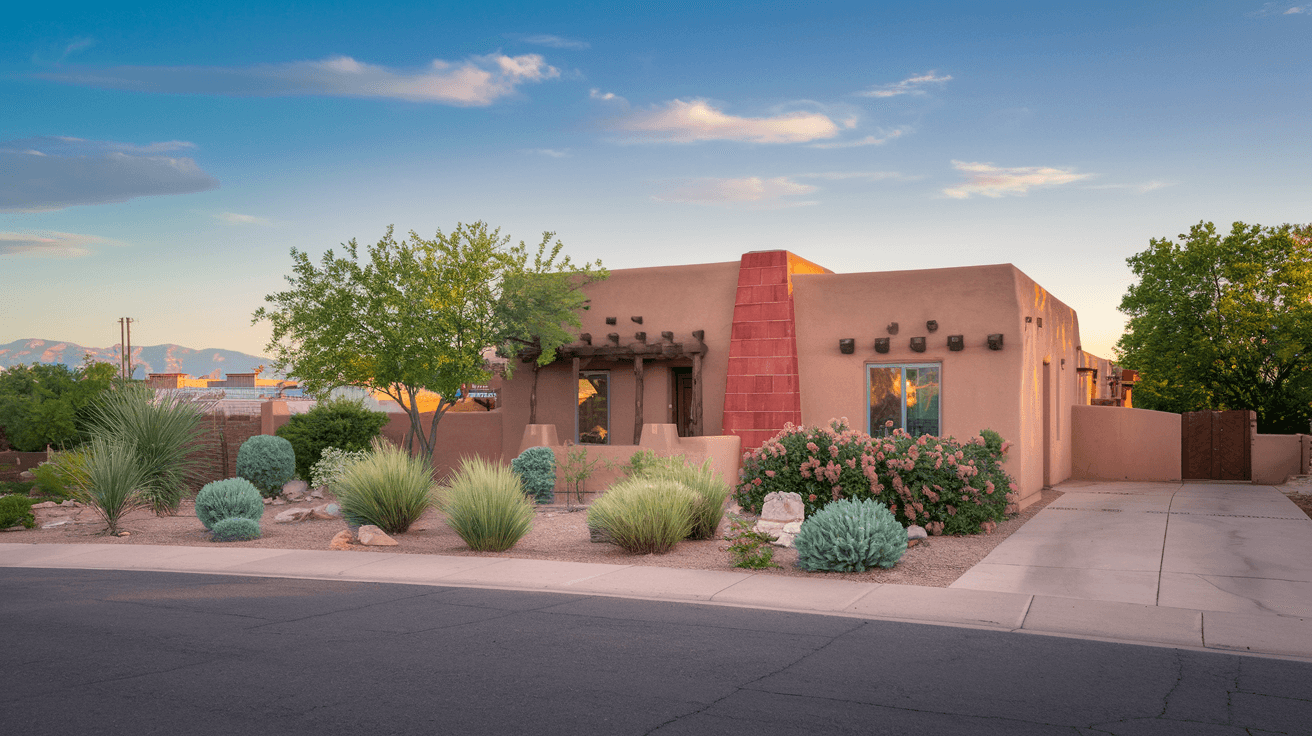
The geographic divergence in the May 2026 data is the most analytically interesting story in this report. Here is where each major submarket stands.
Northeast Heights
Median Price: $348,000 | Days on Market: 17 | YoY Price Change: +4.1%
The Northeast Heights continues to be the most liquid submarket in Albuquerque. The combination of established neighborhoods, strong school access via APS, proximity to Kirtland AFB and Sandia National Laboratories, and price points that remain accessible to dual-income households keeps demand steady. The streets between Menaul and Candelaria, from Louisiana east toward Eubank, are seeing particularly consistent activity. Ranch-style homes with updated kitchens are moving in under two weeks.
Nob Hill / UNM Area
Median Price: $392,000 | Days on Market: 22 | YoY Price Change: +3.8%
Nob Hill's appeal has not faded. The walkability factor along Central between Carlisle and Washington, the density of locally owned restaurants and galleries, and the proximity to UNM's campus and Presbyterian Hospital keep this neighborhood in demand from both owner-occupants and investors. The challenge for buyers here is inventory — there simply are not many homes, and when something comes available in the core Nob Hill grid (think Monte Vista, Morningside, Ridgecrest), it moves quickly. The UNM area south of Central skews toward smaller bungalows and sees more investor competition.
North Valley
Median Price: $435,000 | Days on Market: 28 | YoY Price Change: +3.2%
The North Valley's character — irrigated lots, cottonwood canopy, proximity to the bosque trail system, and the pastoral feel of Rio Grande Boulevard north of Candelaria — commands a premium that has proven durable. The trade-off for buyers is that true North Valley properties (not the adjacent subdivisions that borrow the name) are rare and irregular. Lot size, irrigation rights, and zoning complexity make due diligence more demanding here than anywhere else in the metro. Buyers who know what they are looking for and move decisively when the right property appears are the ones who succeed.
Rio Rancho
Median Price: $318,000 | Days on Market: 20 | YoY Price Change: +4.6%
Rio Rancho remains the most affordable entry point in the greater metro area for buyers who need space and a new-construction option. The Intel presence in Rio Rancho continues to provide employment stability, and the city's own growth along Northern Boulevard and the Unser corridor has created genuine retail and dining infrastructure that did not exist a decade ago. The YoY price appreciation of 4.6% outpaces the metro median, reflecting continued in-migration from higher-cost metros and strong demand from first-time buyers who cannot compete in Albuquerque proper.
Corrales
Median Price: $598,000 | Days on Market: 44 | YoY Price Change: +2.3%
Corrales is a market unto itself. The village's strict zoning, limited inventory, and the specific lifestyle it offers — horses, large irrigated lots, a small-town character fifteen minutes from Albuquerque's Uptown corridor — mean that buyers here are self-selecting and patient. The slower days on market is not a sign of weakness; it reflects the time required to match a specific property to a specific buyer. Corrales Road listings priced under $550,000 are genuinely rare and move faster than the submarket average suggests.
High Desert
Median Price: $648,000 | Days on Market: 51 | YoY Price Change: +1.9%
High Desert's location east of Tramway, with mountain views, access to the Elena Gallegos Open Space, and a master-planned community aesthetic, keeps it the premier luxury address on Albuquerque's East Mesa. Price appreciation has moderated as rate sensitivity hits the upper tier, and sellers who bought in 2020-2022 at peak prices are finding that the market has not kept pace with their expectations. Well-maintained homes with updated finishes and strong views are still commanding full asking price; dated interiors are sitting.
Downtown / EDo (East Downtown)
Median Price: $362,000 | Days on Market: 33 | YoY Price Change: +2.7%
Downtown and the East Downtown (EDo) corridor along Gold and Silver avenues continues to attract a buyer profile that prioritizes walkability, proximity to the Albuquerque Rail Yards redevelopment, and the emerging restaurant scene around 4th Street and Central. Condo and townhome inventory dominates here. The Rail Yards project and ongoing investment in the Civic Plaza area are long-term positive catalysts, though progress has been measured. Buyers willing to accept some urban friction — parking, older infrastructure — are finding relative value compared to the Heights.
Taylor Ranch
Median Price: $335,000 | Days on Market: 29 | YoY Price Change: +3.1%
Taylor Ranch on Albuquerque's West Side offers some of the best value per square foot in the metro for buyers who prioritize size and newer construction. The neighborhood's position west of Unser along Paseo del Norte gives residents quick access to the Cottonwood Mall corridor and reasonable commute times to both Rio Rancho employers and Kirtland AFB via the Paseo del Norte bridge. New construction competition from builders active further west is keeping resale price growth moderate, which is actually good news for buyers entering this submarket.
What the May 2026 Data Means for Albuquerque Buyers and Sellers
If You Are Buying in Albuquerque Right Now
The 4.1 months of inventory gives you more options than buyers had in 2021 and 2022, but do not mistake more inventory for a buyer's market across the board. The $300K to $420K tier is still competitive, and the homes that are priced correctly and show well are not waiting for you to schedule a second showing.
Get pre-approved, not just pre-qualified, before you start touring. In a market where the list-to-sale ratio is 97.8%, sellers are not desperate, and they will not wait for a buyer who needs two weeks to get financing documentation together. Know your number before you fall in love with a property.
For homes that have been sitting past 35 days, this is your negotiating window. Ask for closing cost contributions, request a home warranty, and do not be afraid to come in below asking — but do it with data, not emotion. A home sitting at 45 days in High Desert is not the same situation as a home sitting at 45 days in Northeast Heights. Context matters.
“In a market where the list-to-sale ratio is 97.8% and the best homes under $420,000 are going under contract in under three weeks, the buyers who win are the ones who have done their homework before the listing goes live — not after.
If You Are Selling in Albuquerque Right Now
The 3.5% year-over-year appreciation means you have equity growth working in your favor, but this is not a market that forgives overpricing the way 2022 did. Buyers have access to data, they are working with experienced agents, and they are paying close attention to days on market.
Pricing at or just below the market-clearing price for your neighborhood and tier will generate more net proceeds than pricing high and chasing the market down with reductions. Every price reduction is a signal to buyers that something is wrong, even when the only thing wrong was the initial price.
Presentation matters more now than it has in four years. Professionally photographed listings with accurate floor plans are the baseline. Homes that are decluttered, lightly staged, and competitively priced are outperforming comparable homes that are not by 8 to 12% on final sale price in this environment.
Albuquerque Real Estate Outlook: What to Expect This Summer
Several factors will shape the Albuquerque market through June, July, and August 2026.
Seasonal demand typically peaks in June and begins to soften in late July as the monsoon season arrives and families with school-age children finalize their moves. Expect the next 45 days to represent the strongest buyer activity of the year. Sellers who are not on the market by mid-June are effectively waiting until September.
Interest rates remain the wildcard. The Federal Reserve's posture heading into summer 2026 has been cautious, with no clear signal of near-term cuts. If rates hold in the high-6% range, the market will likely maintain its current equilibrium. A move toward 6.25% or below would meaningfully expand the buyer pool and could accelerate price appreciation in the $350K to $500K tier.
Local employment drivers remain fundamentally sound. Sandia National Laboratories continues to expand its workforce under ongoing Department of Energy contracts. Kirtland AFB's operational footprint is stable. The New Mexico film industry, anchored by Netflix's Albuquerque Studios on Edith Boulevard NE and the Garson Studios complex in Santa Fe, continues to bring production workers and crew into the metro housing market. UNM's enrollment stabilization after several difficult post-pandemic years is supporting the Nob Hill and EDo rental and owner-occupant markets.
The one local risk worth monitoring is the broader Intel situation in Rio Rancho. Any significant shift in that facility's operational status would have a measurable impact on West Side and Rio Rancho demand. Current indicators do not suggest near-term disruption, but it is a variable that deserves attention.
Key Takeaways: Albuquerque Housing Market May 2026
- •The metro median price of $385,000 reflects 3.5% year-over-year growth, a pace that is sustainable rather than speculative — appreciation driven by constrained supply and stable employment, not irrational exuberance.
- •The $300K to $400K price tier remains the most competitive segment, with effective months of supply near 2.8 months and average days on market under 20 days for well-presented homes in Northeast Heights and Rio Rancho.
- •Rio Rancho is outperforming the metro on price appreciation at +4.6% YoY, driven by affordability, Intel employment stability, and continued in-migration from higher-cost markets — making it the most compelling value play in the greater metro area.
- •High Desert and Corrales are experiencing moderated appreciation (+1.9% and +2.3% respectively), with days on market above 44 days in both submarkets — buyers in the luxury tier have genuine negotiating leverage for the first time since 2019.
- •The list-to-sale ratio of 97.8% confirms that Albuquerque sellers retain pricing power, but the era of automatic above-asking bidding wars on every listing is over; presentation, pricing discipline, and timing are now the determinants of outcome.
Want more insider intel?
Subscribe to get market updates and new articles delivered to your inbox.