Albuquerque Housing Market Report: May 2026 — Condo and Townhome Sales Are Outpacing Single-Family Growth. What That Tells Us About ABQ Affordability
Albuquerque Housing Market May 2026: The Affordability Shift Nobody Is Talking About
The metro median home price in Albuquerque hit $385,000 in May 2026, a 3.5% year-over-year gain that looks modest on paper. But median price alone is not the story this month. What the data is actually showing is a structural shift in what Albuquerque buyers are willing — or able — to purchase. Condo and townhome closed sales are outpacing single-family growth by a meaningful margin, inventory is sitting at 4.1 months metro-wide, and the list-to-sale ratio of 97.8% tells us sellers still hold real leverage even as the market breathes a little more than it did eighteen months ago.
This is not a market in distress. It is a market recalibrating. Buyers who were priced out of the $350,000-plus single-family bracket along Montgomery Boulevard or in the established blocks of Four Hills are finding their entry point in attached housing — townhomes in Uptown, condos near Nob Hill on Central, and newer stacked-flat developments pushing into the Journal Center corridor. That migration of demand is reshaping price pressure across every segment.
With 3,200 active listings and homes averaging 31 days on market, May 2026 looks like a market that has finally found some equilibrium. Whether that equilibrium holds through summer depends on factors we will break down section by section.
Albuquerque Housing Inventory and Supply Dynamics: May 2026
Active Listings and Months of Supply
At 3,200 active listings, Albuquerque's inventory picture is meaningfully different from the historic lows of 2021 and 2022, but it is not the buyer's market that inventory growth alone might suggest. 4.1 months of supply puts the metro in balanced-to-slightly-seller-favoring territory. A true buyer's market requires six months or more. We are not there.
Compared to April 2026, active listings ticked up approximately 4.2%, driven largely by new listings coming online in Rio Rancho's newer subdivisions west of Unser Boulevard and in the mid-range corridors of the Northeast Heights near Comanche and Wyoming. New listings entering the market in May came in at roughly 1,180, while closed sales settled near 780 — a ratio that explains the modest inventory build without suggesting any collapse in demand.
Year-over-year, inventory is up approximately 18% from May 2025, when the market was running closer to 2.7 months of supply. That loosening is what is giving buyers more negotiating room on inspection requests and closing cost contributions, even as sellers maintain pricing power reflected in that 97.8% list-to-sale ratio.
New Listings vs. Closed Sales
The gap between new listings and closed sales is worth watching. When new listings consistently outpace closings by more than 30-35%, inventory builds and price growth moderates. May's spread of roughly 400 units is within normal seasonal parameters for a metro this size. June and July historically see both numbers rise together, so this gap is unlikely to widen dramatically through summer.
Albuquerque Home Prices by Tier: Where Competition Is Hottest
Price Tier Analysis
The $300,000 to $400,000 tier remains the engine of the Albuquerque market. Homes in this range are moving in an average of 24 days, faster than the metro-wide 31-day average, and multiple-offer situations — while less frantic than 2022 — still occur regularly on well-priced properties in this band. This is the tier where the condo and townhome surge is most visible: attached housing that would have sold at $260,000 eighteen months ago is now trading at $310,000 to $340,000, compressing the gap between attached and detached pricing.
The $200,000 to $300,000 tier is where the real affordability story lives. Single-family inventory in this range has effectively dried up inside the city limits. What remains is almost exclusively condos, older townhomes, and manufactured housing on leased land near the South Valley. For buyers targeting this price point for a detached home, Rio Rancho is the primary option, and even there, sub-$280,000 single-family listings are moving within two weeks of hitting the MLS.
The $400,000 to $500,000 tier is performing steadily but not spectacularly. Days on market here average closer to 38 days, and sellers in this range are more likely to accept inspection repair credits or minor price adjustments than at lower price points. The Northeast Heights and the established blocks of Taylor Ranch populate this tier heavily.
The $500,000-plus segment — High Desert, Corrales, the upper reaches of the North Valley near Alameda — is where the market genuinely softens. Median days on market in this tier exceed 45 days, price reductions are more common, and buyers have real negotiating leverage. This segment is not declining, but it is not appreciating at the rate of the broader metro either.
“"The $300,000 to $400,000 range is where Albuquerque buyers are competing hardest right now — and condos and townhomes in that band are absorbing demand that used to flow exclusively to single-family homes."
Price Per Square Foot Trends
Metro-wide price per square foot is averaging approximately $192, up from roughly $185 a year ago. Notably, condo and townhome price per square foot has been climbing faster than single-family — a direct reflection of the demand rotation described above. In Nob Hill, attached housing is now regularly trading at $210 to $230 per square foot, approaching parity with detached homes in the same zip codes.
Albuquerque Days on Market: What 31 Days Means for Your Offer Strategy
Thirty-one days is the average, and averages hide the real texture of this market. Well-priced homes under $400,000 in the Northeast Heights, Taylor Ranch, and Rio Rancho are still going under contract in 10 to 18 days. Overpriced listings — and there are more of them now that sellers have adjusted their expectations upward after three years of appreciation — are sitting 60, 75, even 90 days before either a price reduction or withdrawal.
For buyers, the 31-day average means the urgency of 2022 is gone, but the strategy of waiting a week to see if something better comes along is still risky on correctly priced inventory. A property that hits the MLS on a Thursday in the $330,000 to $370,000 range in a desirable neighborhood is likely to have multiple showings by Sunday and an accepted offer by Tuesday. That rhythm has not changed.
For sellers, the data is a warning against overpricing at listing. The homes sitting 60-plus days are almost exclusively those that launched 5-8% above comparable sales. In a market with a 97.8% list-to-sale ratio, the sellers achieving that ratio are the ones who priced to the data from day one.
Albuquerque Neighborhood Breakdown: May 2026 Median Prices and Trends
Northeast Heights
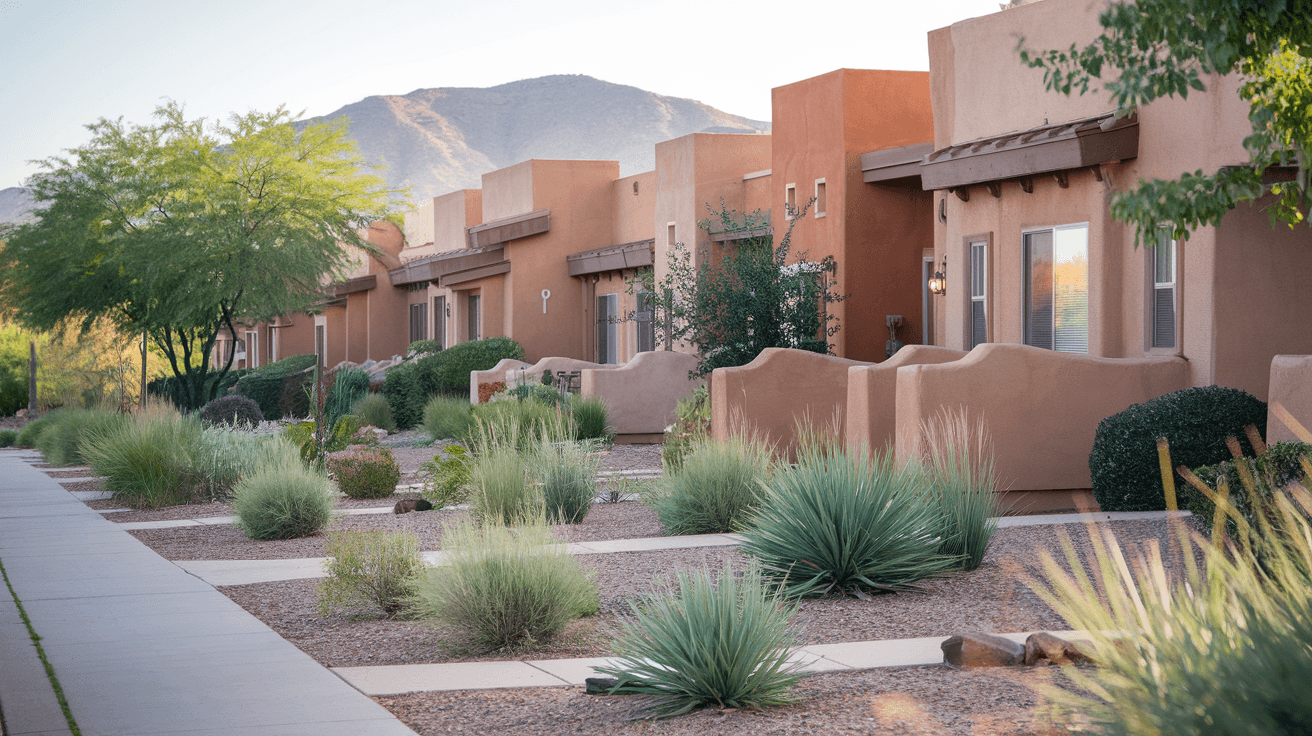
The Northeast Heights — loosely bounded by Menaul to the south, Tramway to the east, and Montgomery as its commercial spine — posted a May 2026 median price of $338,000, up 4.8% year-over-year. Days on market averaged 22 days, making this one of the fastest-moving submarkets in the metro. The combination of established schools, proximity to Sandia Labs and Kirtland AFB, and a dense inventory of 3-bedroom ranch homes in the $300,000 to $380,000 range keeps demand consistent regardless of rate environment.
Nob Hill
Nob Hill's walkable blocks between Girard and Washington along Central Avenue are attracting a younger buyer demographic, and the data reflects it. Median price: $392,000, up 3.5% YoY, with an average of 26 days on market. The condo and townhome surge is particularly visible here — attached units near the Nob Hill Business District are trading briskly as remote workers and young professionals prioritize location over square footage.
North Valley
The North Valley, with its acequia-fed lots and adobe character between Rio Grande Boulevard and the bosque, remains one of Albuquerque's most distinct submarkets. Median price: $435,000, up 3.1% YoY, DOM: 34 days. Inventory here is thin by nature — the neighborhood does not produce large volumes of listings — and when properties do come available near Alameda or Corrales Road, they attract buyers who have specifically sought this lifestyle. The agricultural character of the North Valley is a feature, not a bug, for its buyer pool.
Rio Rancho
Rio Rancho continues to absorb affordability-driven demand from Albuquerque proper. Median price: $312,000, up 5.2% YoY — the strongest year-over-year appreciation in the report. DOM: 19 days. The subdivisions west of Unser near Southern and the established neighborhoods around Loma Colorado are where most of the volume is occurring. Rio Rancho's price growth outpacing the metro average is a direct consequence of buyers accepting the commute to Kirtland or Sandia Labs in exchange for an additional 400-600 square feet and a garage.
Corrales
Corrales, the agricultural village along the Rio Grande north of Albuquerque, is its own market entirely. Median price: $595,000, up 2.0% YoY, DOM: 48 days. This is a lifestyle market with genuinely limited inventory — large lots, horse properties, and custom adobe homes that attract a specific, patient buyer. The slower appreciation rate relative to the metro is a function of price point, not weakening demand.
High Desert
High Desert, the master-planned community tucked against the Sandia foothills east of Tramway, posted a median price of $648,000, up 1.7% YoY, with homes averaging 52 days on market. The luxury tier here is moving, but deliberately. Buyers in High Desert are doing thorough due diligence, and sellers who price to the 2025 peak comparable sales rather than the current market are experiencing extended market time.
Downtown / EDo (East Downtown)
The Downtown and EDo corridor — stretching from the Convention Center area east along Central to the UNM campus fringe — is showing the most dramatic condo activity in the metro. Median price: $285,000, up 4.1% YoY, DOM: 29 days. This is almost entirely attached housing: loft condos, renovated historic units, and newer infill townhomes. The UNM medical corridor and the ongoing investment in the Rail Runner connectivity are keeping this submarket relevant to buyers who want urban density at a non-coastal price point.
Taylor Ranch
Taylor Ranch, the established West Side neighborhood bounded by Coors and the escarpment west of Paseo del Norte, remains one of the most reliable mid-range submarkets in the city. Median price: $362,000, up 3.8% YoY, DOM: 25 days. Families targeting good schools, established tree cover, and reasonable commute times to both Kirtland and the Journal Center keep Taylor Ranch consistently active. Inventory here turns over quickly, and properly priced listings rarely sit.
“"In Taylor Ranch and the Northeast Heights, the affordability math still works for dual-income households — and that is exactly why those neighborhoods continue to outperform the metro average on days-on-market."
What the May 2026 Albuquerque Market Means for Buyers and Sellers
For Buyers: Practical Guidance for May 2026
If you are buying in Albuquerque this month, the most important thing to understand is that this market rewards preparation and punishes hesitation selectively. On correctly priced homes under $400,000 in strong neighborhoods, you still need to be ready to move within 48 to 72 hours of a listing going live. Get pre-approved — not pre-qualified, pre-approved with a full underwrite if your lender offers it — and know your ceiling before you start touring.
The condo and townhome opportunity is real. If your budget is $300,000 to $340,000 and you have been frustrated by the single-family inventory at that price point, the attached housing market in Nob Hill, EDo, and the Uptown corridor is offering genuine value. Price per square foot is climbing, but it has not yet caught up to comparable detached housing — that gap will likely close over the next 12 to 18 months.
For buyers targeting the $400,000-plus range, you have more leverage than you did a year ago. Request a home inspection, ask for repair credits on legitimate findings, and do not be afraid to negotiate on homes that have been sitting 30-plus days. The list-to-sale ratio of 97.8% is a metro average — individual transactions in the upper tiers are closing at 95-96% of list price with regularity.
For Sellers: Pricing and Positioning in May 2026
The market will reward you if you price correctly from day one. The data is unambiguous: homes that launch at or within 1-2% of true market value are selling in under 30 days at 97-99% of list price. Homes that launch 5% or more above market are sitting, accumulating days on market, and ultimately selling for less than they would have achieved with a disciplined initial price.
Presentation matters more in a 4.1-month inventory environment than it did in a 1.5-month environment. Buyers have options now. Professional photography, a clean pre-listing inspection to get ahead of repair negotiations, and proper staging — even minimal staging — are not optional extras in May 2026. They are the difference between a 15-day sale and a 60-day grind.
If you are selling a condo or townhome, the timing is genuinely favorable. Demand for attached housing is at a multi-year high relative to single-family, and your buyer pool has expanded as affordability pressure pushes more purchasers toward your product type.
Albuquerque Real Estate Market Outlook: What to Expect in June and July 2026
Seasonally, Albuquerque's summer market is active through June and then softens modestly in July as the heat peaks and families with school-age children complete their moves. Expect new listings to increase another 5-8% in June as spring sellers who were watching the market make their decisions, followed by a gradual inventory build through August.
On rates: the 30-year fixed mortgage rate environment in late spring 2026 remains a headwind for first-time buyers, but not a dealbreaker for move-up buyers with equity. Any meaningful rate improvement — even a quarter-point drop — tends to unlock pent-up demand in Albuquerque's $300,000 to $420,000 range almost immediately.
Local economic drivers remain constructive. Sandia National Laboratories continues its multi-year expansion tied to federal energy and defense contracts, providing stable high-income employment that supports the Northeast Heights and High Desert price tiers. Kirtland Air Force Base's footprint is unchanged, anchoring the Southeast Heights and Ridgecrest submarkets. The New Mexico film industry, centered on Albuquerque Studios near I-25 and the expanding Nexus Studios campus, continues to bring rotating professional populations who rent first and buy later — a pipeline for future owner-occupant demand. Intel's Rio Rancho facility, while operating at steady state rather than expansion mode, remains one of the largest private employers in the state and directly supports Rio Rancho's sustained price appreciation.
The condo and townhome trend that defined May 2026 is not a blip. It is the beginning of a structural demand shift that will play out over the next two to three years as Albuquerque's buyer demographics continue to age younger and as remote-work flexibility keeps the city competitive with Denver and Phoenix at roughly half the price point.
Key Takeaways: Albuquerque Housing Market May 2026
- •Condo and townhome sales are outpacing single-family growth, with attached housing in Nob Hill and EDo trading at $210-$230 per square foot — a direct response to affordability pressure pushing buyers away from detached homes in the $300,000-$350,000 range.
- •The metro median price of $385,000 and a 97.8% list-to-sale ratio confirm that sellers retain pricing power, but only those who price to current comps — homes launched above market are sitting an average of 60-plus days before adjustment.
- •Rio Rancho posted the strongest year-over-year appreciation in the report at 5.2%, driven by affordability migration from Albuquerque proper and consistent demand from Sandia Labs and Kirtland commuters willing to trade distance for square footage.
- •At 4.1 months of inventory, the market is balanced but not a buyer's market — buyers have more leverage than in 2022-2023, particularly in the $500,000-plus tier, but the $300,000-$400,000 range still produces competitive offer situations on well-priced inventory.
- •The local employment base — Sandia Labs, Kirtland AFB, the film industry, and UNM — provides structural demand insulation that makes Albuquerque significantly less vulnerable to national housing corrections than metros without this kind of diversified, government-anchored economic foundation.
Want more insider intel?
Subscribe to get market updates and new articles delivered to your inbox.