Albuquerque Housing Market Report: May 2026 — UNM Research Corridor and Kirtland Expansion Push Southeast ABQ Values Up 5.2%
Albuquerque Housing Market May 2026: The Southeast Corridor Is Rewriting the Price Map
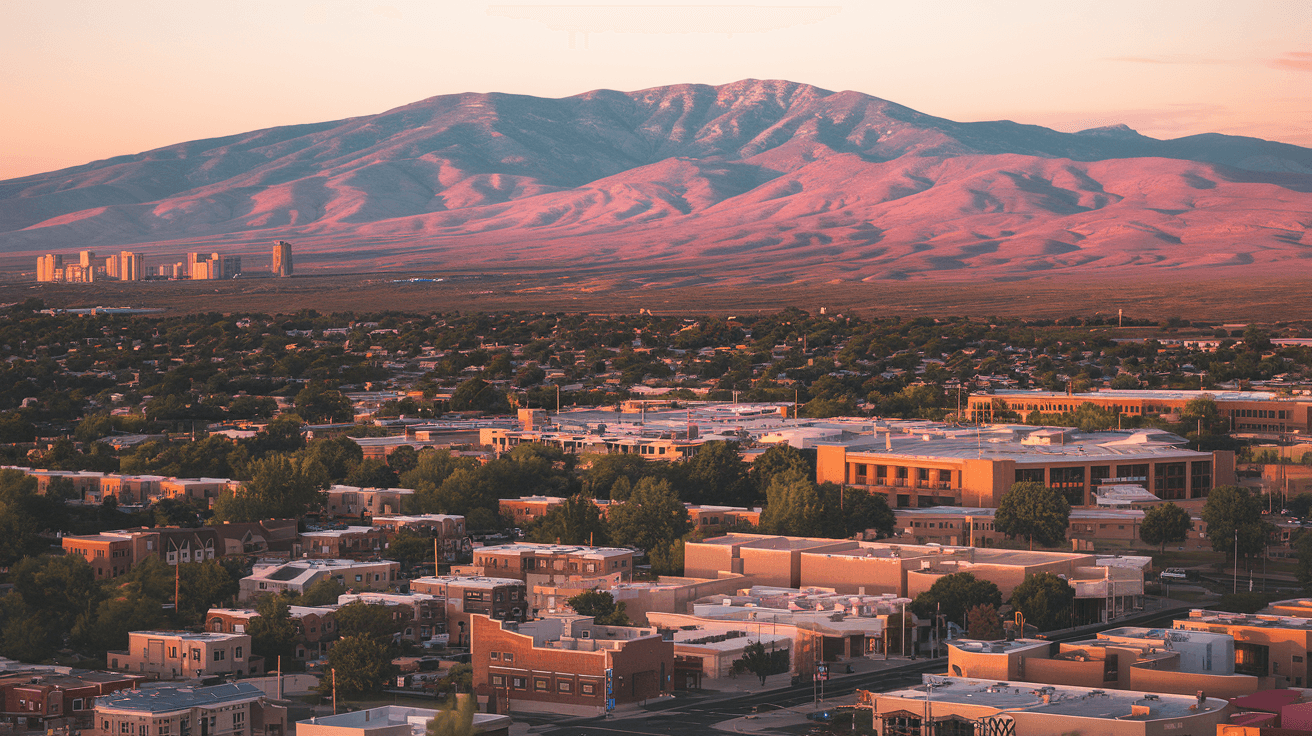
For most of the past three years, Albuquerque's housing story has been told through the lens of the Northeast Heights and Rio Rancho — affordability refugees from the coasts, remote workers discovering the 310 days of sunshine, and a steady drumbeat of military and federal employment keeping the floor under demand. That story still holds. But in May 2026, a more specific and data-driven narrative is emerging, and it runs along a corridor stretching from the University of New Mexico's south campus research district down Gibson Boulevard toward Kirtland Air Force Base and the Sandia Science and Technology Park.
The metro median home price hit $387,000 in May 2026, up 3.5% year-over-year and up roughly 1.4% from March's $381,600. That headline number is solid, but it understates what is happening in specific ZIP codes south of Central Avenue and east of I-25. In those pockets — think Ridgecrest, Kirtland Addition, and the neighborhoods feeding directly into the UNM Health Sciences Center on Lomas — values are running 4.8% to 5.2% ahead of last May. The reason is structural, not speculative, and it matters for every buyer and seller operating within fifteen minutes of the Sunport.
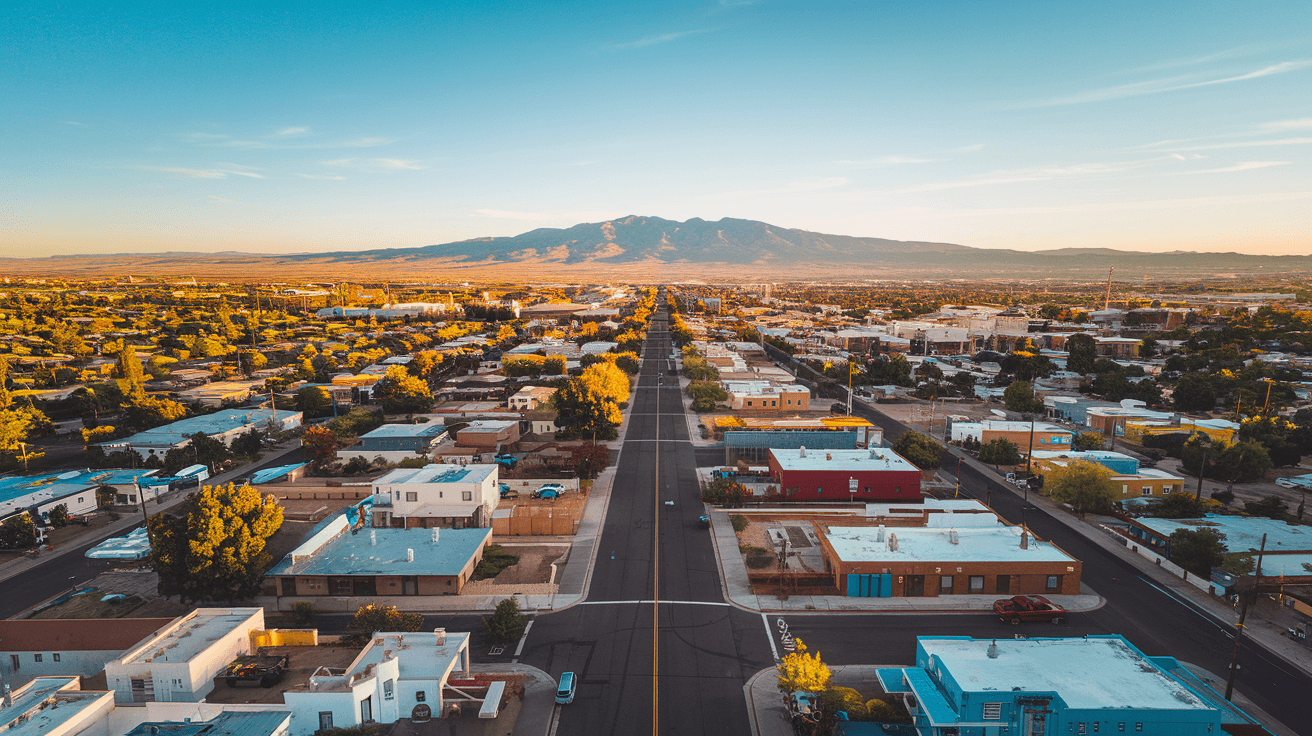
The UNM Board of Regents approved Phase 2 of the Innovation District expansion in late 2025, committing to 340,000 square feet of new research and biotech lab space along the Yale Boulevard and Girard corridor by Q3 2027. Simultaneously, Kirtland's Space Systems Command detachment — which grew from roughly 800 personnel to over 1,400 between 2023 and 2025 — is now in a third wave of staffing that is pulling cleared professionals and their families into the Albuquerque market with housing allowances that comfortably reach the $380,000 to $450,000 range. When institutional employment growth and physical infrastructure investment arrive in the same geography at the same time, housing markets respond. Southeast ABQ is responding.
Albuquerque Housing Inventory and Supply Dynamics: Room to Breathe, But Not Much
At 3,850 active listings metro-wide as of the May reporting period, Albuquerque has more inventory on the market than it did at the same point in 2024, when the count sat closer to 3,100. That 24% year-over-year increase in active supply sounds significant until you pair it with the 4.3 months of inventory figure — still technically a seller's market by the conventional six-month threshold, and meaningfully tighter than the national average.
New listings came in at approximately 1,020 for the month, while closed sales tracked at 890. The gap between new supply entering and transactions clearing is narrowing compared to the first quarter, which is a seasonal pattern Albuquerque follows reliably. Spring listings hit the market; spring buyers absorb them faster than winter buyers did. What is notable this May is that the absorption is uneven. Homes priced between $300,000 and $420,000 are clearing at a pace that implies roughly 2.8 months of inventory in that band. Homes above $500,000 carry closer to 6.1 months of supply, which is a meaningful distinction for sellers pricing in the upper tier.
Compared to April 2026, active listings grew by about 3.2%, a modest seasonal expansion that is consistent with the May pattern of sellers who waited out winter finally listing before the summer heat suppresses showing activity. The year-over-year inventory gain is real, but it has not yet tipped the market into balanced territory. Buyers have more options than they did eighteen months ago. They do not yet have leverage.
“"The inventory picture in Albuquerque right now is like a highway with more lanes than last year but more cars, too. It moves faster than it looks from the outside."
Albuquerque Home Price Analysis by Tier: Where Competition Is Hottest
The $387,000 median and $412,000 average diverge by about $25,000, which signals that the upper end of the market is pulling the mean upward — a pattern consistent with the Kirtland and Sandia Labs employment profile skewing toward dual-income STEM households. Price per square foot metro-wide came in at $196, up from $188 a year ago.
Price Tier Breakdown
$200,000 to $300,000: This tier is the most contested in the metro and has been for two years. Active supply in this range is down 8% year-over-year even as overall inventory grew. Buyers competing here are often first-time purchasers going up against investors and FHA-financed buyers, and multiple-offer situations remain common. Homes in this band are averaging 19 days on market, and list-to-sale ratios frequently exceed 100% in move-in-ready condition.
$300,000 to $400,000: The broadest and most active segment, accounting for roughly 38% of all closed transactions in May. This is where the Kirtland BAH ceiling and the UNM researcher salary band concentrate demand. Average DOM here is 26 days, and the 97.8% list-to-sale ratio is most representative of this tier. Well-priced homes in good condition are not sitting.
$400,000 to $500,000: Demand is present but more deliberate. Buyers in this range tend to be move-up purchasers or relocating professionals with equity from other markets. Days on market stretches to approximately 38 days, and sellers who overprice by even 3% to 4% are finding that the market does not self-correct quickly — they are sitting while comparable properties at sharper prices close.
$500,000 and above: The luxury and semi-luxury tier is the one place in the Albuquerque market where buyers genuinely hold cards. With 6.1 months of effective supply, sellers above $500,000 are negotiating more on price, repairs, and closing costs than they have in three years. High Desert and Corrales dominate this segment, and both neighborhoods are showing the softest year-over-year appreciation in the metro.
Days on Market in Albuquerque: What 31 Days Tells Buyers About Offer Strategy
The metro average of 31 days on market is up from 26 days in May 2025, which is the most important single number for buyers calibrating their offer strategy this spring. A rising DOM average does not mean the market is softening uniformly — it means the distribution is widening. Fast-moving properties in the $300,000 to $400,000 corridor are still going in under two weeks. Slower-moving properties above $500,000 are dragging the average upward.
For buyers, the practical implication is this: if you are targeting a home priced under $400,000 in Southeast ABQ, the Northeast Heights, or any neighborhood within twenty minutes of a major federal employer, you are still operating in a speed-dependent environment. Waiting 48 hours to write an offer on a well-priced three-bedroom near Carlisle and Menaul is a meaningful risk. Waiting 48 hours on a $650,000 property in High Desert above Montgomery is not.
The 97.8% list-to-sale ratio is the other calibrating number. On a $380,000 home, that ratio implies an average closing price of approximately $371,640. Buyers who are writing at full list price on well-positioned properties are competitive. Buyers writing at 94% or 95% of list on those same properties are getting declined and then watching the home close above their offer.
Albuquerque Neighborhood Breakdown: May 2026 Data by Area
Northeast Heights
Median price: $341,000 | Average DOM: 22 days | YoY price change: +4.4%
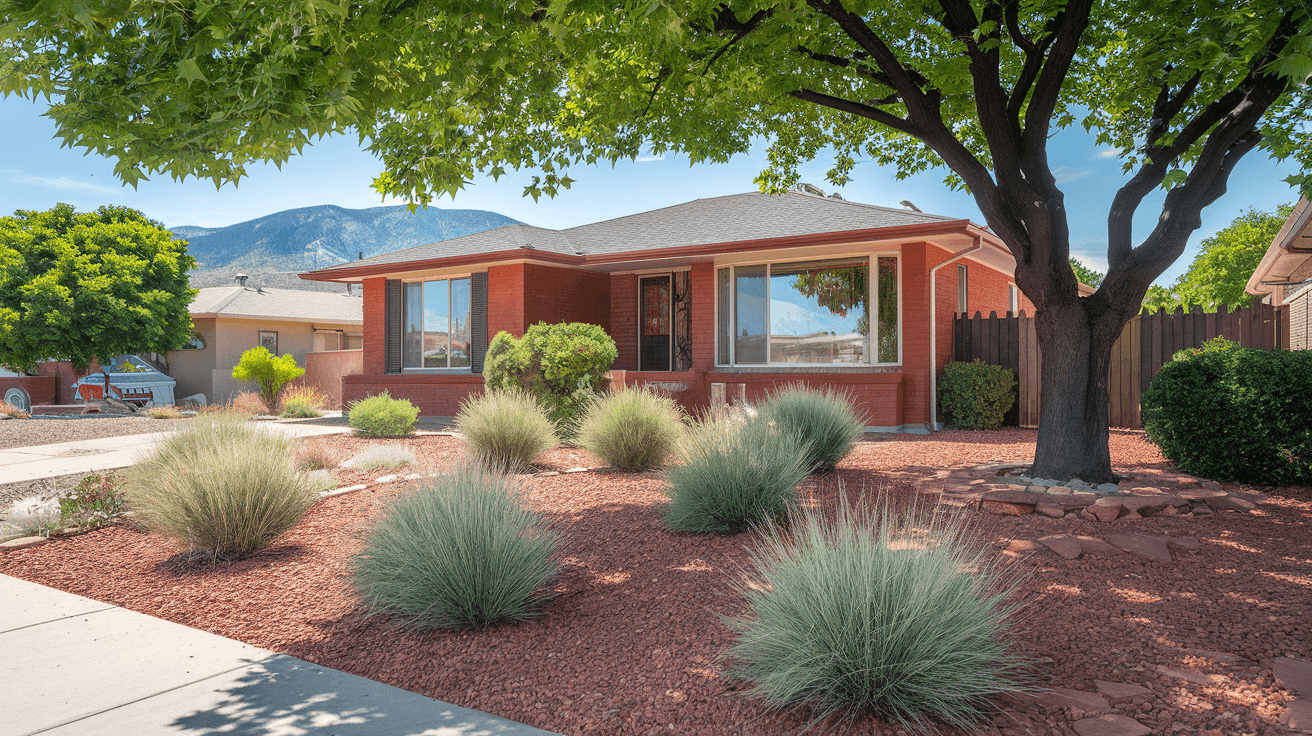
The Heights remains the workhorse of Albuquerque real estate — reliable, liquid, and perpetually in demand from buyers who want proximity to Uptown, Trader Joe's on Louisiana, and the I-40 corridor without paying North Valley or High Desert prices. The 4.4% annual gain is the second-strongest in the metro among established neighborhoods. Ranch-style homes on the larger lots between Eubank and Tramway are the sweet spot.
Nob Hill
Median price: $398,000 | Average DOM: 27 days | YoY price change: +3.8%
Nob Hill continues its steady appreciation arc as Central Avenue's restaurant and retail corridor attracts younger buyers willing to trade square footage for walkability. The UNM proximity premium is real here. Bungalows on tree-lined streets between Carlisle and Washington are generating genuine competition. The median is up from $383,500 last May.
North Valley
Median price: $434,000 | Average DOM: 33 days | YoY price change: +3.1%
The North Valley's acequia-lined streets and agricultural roots continue to command a lifestyle premium that no other Albuquerque neighborhood replicates. Inventory here is structurally constrained — there are only so many adobe homes on Rio Grande Boulevard with mature cottonwoods and irrigation rights. The 33-day DOM reflects deliberate buyers, not weak demand.
Rio Rancho
Median price: $312,000 | Average DOM: 24 days | YoY price change: +4.9%
Rio Rancho is running the hottest appreciation rate in the extended metro, and the Intel campus activity is a meaningful part of that story. The $312,000 median makes it the most accessible entry point for buyers priced out of Albuquerque proper. New construction in Lomas Encantadas and the northern Mariposa sections is absorbing demand that the resale market cannot fully meet.
Corrales
Median price: $598,000 | Average DOM: 44 days | YoY price change: +2.0%
Corrales is beautiful, desirable, and slower-moving than it was two years ago. The village's appeal — horses allowed, dark skies, Corrales Road's farm stands, and a genuine sense of rural proximity to a major city — does not change. But at nearly $600,000 median, the buyer pool is narrow, and sellers need patience and accurate pricing. Homes that price correctly are still selling. Homes that test the market are sitting.
High Desert
Median price: $641,000 | Average DOM: 49 days | YoY price change: +1.7%
High Desert's position against the Sandia foothills, with its trail access and architectural quality, keeps it aspirational. But 1.7% appreciation and nearly seven weeks average DOM tell a clear story: this is a buyer's market within the Albuquerque luxury segment. Sellers here should be working with agents who understand how to position against the Corrales and Far Northeast Heights competition simultaneously.
Downtown / EDo (East Downtown)
Median price: $362,000 | Average DOM: 29 days | YoY price change: +3.6%
The Rail Yards redevelopment progress and the continued buildout of the Albuquerque Rapid Transit corridor along Central have kept EDo relevant for urban buyers. Loft condos and renovated Victorian-era homes between 4th Street and Broadway are moving steadily. The 3.6% gain is respectable for an urban infill market.
Taylor Ranch
Median price: $329,000 | Average DOM: 21 days | YoY price change: +4.1%
Taylor Ranch on the West Side consistently punches above its profile. Families are drawn to the Coors Bypass access, the Cottonwood Mall proximity, and the neighborhood's reputation for value relative to the Heights. At 21 days average DOM, it is one of the faster-moving neighborhoods in the metro. The $329,000 median is up from $316,000 last May.
What the May 2026 Market Means for Albuquerque Buyers and Sellers

For Buyers
The single most important thing a buyer can internalize about the May 2026 Albuquerque market is that it rewards preparation and penalizes hesitation selectively. Below $400,000, hesitation is still expensive. Above $500,000, patience is a legitimate strategy.
Get pre-approved — not pre-qualified, pre-approved with a full underwrite — before you look at a single home. In the sub-$400,000 segment, sellers and their agents are distinguishing between pre-approval letters within the first sixty seconds of reviewing an offer. Know your ceiling, know your target neighborhoods, and understand that the Southeast ABQ corridor near Kirtland and UNM is likely to continue outperforming the broader metro through the rest of 2026 as infrastructure investment materializes.
On offer construction: the 97.8% list-to-sale ratio is your baseline, not your ceiling. On homes that have been on the market fewer than ten days in the Northeast Heights, Nob Hill, or Taylor Ranch, writing at list price with a clean inspection contingency is a reasonable opening position. Escalation clauses remain relevant in the $300,000 to $380,000 band.
For Sellers
The Albuquerque market will reward sellers who price accurately and present well in May 2026. It will not bail out sellers who overprice and wait. The gap between homes that sell in under 21 days and homes that linger past 45 days is almost entirely explained by initial pricing discipline and condition.
If your home is in the Southeast ABQ corridor, within three miles of the UNM Health Sciences campus or the Kirtland main gate on Gibson, you have a structural tailwind that a skilled agent should be quantifying in your pricing analysis. That tailwind is real, it is documented in the transaction data, and it is worth understanding before you set your list price.
For sellers above $500,000, the conversation is different. Budget for negotiation. Price at the market, not above it. The buyers who can afford your home have options, and they know it.
“"In Southeast ABQ right now, the UNM and Kirtland employment engines are doing what good economic anchors always do for housing — they create floors under demand that hold even when broader market sentiment softens."
Albuquerque Real Estate Outlook: What to Expect Through Summer 2026
Several factors will shape the Albuquerque housing market through June and July 2026.
Interest rates remain the macro variable. The 30-year fixed rate has been ranging between 6.4% and 6.8% through the first half of 2026. A meaningful move below 6.25% would likely accelerate the sub-$400,000 segment materially, bringing sidelined buyers back into active search. A move above 7% would suppress new listings as existing homeowners with sub-4% pandemic-era rates hold even tighter to their properties, constraining supply further.
Kirtland AFB summer PCS (Permanent Change of Station) season runs through July and is historically the single largest driver of summer transaction volume in the Southeast quadrant of the metro. Agents who work the military relocation channel are already seeing the early wave of incoming families beginning their search. This will support the $340,000 to $430,000 range through at least mid-July.
Sandia National Laboratories continues its classified computing infrastructure expansion, and the ripple effect on the Rio Rancho and Northeast Heights housing demand from Sandia's workforce is measurable. The labs employ over 14,000 people, and any meaningful hiring surge shows up in the housing data within two quarters.
Seasonal patterns suggest that June will see a modest uptick in active listings as the last wave of spring sellers enters the market, followed by a summer plateau in July and August when Albuquerque's heat suppresses showing activity. Buyers who can tolerate showing homes in 95-degree July afternoons often find the best negotiating conditions of the year in that window.
The film industry presence at Albuquerque Studios and the Netflix facility on the South Valley continues to generate a steady stream of production professionals seeking medium-term housing, which sustains rental demand and supports investor activity in the Nob Hill and Downtown segments.
Key Takeaways: Albuquerque Housing Market May 2026
- •The metro median of $387,000 represents 3.5% annual growth, a pace that is sustainable and not speculative — Albuquerque is not running hot on sentiment, it is running on employment fundamentals anchored by Kirtland, Sandia Labs, UNM, and Intel in Rio Rancho.
- •Southeast ABQ neighborhoods near the UNM Innovation District and Kirtland Gibson gate are appreciating at 5.0% to 5.2% annually, outpacing the metro average by more than a full percentage point, driven by Phase 2 research corridor construction and Kirtland's Space Systems Command staffing expansion.
- •The $300,000 to $400,000 price band is the most competitive segment in the market, with effective inventory of just 2.8 months and an average DOM of 26 days — buyers in this range need pre-approval in hand and should be prepared to move within 24 to 48 hours of a property hitting the market.
- •Homes above $500,000 carry 6.1 months of effective inventory, making the Corrales and High Desert luxury segment the one area of the Albuquerque market where buyers have genuine negotiating leverage on price, concessions, and repair requests.
- •Rio Rancho's 4.9% year-over-year appreciation is the strongest in the extended metro, fueled by Intel campus activity and new construction absorption in Mariposa and Lomas Encantadas — buyers priced out of Albuquerque proper should treat Rio Rancho as a primary target, not a fallback.
Want more insider intel?
Subscribe to get market updates and new articles delivered to your inbox.