Albuquerque Housing Market Report: May 2026 — How Mortgage Rate Buydowns Are Changing What Buyers Can Afford in New Mexico Right Now
Albuquerque Housing Market May 2026: The Buydown Era Arrives on the Rio Grande
The number that defines the Albuquerque real estate market this May is not $387,000 — though that median sale price, up 3.5% from May 2025, tells an important story on its own. The number that actually matters to anyone writing an offer or pricing a listing right now is the one buried in the financing addendum: the rate buydown figure that is quietly restructuring what Albuquerque buyers can qualify for and what sellers are willing to concede to close.
Across the metro, from the ranch-style subdivisions of Taylor Ranch to the cottonwood-canopied lots along Corrales Road, seller-paid temporary and permanent rate buydowns have moved from occasional negotiating tactic to standard market practice. In a city where the conforming loan limit sits well above the median price and where a significant portion of buyers are first-time purchasers, the difference between a 7.1% note rate and a 5.9% bought-down rate on a $375,000 loan is roughly $290 per month — enough to determine whether a household qualifies at all.
The broader market context: 3,850 active listings metro-wide, 4.3 months of supply, and a list-to-sale ratio of 97.8% collectively describe a market that is neither the frenzied seller's paradise of 2021 nor a buyer's bonanza. It is something more nuanced — a transitional market where preparation, pricing discipline, and financing creativity separate successful transactions from stalled ones.
Albuquerque Housing Inventory: More Choices, But Not a Flood
Active Listings and Months of Supply
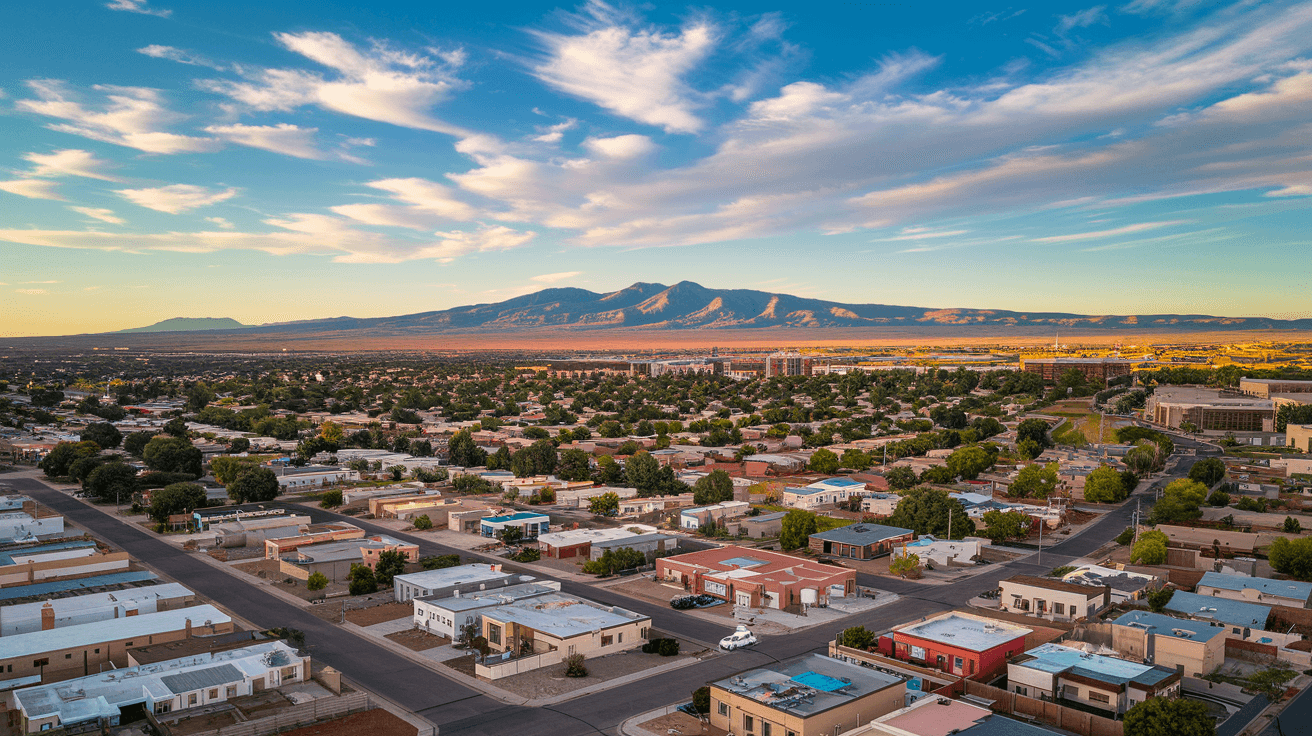
At 3,850 active listings, Albuquerque's inventory picture in May 2026 represents a meaningful shift from the supply-starved conditions that defined 2022 and 2023. Year-over-year, active listings are up approximately 18%, and the 4.3 months of supply is the highest the metro has recorded since early 2019. To put that in context: a balanced market is generally defined as five to six months of supply. Albuquerque is not there yet, but it is closer than it has been in years.
New listings coming to market in May ran at a healthy pace, with sellers who delayed listing during the rate-shock period of 2023 and 2024 finally accepting that waiting for a return to 3% mortgages is not a viable strategy. Closed sales, meanwhile, are tracking at a pace that keeps absorption steady without burning through the new supply. The net effect is a market where buyers have genuine options — something that was nearly impossible to say eighteen months ago along the Juan Tabo corridor or in the Ventana Ranch subdivisions.
What Inventory Levels Mean for Pricing Power
The inventory expansion is real, but it is not uniform. Homes priced between $300,000 and $400,000 — the metro's highest-velocity price band — are still moving in under three weeks in many cases. Above $500,000, supply has grown faster, and sellers in that tier are competing more aggressively for a smaller buyer pool. Below $300,000, inventory remains critically thin, which is why entry-level buyers in areas like the South Valley and parts of the International District continue to face multiple-offer situations even in a loosening market.
Albuquerque Home Prices: Tier-by-Tier Analysis
Where the Competition Is Hottest
The metro-wide median of $387,000 masks significant variation across price tiers. Here is what the data shows for May 2026:
$200,000 to $300,000: This segment represents less than 19% of active inventory but accounts for a disproportionate share of competitive offers. Average days on market in this tier: under 18 days. Buyers here should expect to offer at or above list price with minimal contingency leverage. Seller-paid buydowns in this tier are less common because sellers rarely need them to generate interest.
$300,000 to $400,000: The metro's core. Median price per square foot in this tier is running approximately $189, up 4.1% year-over-year. Homes in this range in established Northeast Heights neighborhoods — think the streets running between Wyoming Boulevard and Juan Tabo, north of Menaul — are still generating multiple offers within the first weekend. Buydowns are negotiable here, particularly on homes that have sat 20 or more days.
$400,000 to $500,000: A more deliberate buyer pool. Days on market average 28 to 34 days in this tier. Sellers who price sharply relative to recent comps are still achieving near-list-price results. Those who price aspirationally are sitting. The list-to-sale ratio in this tier dips to approximately 96.4%, meaning buyers are successfully negotiating meaningful concessions.
$500,000 and above: Supply has grown faster than demand. Luxury and semi-luxury buyers in Albuquerque have options, and they know it. Average days on market above $500,000 is running close to 52 days, and seller concessions — including rate buydowns, closing cost credits, and price reductions — are common. The High Desert and Corrales markets tell this story most clearly.
“"The buydown conversation used to happen after an offer was accepted. Now it is happening before buyers even schedule showings — it is part of how they filter which listings are worth pursuing."
Albuquerque Days on Market: What 31 Days Tells Buyers About Offer Strategy
The metro average of 31 days on market is the most strategically useful number in this report for active buyers. It tells you that the market has decelerated from the eight-to-twelve-day frenzy of 2021 and 2022, but it has not softened to the point where buyers can afford to deliberate indefinitely.
The practical implication: if a home has been on market for fewer than 14 days, treat it as a competitive situation. Offer clean, offer close to list, and use the buydown ask strategically — request it as a seller concession rather than combining it with a price reduction, which can complicate appraisal. If a home has been on market for 30 or more days, the leverage equation has shifted. Sellers in that position have already watched their listing age through at least one full weekend cycle, and a well-structured offer with a buydown request or closing cost credit is likely to be received seriously.
For sellers, the 31-day average is a calibration point. A properly priced, well-presented home in a demand corridor should not be sitting at day 45 waiting for the market to catch up. If it is, the price is the problem.
Neighborhood-by-Neighborhood Breakdown: Albuquerque Real Estate Market by Area
Northeast Heights
Median price: $341,000 | Average DOM: 19 days | YoY price change: +4.2%
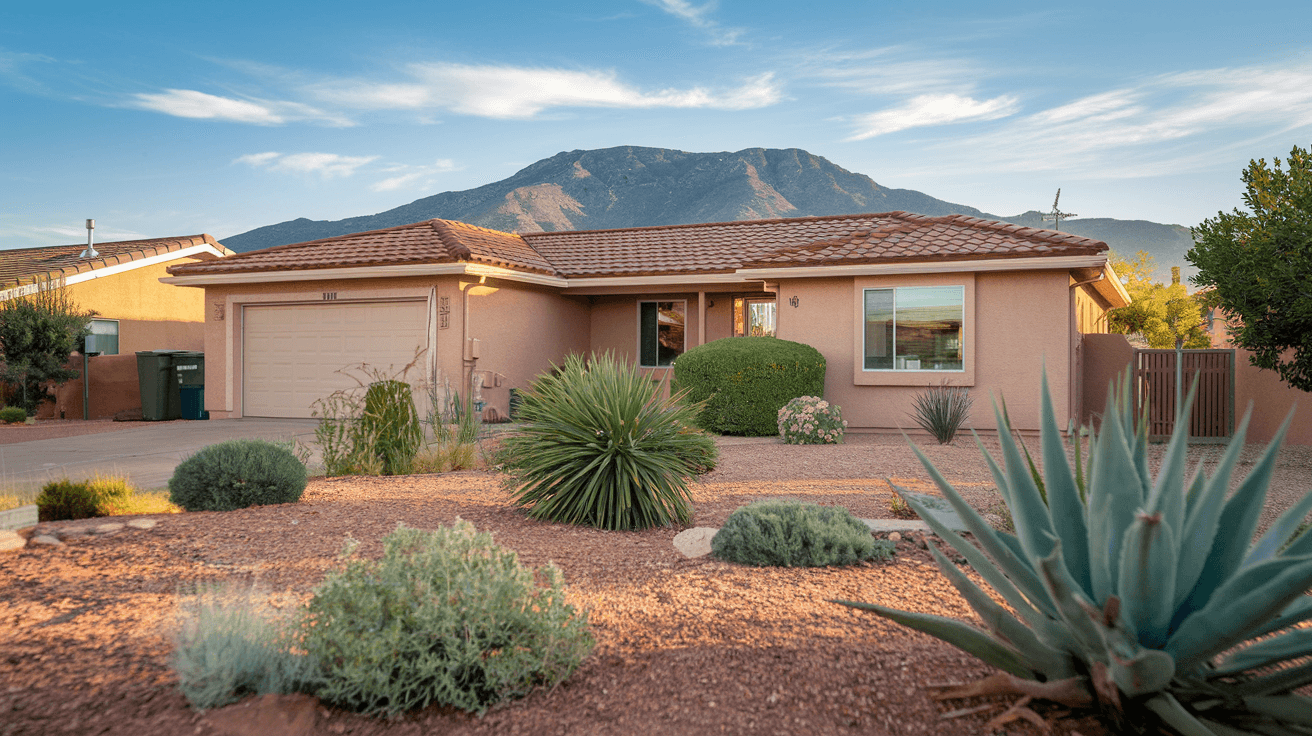
The Heights remains the metro's most reliable demand engine. The combination of established school districts, proximity to Kirtland AFB employment corridors via Gibson Boulevard, and the density of mid-century ranch homes that buyers continue to favor keeps this area consistently active. Homes on the east side of the Heights, closer to the Sandia foothills and the Tramway corridor, are commanding a premium over their western counterparts. Inventory is tighter here than the metro average.
Nob Hill
Median price: $412,000 | Average DOM: 24 days | YoY price change: +3.5%
The walkability premium around Central Avenue and the Nob Hill commercial district continues to attract buyers who want urban texture without downtown density. The neighborhood's Craftsman bungalows and mid-century contemporaries are drawing younger professional buyers, many connected to UNM's medical complex or the growing film production ecosystem anchored by Albuquerque Studios. Competition is real but not frantic — well-staged homes priced within 2% of market value are moving in three to four weeks.
North Valley
Median price: $447,000 | Average DOM: 26 days | YoY price change: +3.2%
The North Valley's appeal is irreplaceable: irrigated lots, horse property, mature cottonwoods, and an agricultural character that no amount of new construction can replicate. Prices here are up modestly year-over-year, but the buyer pool is specific. These buyers are not cross-shopping with Taylor Ranch — they want the acreage and the acequia culture. Homes with functional irrigation rights and updated infrastructure are moving. Properties needing significant renovation are taking longer as buyers factor rehab costs into their financing calculations.
Rio Rancho
Median price: $312,000 | Average DOM: 22 days | YoY price change: +4.8%
Rio Rancho is outperforming the broader metro on price appreciation, driven by affordability migration from Albuquerque proper and continued employment growth tied to Intel's ongoing operations in the area. The city's newer subdivisions off of Unser Boulevard and in the Northern Meadows area are particularly active. For buyers priced out of comparable Albuquerque neighborhoods, Rio Rancho represents the most accessible path into homeownership in the metro. Seller-paid buydowns are common here and are being used effectively to close deals in the $290,000 to $330,000 range.
Corrales
Median price: $598,000 | Average DOM: 41 days | YoY price change: +2.1%
Corrales is a patient market. Buyers here are not in a hurry, and neither are sellers — which is appropriate for a village where the inventory of irrigated, horse-zoned properties along Corrales Road turns over slowly by definition. Price appreciation has moderated, which reflects both the national luxury market softening and the specific dynamics of a small, supply-constrained inventory. Sellers who bought during the 2020 to 2022 run-up should be realistic about appreciation expectations. The buyer for a Corrales property is out there, but they have options and they know the market.
High Desert
Median price: $672,000 | Average DOM: 48 days | YoY price change: +1.8%
High Desert continues to command the metro's highest price points for non-custom construction, and the Sandia Mountain backdrop along the Elena Gallegos open space corridor remains one of Albuquerque's most compelling residential settings. But at 48 average days on market, this is clearly a buyer's negotiating environment. Sellers here are increasingly offering rate buydowns and closing cost credits to move properties. Buyers patient enough to wait for the right home will find genuine value in 2026 relative to the peak pricing of 2022.
Downtown / EDo (East Downtown)
Median price: $328,000 | Average DOM: 35 days | YoY price change: +2.8%
The Downtown and East Downtown corridor continues its slow but real revitalization, with the Kimo Theatre district and the Route 66 commercial strip drawing buyers who prioritize walkability and urban character. Condo and townhome inventory dominates this segment. Days on market are slightly above metro average, reflecting a buyer pool that is smaller but highly motivated when the right property appears. The film industry's presence in Albuquerque has brought a cohort of creative-economy buyers to this area who were not a significant market factor five years ago.
Taylor Ranch
Median price: $358,000 | Average DOM: 21 days | YoY price change: +3.9%
Taylor Ranch punches above its weight in terms of market velocity. The neighborhood's combination of larger lot sizes, access to Paseo del Norte, and relatively newer construction stock (much of it from the 1990s and 2000s) makes it attractive to families and move-up buyers. Homes here are moving faster than the metro average, and the neighborhood's proximity to the Cottonwood Mall employment and retail corridor adds practical appeal. This is one of the metro's most consistent performers.
Buyer vs. Seller Strategy: What the May 2026 Albuquerque Market Means for You

If You Are Buying in Albuquerque Right Now
The single most important thing a buyer can do in May 2026 is get a full underwriting pre-approval — not a pre-qualification letter — and have a frank conversation with their lender about buydown structures before they make their first offer. A 2-1 buydown on a $387,000 purchase at current rates reduces the first-year payment by roughly $350 to $400 per month. That is not a minor detail — that is the difference between comfortable and stretched for many households.
In the $300,000 to $400,000 range, buyers should be prepared to move within 48 to 72 hours of a listing going live in target neighborhoods. Requesting a seller-paid buydown in an initial offer on a fresh listing is a reasonable ask, but pair it with a strong purchase price and clean terms. Do not combine a buydown request with a price reduction ask on a competitively priced home — you will lose the offer.
Above $450,000, the market is working in your favor. Negotiate. Ask for the buydown, ask for closing cost credits, and do not be afraid to counter after inspection. Sellers in that tier have already adjusted their expectations.
“"In a market where rates are the variable buyers can least control, the buydown has become the most powerful tool a motivated seller can offer — and the most underutilized ask a buyer can make."
If You Are Selling in Albuquerque Right Now
Pricing accuracy is non-negotiable in May 2026. The 97.8% list-to-sale ratio looks healthy at the metro level, but it conceals a significant divergence between homes that sold in the first two weeks and homes that sat for 45 or more days and eventually reduced. Homes that sell in the first two weeks are achieving that 97.8% figure. Homes that sit are pulling it down.
Budget for a seller-paid buydown as part of your net proceeds calculation. In the current environment, offering a $8,000 to $12,000 buydown credit on a $380,000 listing is frequently more effective than reducing your list price by the same amount — buyers respond more strongly to a lower monthly payment than to a lower purchase price, and it keeps your sale price higher for appraisal and comp purposes.
Presentation matters more than it did two years ago. Buyers have options now. A home that photographs poorly or shows cluttered will sit while comparable homes move.
Looking Ahead: What to Expect in Albuquerque's June and Summer 2026 Market
Seasonal patterns in Albuquerque favor continued activity through June and into early July before the traditional late-summer slowdown associated with monsoon season and the back-to-school transition. Expect new listing volume to remain elevated as sellers who were waiting for spring market conditions capitalize on the window before summer heat dampens showing activity.
On the economic side, Albuquerque's employment base remains one of the most recession-resistant in the Mountain West. Kirtland AFB and Sandia National Laboratories together represent tens of thousands of direct and indirect jobs with federal funding backstops that insulate the local economy from private-sector volatility. Intel's Albuquerque operations, while subject to semiconductor cycle pressures nationally, continue to anchor Rio Rancho's employment base. UNM's medical complex is the metro's largest single employer and shows no signs of contraction. The film and television production industry, which has made New Mexico the third-largest production hub in the country, continues to bring higher-income creative professionals into the buyer pool.
Interest rate trajectory is the variable with the most uncertainty. If the Federal Reserve holds rates through summer — the current consensus expectation — the buydown-driven affordability strategies that define May's market will remain central through at least Q3. Any rate reduction, even a modest 25-basis-point cut, would meaningfully expand the qualified buyer pool and could compress days on market in the $300,000 to $450,000 tier quickly.
Inventory is the metric to watch most closely. If new listings continue outpacing closed sales into June, months of supply could approach 4.8 to 5.0 by July — a level that would meaningfully shift negotiating leverage toward buyers in the mid-to-upper price tiers. If absorption accelerates with seasonal demand, supply could stabilize or tighten, reinforcing current pricing.
Key Takeaways: Albuquerque Housing Market May 2026
- •Median price holds at $387,000, up 3.5% year-over-year, reflecting sustained demand in the metro's core price tiers despite elevated mortgage rates and the highest inventory levels since early 2019.
- •Seller-paid mortgage rate buydowns are now a standard negotiating element in Albuquerque transactions, particularly in the $300,000 to $450,000 range, where a 2-1 buydown can reduce first-year payments by $350 to $400 per month and meaningfully expand buyer qualification.
- •Rio Rancho leads metro neighborhoods in year-over-year price appreciation at 4.8%, driven by affordability migration and Intel-anchored employment, while High Desert and Corrales have moderated to under 2% annual gains as luxury supply outpaces demand.
- •At 31 average days on market and 4.3 months of supply, Albuquerque sits in a transitional zone — not a seller's market by traditional definition, but competitive enough in the sub-$400,000 tier that buyers who delay decisions or submit weak offers are consistently losing to more prepared competition.
- •Sellers who budget for concessions and price accurately are achieving near-list results; those who price aspirationally in a market with 3,850 active listings are experiencing extended market times and eventual reductions that net them less than a correctly priced listing would have from day one.
Want more insider intel?
Subscribe to get market updates and new articles delivered to your inbox.