Albuquerque Housing Market Report: May 2026 — Rising Inventory Reshapes the Summer Outlook
Albuquerque Housing Market Report: May 2026 — What Rising Inventory Means for Buyers and Sellers Heading Into Summer
The Albuquerque housing market entered May 2026 in a state of measured recalibration. The metro median home price settled at $385,000, a figure that looks stable on the surface but carries more complexity underneath. Year-over-year appreciation held at 3.5% — healthy by historical standards, but the slowest pace of gain since 2019. Meanwhile, active listings climbed to 2,850, months of inventory expanded to 3.7, and average days on market stretched to 32 days. Taken together, these numbers tell a story of a market that is no longer running hot and is gradually returning to something closer to equilibrium.
For buyers who spent the last four years watching homes evaporate within 48 hours of listing, this shift is significant. For sellers who grew accustomed to waived inspections and offers $30,000 over ask, it demands a recalibration of strategy. This report breaks down exactly what is happening, neighborhood by neighborhood, price tier by price tier, and what it means for anyone making a move in Albuquerque this summer.
Albuquerque Real Estate Market Overview: The Big Picture in May 2026
The headline metric for May is inventory. Active listings at 2,850 represent a 34% increase compared to May 2025, when the market was running on roughly 2,120 available homes. That is a meaningful shift. When inventory grows that quickly, it does not automatically collapse prices — but it does redistribute power at the negotiating table.
The list-to-sale ratio of 97.8% tells part of that story. Sellers are still getting close to their asking price, but the days of routinely closing at 103% or 104% of list are largely behind us for most price segments. Buyers are negotiating again. Inspection contingencies are returning to contracts. Appraisal gaps are no longer being casually absorbed by buyers desperate to win a bidding war.
What is driving the inventory increase? Three converging forces. First, mortgage rate fatigue is easing the lock-in effect that kept potential move-up sellers frozen in place. Rates have moderated enough from their 2023 peaks that some homeowners who refinanced at 3% are now willing to trade up, even at today's rates. Second, new construction deliveries in the South Valley and on Albuquerque's West Side have added supply that was years in the pipeline. Third, a segment of investor-owned properties — particularly short-term rentals near Old Town and the Nob Hill corridor — are being repositioned back to the for-sale market as the short-term rental regulatory environment tightens.
“"Inventory at 3.7 months is not a buyer's market by textbook definition — that threshold is typically six months — but it is the most breathing room buyers have had since before the pandemic reshaped this city's real estate landscape."
Albuquerque Housing Inventory and Supply Dynamics
Breaking down the supply picture more precisely: 2,850 active listings against a backdrop of approximately 770 closed sales in May produces a months-of-inventory reading of 3.7. That compares to 2.4 months in May 2025 and 1.8 months in May 2024, at the peak of post-pandemic tightness.
New listings coming onto the market in May totaled approximately 980, which outpaced closed sales by a meaningful margin. This is the core mechanic driving inventory accumulation: supply is entering the market faster than it is being absorbed. Seasonally, May typically brings a wave of new listings as sellers target the spring-summer buying window, but this May's intake was notably higher than the five-year seasonal average.
Closed sales for the month came in near 770, which represents a modest improvement over the first quarter of 2026 but remains below the pace needed to prevent further inventory build. The pipeline of pending contracts does suggest some acceleration into June, particularly in the $300,000 to $400,000 price range, which continues to be the engine of transaction volume in this metro.
Comparing May 2026 to Prior Periods
The context matters here. In May 2021 and May 2022, Albuquerque was operating with fewer than 800 active listings metro-wide. The current figure of 2,850 feels dramatic by comparison, but it is worth noting that pre-pandemic norms for this market ran between 3,500 and 4,500 active listings. What we are seeing is not a glut — it is a gradual normalization. Sellers who understand this will price accordingly and move their homes. Sellers who are benchmarking against 2022 conditions are going to sit on the market and eventually reduce.
Albuquerque Home Prices: Trends by Tier and Price Segment
The metro median of $385,000 masks significant divergence across price tiers. Here is how each segment performed in May:
$200,000 to $300,000: This tier is the tightest in the market. Inventory below $300,000 remains genuinely scarce, and homes priced here — particularly in the South Valley, parts of the International District, and older Rio Rancho subdivisions — are still moving in under 15 days with multiple offers. This segment has seen price appreciation of approximately 5.2% year-over-year, the strongest of any tier, driven by first-time buyer demand and investor competition.
$300,000 to $400,000: The volume leader. This range accounts for the largest share of transactions and is where the market feels most balanced. Homes are moving in 22 to 28 days on average, and buyers have enough selection to be thoughtful without being able to lowball. Price appreciation here tracks closely to the metro average at 3.4% YoY.
$400,000 to $500,000: Inventory has grown notably in this tier, particularly in the Northeast Heights foothills and parts of Taylor Ranch. Days on market are averaging 35 to 42 days, and price reductions are more common. Sellers in this range are competing against new construction options, which creates a ceiling on appreciation. YoY price change is running at 2.1%.
$500,000 and above: The luxury and semi-luxury segment is experiencing the most pronounced shift. Active listings above $500,000 have grown by over 40% compared to a year ago. Corrales, High Desert, and the upper North Valley are all showing extended days on market and, in some cases, meaningful price concessions from original list. Price appreciation at this tier is essentially flat at 0.8% YoY, and select properties are trading below their 2024 sale prices.
Average price per square foot metro-wide is tracking at approximately $218, up from $208 a year ago. The gap between median and average pricing reflects the influence of high-value transactions in the foothills and North Valley pulling the average upward.
Days on Market: What the Pace of Sales Tells Buyers About Offer Strategy
At 32 days average days on market, Albuquerque has crossed back above the 30-day threshold for the first time since 2020. This is a psychologically and strategically important number. It means that the average home is sitting long enough for buyers to schedule a showing, conduct due diligence, and submit a considered offer — without the panic-buying dynamic that defined 2021 through early 2024.
However, the average obscures the bimodal nature of the current market. Well-priced homes in high-demand corridors — think Ridgecrest Drive in the Northeast Heights, the streets surrounding Roosevelt Park in Nob Hill, or new listings along the Paseo del Norte corridor in Rio Rancho — are still going under contract in 7 to 12 days. Overpriced homes or properties with deferred maintenance in slower segments are sitting 60, 90, even 120 days and accumulating the stigma that comes with extended market time.
“"The 32-day average is not an invitation to be passive. It is a signal to be strategic. The homes worth buying are still moving fast. The ones sitting are sitting for a reason."
For buyers, the practical implication is this: you can take a breath, but you cannot take a month. If a property checks your boxes and is priced at or below market, act within the first week. If a home has been sitting for 45-plus days, you have negotiating room — on price, on repairs, on closing costs, potentially on all three.
Albuquerque Neighborhood Breakdown: May 2026 Data
Northeast Heights
The workhorse of Albuquerque real estate, the Northeast Heights continues to deliver consistent transaction volume. Median price: $358,000, up 4.1% year-over-year. Average days on market: 24 days. The Tramway corridor and the streets east of Eubank are seeing the strongest demand, driven by proximity to Sandia Labs and Kirtland AFB. Inventory has grown here, but so has buyer interest from incoming defense and tech sector relocations.
Nob Hill
One of Albuquerque's most walkable and culturally rich neighborhoods, Nob Hill continues to command a premium. Median price: $412,000, up 3.8% YoY. Days on market average 26 days. The density of amenities along Central Avenue — from Zinc Wine Bar to Nob Hill Bar and Grill — keeps demand steady among buyers prioritizing lifestyle over square footage. Smaller lot sizes and older construction mean inspection contingencies matter here.
North Valley
The North Valley remains one of the most distinctive submarkets in the metro, defined by its agricultural history, acequia systems, and large lots along the Rio Grande bosque. Median price: $448,000, up 3.2% YoY. Days on market: 38 days. Inventory has loosened slightly, giving buyers more options than they had a year ago. Properties with horse privileges or detached casitas are still generating strong interest.
Rio Rancho
Rio Rancho continues to be the affordability valve for the greater metro. Median price: $312,000, up 4.9% YoY — the strongest appreciation rate of any submarket covered in this report. Days on market: 21 days. Intel's continued presence and the expansion of the Presbyterian Rust Medical Center campus are anchoring demand. New construction in the northern sections of Rio Rancho is adding inventory, but absorption is keeping pace.
Corrales
Corrales operates in its own micro-market reality. Median price: $598,000, up 2.3% YoY. Days on market: 44 days. The combination of rural character, proximity to both Albuquerque and Rio Rancho, and strict zoning that limits density keeps this village perpetually undersupplied relative to demand. However, the $500K-plus slowdown is touching Corrales at the margin, and sellers should expect longer timelines than they saw in 2023 or 2024.
High Desert
Albuquerque's premier master-planned community in the Sandia foothills is navigating the luxury market headwinds with mixed results. Median price: $672,000, up just 1.1% YoY. Days on market: 51 days. The views along Tramway and the trails connecting to the Elena Gallegos Open Space remain compelling selling points, but the price ceiling is real. Buyers in this range have options — Corrales, North Valley, custom builds in the East Mountains — and they are taking their time.
Downtown / EDo (East Downtown)
The urban core continues its slow but steady evolution. Median price: $295,000, up 2.7% YoY. Days on market: 33 days. Condo and townhome inventory has grown as several projects delivered units in late 2025. The film industry's footprint in the area — with Kensington Studios nearby — is a steady demand driver among creative professionals and production workers. Buyers here tend to be less rate-sensitive and more lifestyle-driven.
Taylor Ranch
Located on Albuquerque's West Side, Taylor Ranch offers established suburban inventory at prices that remain accessible. Median price: $342,000, up 3.6% YoY. Days on market: 28 days. The neighborhood's proximity to the Paseo del Norte/Coors interchange and a strong inventory of 3- and 4-bedroom homes makes it a consistent performer with families. Competition is moderate, and buyers here are finding that patient, well-informed offers are landing without bidding wars.
What Rising Inventory Means for Buyers and Sellers in Albuquerque
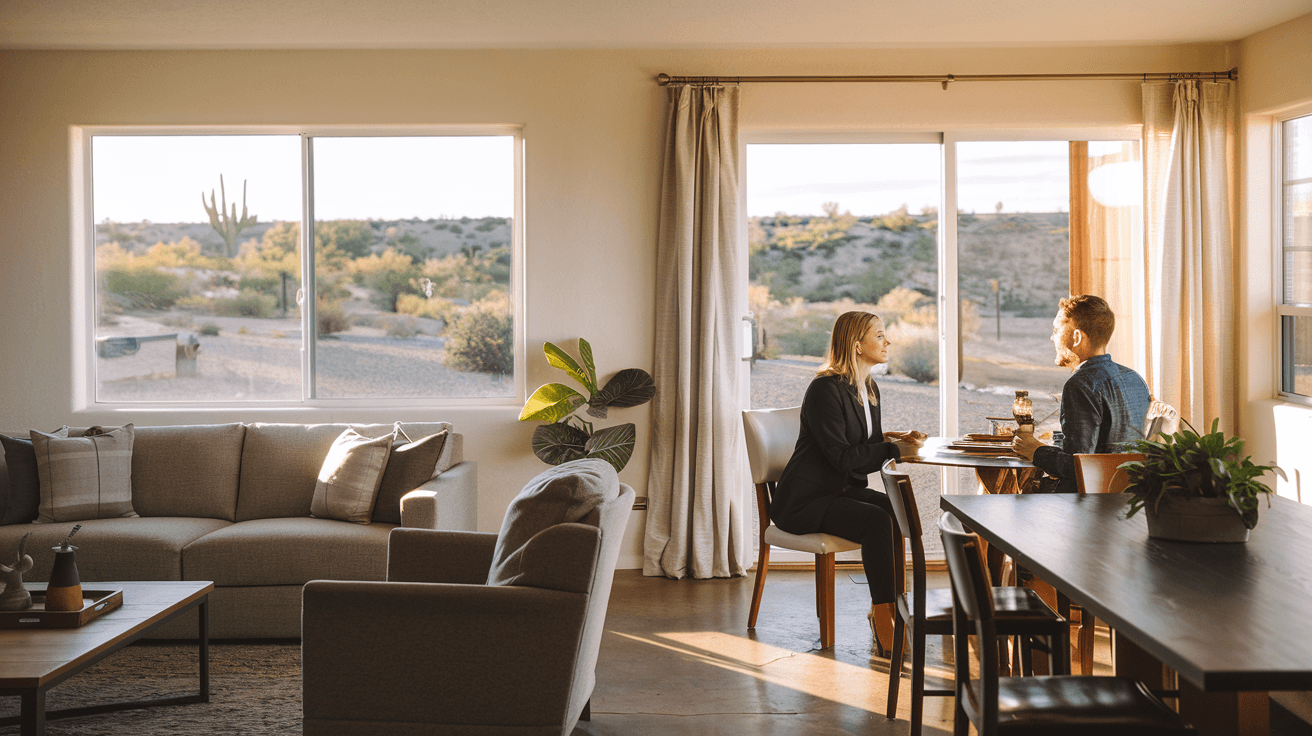
If You Are Buying in Albuquerque Right Now
This is the best buying environment in Albuquerque since 2019, with one important caveat: the best homes are still moving fast. The strategic advantage available to buyers today is selectivity, not passivity. You can afford to be thoughtful about which home you pursue. You can negotiate inspection repairs without fear that a seller will simply move to the next offer. You can ask for closing cost assistance — and often get it, particularly on homes that have been sitting 30-plus days.
Get pre-approved before you start seriously touring. With inventory at 2,850 units, there is enough selection that you will find something worth moving on, but when you do find it, you need to be ready. Focus your attention on the $300,000 to $400,000 range if you want the deepest selection. If you are targeting Rio Rancho for affordability, move faster — that submarket is still competitive. If you are shopping above $500,000, you have real negotiating leverage and should use it.
If You Are Selling in Albuquerque Right Now
Pricing is everything in this market. The list-to-sale ratio of 97.8% tells you that correctly priced homes are still selling very close to ask. The trap is overpricing at the start and chasing the market down with reductions — each reduction signals weakness and erodes your negotiating position. Homes that launch at the right price in May and June are still selling in under 30 days. Homes that launch aspirationally are sitting, accumulating days on market, and ultimately selling for less than a correct initial price would have achieved.
Presentation matters more than it did two years ago. Buyers have options now. Stage the home. Address the deferred maintenance items before listing. If your property is above $450,000, professional photography and video are not optional — they are the price of admission for competing in a market where buyers are deliberate and well-informed.
If your timeline is flexible, late May through mid-July remains the strongest selling window from a demand perspective. Do not wait until August, when summer heat and the back-to-school transition historically slow showings.
Albuquerque Real Estate Outlook: What to Expect Heading Into Summer 2026
The summer forecast for Albuquerque real estate hinges on three variables: interest rates, employment, and whether the current inventory build continues or stabilizes.
On rates, the consensus expectation is for modest stability through Q3 2026. A meaningful rate drop would unlock a new wave of move-up buyers who are currently rate-locked, tightening inventory rapidly. A rate increase would further slow transaction volume and put additional downward pressure on prices above $500,000. The base case is continuation of the current environment.
On employment, Albuquerque's economic anchors remain solid. Sandia National Laboratories and Kirtland Air Force Base together employ roughly 20,000 workers with above-median incomes, and both are operating under multi-year federal commitments that insulate the local economy from broader cyclical pressure. Intel's Rio Rancho facility is in an expansion phase that is expected to generate both direct hiring and supply-chain employment through 2027. The New Mexico film industry, now a genuine economic driver rather than a novelty, continues to attract production spending that circulates through the local economy. UNM's enrollment stabilization after years of decline adds a modest but consistent demand layer for housing near the university corridor.
The most likely scenario for June and July 2026 is a modest seasonal uptick in closed sales as the spring listings pipeline converts to closings, with median price holding in the $382,000 to $390,000 range. Inventory may grow slightly before plateauing as the summer heat typically suppresses new listings in July and August. Neighborhoods with school-driven demand — Northeast Heights, Taylor Ranch, Rio Rancho — will see their busiest weeks between now and the start of the Albuquerque Public Schools calendar in early August.
Key Takeaways: Albuquerque Housing Market May 2026
- •Inventory has shifted the balance of power. At 2,850 active listings and 3.7 months of supply, buyers have more selection and negotiating leverage than at any point since 2019, though the market remains technically undersupplied relative to pre-pandemic norms.
- •The median price of $385,000 reflects a healthy but moderating market. Year-over-year appreciation of 3.5% is sustainable and supported by fundamentals, but the era of 8% to 12% annual gains is over for this cycle.
- •Rio Rancho is the standout submarket. With a median price of $312,000 and 4.9% YoY appreciation — the strongest in the metro — Rio Rancho is absorbing demand that cannot afford Albuquerque proper and benefiting from Intel and healthcare sector employment growth.
- •The luxury segment above $500,000 is the softest part of the market. High Desert and Corrales are both showing extended days on market and near-flat appreciation; buyers in this range should negotiate assertively and sellers should price to the current reality, not the 2024 peak.
- •Pricing strategy is the single most important variable for sellers. The 97.8% list-to-sale ratio means correctly priced homes are still selling at near full value, but overpriced listings are sitting and ultimately selling for less — making accurate pricing at launch the highest-leverage decision any seller can make in this market.
Want more insider intel?
Subscribe to get market updates and new articles delivered to your inbox.