Albuquerque Housing Market Report: June 2026 — Rate Buydown Deals and Seller Concessions Are Reshaping How Homes Actually Close Across the Metro
Albuquerque Housing Market June 2026: What the Headline Number Is Not Telling You
The metro median home price in Albuquerque landed at $385,000 in June 2026, a 3.5% increase year-over-year and a figure that looks, at first glance, like steady, unremarkable appreciation. But spend any time in the transaction data and a more nuanced picture emerges. The way homes are closing has fundamentally shifted. Seller concessions — particularly rate buydowns and closing cost credits — are no longer the exception for distressed or overpriced listings. They are becoming a normalized negotiating tool across price tiers, from Taylor Ranch starter homes to High Desert custom builds pushing past $700,000.
The mechanics matter here. A 2-1 temporary buydown, where the seller funds a reduced rate in years one and two of the loan, is now appearing in contracts that otherwise look competitive on price. A buyer purchasing at $385,000 with a seller-funded buydown can effectively enter year one at a rate roughly 200 basis points below their note rate — a meaningful monthly savings that is driving purchase decisions for relocating Kirtland and Sandia Labs employees who are rate-sensitive but not necessarily price-sensitive. This is not a distressed market signal. It is an adaptation, and buyers and sellers who understand the mechanics are winning.
Active listings across the metro stood at 3,850 heading into the end of June, with months of inventory at 3.9 — a figure that technically sits in balanced territory but masks significant variance by neighborhood and price tier. The overall list-to-sale ratio of 97.8% confirms sellers are still holding pricing power, just not the same unchecked leverage they had in 2021 and 2022.
Albuquerque Housing Inventory: Where Supply Is Tightening and Where It Is Building
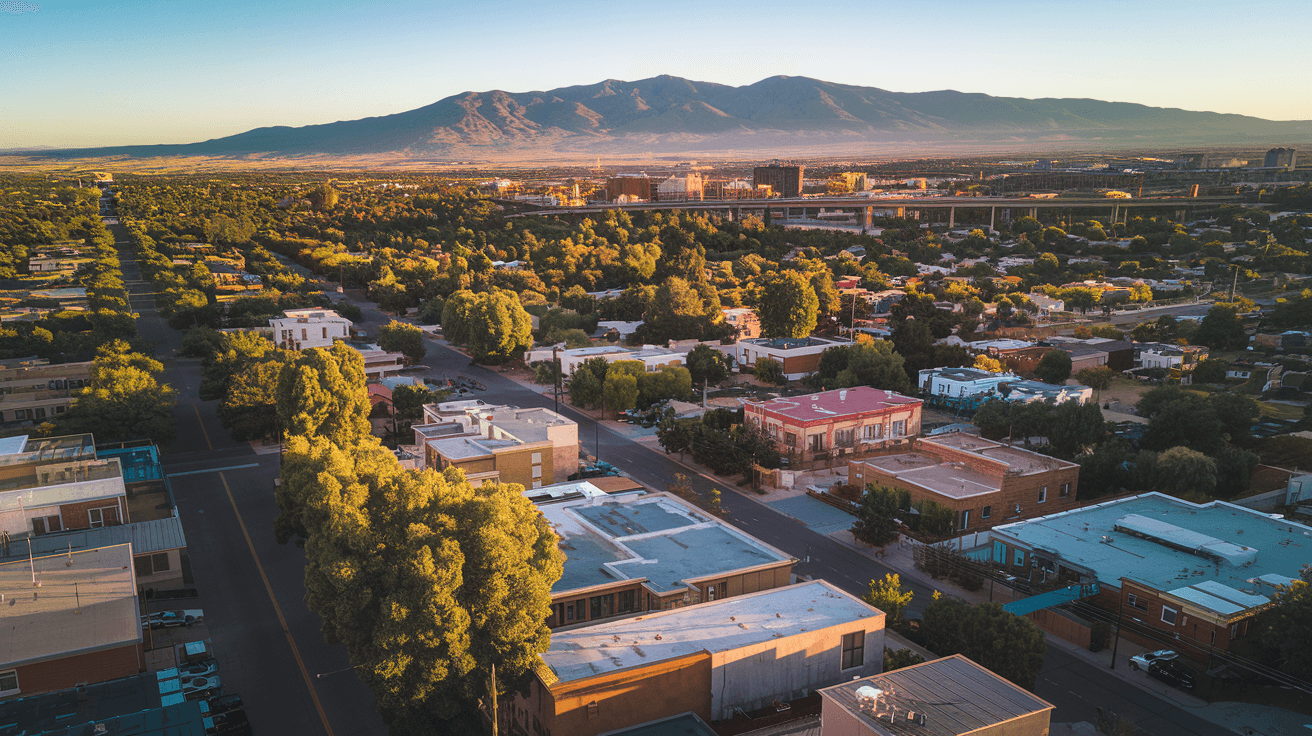
The inventory story in June is one of two distinct markets operating simultaneously within the same metro.
Below $350,000, the market remains functionally undersupplied. New listings in this tier are being absorbed within 18 to 22 days on average, and multiple-offer situations — while less frenzied than peak years — are still occurring on well-priced product. Rio Rancho's southeast quadrant, particularly the neighborhoods feeding into Cleveland High School's district, is seeing consistent demand from first-time buyers who have been priced out of comparable Albuquerque zip codes.
Above $500,000, the picture is meaningfully different. Active listings in the $500,000-plus tier have increased approximately 14% compared to June 2025, and average days on market in that segment has stretched to 52 days. Sellers in High Desert, Corrales, and the upper end of the North Valley are competing for a buyer pool that is smaller, more deliberate, and increasingly willing to wait. This is precisely where seller-paid buydowns and concession packages are having the most strategic impact — not as signs of weakness, but as deal-structuring tools that move qualified buyers off the fence.
Months of inventory by price tier tells the clearest story:
- •$200,000 to $300,000: 2.1 months — firmly a seller's market
- •$300,000 to $400,000: 3.4 months — balanced, competitive
- •$400,000 to $500,000: 4.2 months — slight buyer advantage emerging
- •$500,000 and above: 5.8 months — buyers have real leverage
Year-over-year, total active listings are up roughly 11% from June 2025, which is the inventory expansion the market needed. But it has not arrived uniformly, and buyers should not assume that higher inventory numbers translate to negotiating power in every segment or every zip code.
Albuquerque Home Prices by Tier: Where Competition Is Hottest in June 2026
The $300,000 to $400,000 price band remains the most contested segment in the Albuquerque market, accounting for an estimated 38% of all closed sales in June. Median price per square foot across the metro came in at $192 per square foot, up from $183 per square foot in June 2025 — a roughly 4.9% increase that slightly outpaces the overall median appreciation rate, suggesting that smaller, more efficient floor plans are commanding premium positioning.
In the $200,000 to $300,000 tier, inventory is thin enough that properly conditioned homes in established Northeast Heights neighborhoods — particularly along the Montgomery and Candelaria corridors — are still receiving offers within the first weekend. The buyer pool here skews toward FHA and VA financing, and sellers who proactively offer closing cost credits (rather than waiting to be asked) are shortening their time on market by an average of four to six days, based on agent-reported data from recent closings.
The $400,000 to $500,000 tier is where the concession conversation gets most interesting. This price point attracts a mix of move-up buyers from within the metro and relocating professionals — particularly those coming in from higher-cost markets in California, Texas, and Colorado who view Albuquerque pricing as inherently reasonable. Many of these buyers are financing-capable but rate-sensitive, making seller-funded buydown packages a particularly effective conversion tool. Several listings in the Tanoan area and along the Paseo del Norte corridor have closed in this tier with seller credits structured specifically as 2-1 buydowns, allowing buyers to manage cash flow in year one while sellers maintained their asking price.
“"The list-to-sale ratio of 97.8% tells you sellers still have pricing power. The concession data tells you that power is increasingly being deployed through financing structure rather than price reduction — and that is a fundamentally different negotiation."
Albuquerque Days on Market: What 34 Days Means for Your Offer Strategy
The metro-wide average of 34 days on market is up from 27 days in June 2025 and represents the clearest single indicator that the market has rebalanced from its 2021-2022 extremes. But averages obscure the tactical reality.
Homes priced correctly in the $300,000 to $400,000 range in high-demand neighborhoods are still moving in 14 to 21 days. Homes that sit past 30 days are increasingly signaling either a pricing issue or a condition issue — and in the current environment, buyers are patient enough to wait for one of those to be corrected. The stigma of days on market has returned after years of buyers waiving everything in competitive bidding. A listing that crosses the 45-day threshold is now generating questions about what the market knows that the buyer does not.
For buyers, this means offer strategy has become more nuanced than it was even 18 months ago. On fresh listings in competitive neighborhoods, moving quickly with a clean offer still matters. On properties that have been sitting, buyers now have room to negotiate on price, request inspections without fear of losing the deal, and ask for concessions — including rate buydown credits — that would have been laughed out of a multiple-offer situation two years ago.
For sellers, the data argues strongly for accurate pricing at launch. Homes that start at the right number are still selling in three to four weeks. Homes that start aspirationally and reduce are averaging 55 to 65 days — nearly double — and frequently netting less than they would have with a sharper initial price.
Albuquerque Neighborhood-by-Neighborhood Breakdown: June 2026 Data
Northeast Heights
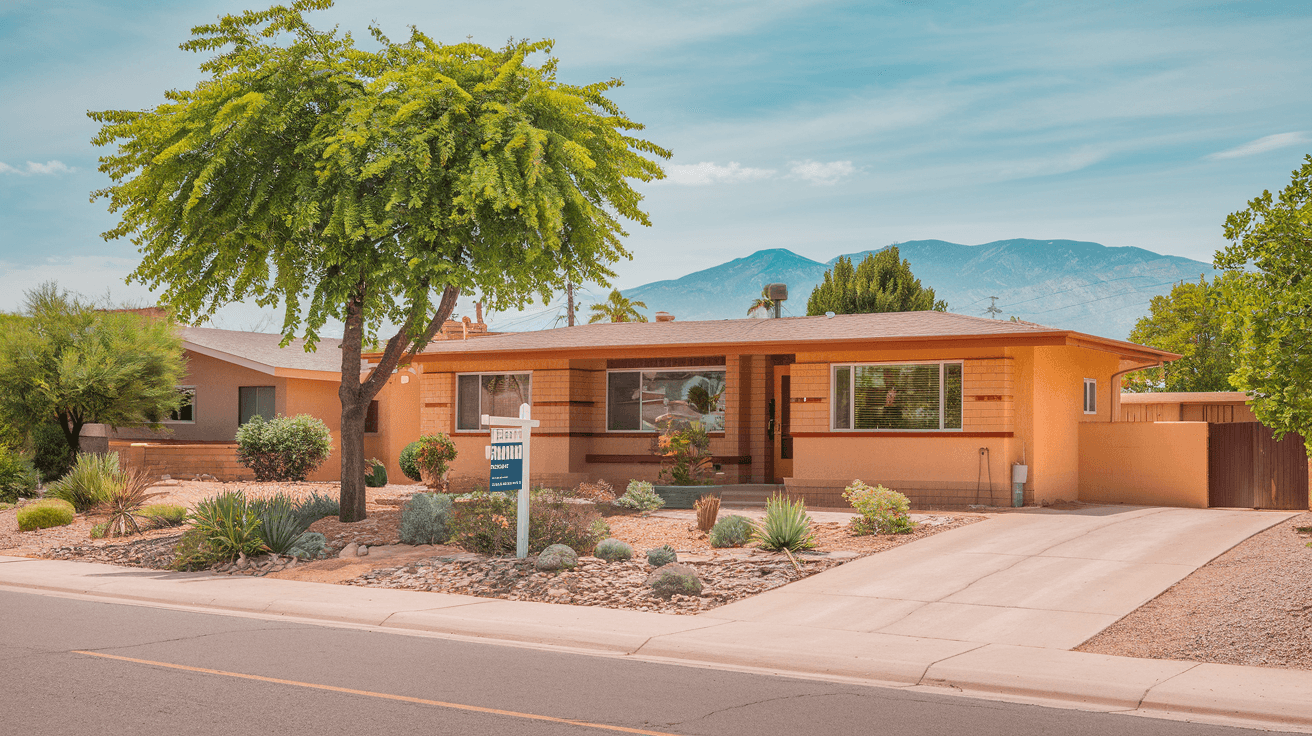
The workhorse of the Albuquerque market. Median price: $338,000. Average days on market: 21 days. Year-over-year price change: +4.1%. The Heights continues to absorb consistent demand from buyers who want established neighborhoods, mature trees, and proximity to Menaul, Montgomery, and the Uptown employment corridor. The Sandia High and La Cueva school districts are driving specific micro-demand within this broader geography. Inventory is lean below $325,000; anything priced there with updated finishes is moving fast.
Nob Hill
Median price: $392,000. Average days on market: 28 days. Year-over-year price change: +3.2%. The Central Avenue corridor and surrounding blocks continue to attract buyers who want walkability to Nob Hill's restaurant and retail district, but the market here is selective. Buyers are paying for character and location but are scrutinizing condition carefully. Older homes with deferred maintenance are sitting. Renovated bungalows and casitas near Carlisle and Girard are moving well.
North Valley
Median price: $447,000. Average days on market: 31 days. Year-over-year price change: +2.8%. The North Valley's agricultural zoning, mature cottonwoods, and proximity to the Rio Grande continue to command a lifestyle premium. Inventory here is genuinely limited — there are only so many properties along the bosque and the acequia corridors — and when well-priced homes come to market, they attract buyers from across the metro who have been waiting. The slower days-on-market figure reflects the deliberate pace of buyers in this price range, not lack of demand.
Rio Rancho
Median price: $312,000. Average days on market: 19 days. Year-over-year price change: +4.8%. Rio Rancho is the strongest performing sub-market in the metro on a percentage basis this June. Intel's ongoing operations at the Rio Rancho campus and continued growth in the city's commercial corridor along Southern Boulevard are supporting consistent employment-driven demand. New construction is adding inventory but not fast enough to cool what is effectively a sub-three-month supply environment. First-time buyers and VA buyers are particularly active here.
Corrales
Median price: $589,000. Average days on market: 44 days. Year-over-year price change: +1.9%. Corrales remains a market of patience on both sides. Buyers are drawn by the village character, horse properties, and the views looking east toward the Sandias and west toward the volcanoes. Sellers need to price with discipline — the buyer pool is small and sophisticated, and overpriced listings sit visibly in a small community. Seller concessions are appearing in Corrales transactions more frequently than a year ago, particularly on properties above $650,000.
High Desert
Median price: $648,000. Average days on market: 52 days. Year-over-year price change: +1.4%. The gated communities and custom homes along the High Desert trail system and near the Elena Gallegos Open Space continue to attract Albuquerque's upper-income professional class, but this segment is clearly in buyer-favorable territory. Sellers here have the most incentive to offer creative financing structures. A well-packaged seller concession — whether structured as a rate buydown or a renovation credit — can be the difference between 45 days and 75 days on market at this price point.
Downtown / EDo (East Downtown)
Median price: $298,000. Average days on market: 33 days. Year-over-year price change: +3.6%. The area east of Downtown along the Rail Runner corridor and around the emerging EDo Arts District continues its slow but real transformation. Townhomes and condos are the primary product type, and the buyer profile skews younger, often remote workers who prioritize walkability and the creative energy of the Central/Lead/Coal corridor. The film industry's ongoing presence in Albuquerque is a quiet but real demand driver in this neighborhood.
Taylor Ranch
Median price: $341,000. Average days on market: 24 days. Year-over-year price change: +3.9%. Taylor Ranch on the west side continues to offer some of the best value-to-condition ratios in the metro. Proximity to Paseo del Norte, the Cottonwood Mall employment node, and access to the expanding westside trail system make this a consistent performer. Families relocating from out of state frequently land here after touring the metro because the price-per-square-foot is hard to argue with. Seller concessions in Taylor Ranch are being used tactically rather than desperately — a signal of a healthy, functioning market.
What June 2026 Means If You Are Buying or Selling in Albuquerque
If You Are Buying
The single most important thing a buyer can do right now is understand the concession landscape before making an offer. In segments with more than four months of inventory — everything above $400,000 — asking for a seller credit toward a rate buydown is not aggressive. It is standard practice. A $10,000 seller credit applied to a 2-1 buydown on a $420,000 purchase can reduce your effective payment by $400 to $500 per month in year one. That is real money, and sellers in the $400,000-plus tier are expecting the conversation.
Below $350,000, the calculus is different. Move quickly on well-priced listings, come in clean, and save the concession negotiation for properties that have been on the market more than three weeks. Trying to extract credits on a fresh listing in Northeast Heights or Rio Rancho in the sub-$340,000 range risks losing the home entirely.
Get pre-approved — not pre-qualified — before you write an offer anywhere in this metro. The list-to-sale ratio of 97.8% tells you sellers are not desperate, and an incomplete financing package is the fastest way to get passed over even in a market with more inventory than two years ago.
If You Are Selling
Price discipline at launch is the non-negotiable. The data is unambiguous: homes priced correctly in the first two weeks are selling at or very near list price. Homes that require a reduction are averaging significantly more days on market and netting less. Your agent should be running a current absorption rate analysis by price tier for your specific zip code — not a metro-wide average — before setting your list price.
On the concession question: consider building a seller concession into your strategy proactively rather than reactively. A listing marketed with "seller to contribute up to $8,000 toward buyer's closing costs or rate buydown" attracts more qualified showings in the $380,000 to $450,000 range than the same home listed without that language, based on what agents across the metro are reporting this spring. You are not giving money away — you are converting fence-sitters into buyers.
“"In a market where 97.8% of sellers are getting within 2.2% of their list price, the question is not whether to negotiate — it is where to deploy your flexibility. Sellers who put it in the financing structure are closing faster and netting more than those who sit and wait for a full-price offer with no concessions."
Looking Ahead: What to Expect in Albuquerque Real Estate Through Summer 2026
Seasonal patterns suggest July will bring a modest pullback in new listings as the Albuquerque summer heat discourages casual sellers and some buyers temporarily pause their searches. This typically compresses the active listing count slightly through August, which historically gives a brief tailwind to pricing in the sub-$400,000 segment.
The interest rate environment remains the biggest macro variable. If the Federal Reserve holds rates through the summer — which current futures markets suggest is the base case — expect the concession and buydown market to remain active. A rate cut of even 25 basis points in the fall would likely release pent-up buyer demand that has been sitting on the sidelines, particularly in the move-up tier.
Locally, the economic anchors remain solid. Kirtland Air Force Base continues to generate steady household formation demand on the southeast side. Sandia National Laboratories hiring in advanced energy and defense technology is bringing in high-income earners who are purchasing in the $450,000 to $650,000 range. Intel's Rio Rancho operations, while not at peak expansion, maintain a consistent employment base that underpins westside demand. The New Mexico film industry — centered on Albuquerque Studios and the growing production infrastructure along the I-25 corridor — continues to generate transient-to-permanent resident conversions, particularly in the Nob Hill and EDo markets. UNM's healthcare and research expansion is quietly adding professional-class demand in the near-university neighborhoods.
None of these drivers are new, but their collective stability is precisely what keeps Albuquerque's market from the volatility visible in metros that are more dependent on a single industry or a single employer.
Key Takeaways: Albuquerque Housing Market June 2026
- •The metro median price of $385,000 represents 3.5% year-over-year growth, but the more important trend is structural: seller concessions and rate buydowns are now present in an estimated one in four closed transactions, fundamentally changing how deals are structured across all price tiers.
- •Inventory at 3.9 months is not uniform — the sub-$350,000 market remains supply-constrained at roughly 2.1 months, while the $500,000-plus segment has expanded to 5.8 months, creating two distinct negotiating environments within the same metro.
- •Rio Rancho leads the metro in year-over-year appreciation at 4.8%, driven by Intel employment stability, new commercial development, and a buyer pool dominated by first-time and VA purchasers who are finding better value-per-square-foot than comparable Albuquerque zip codes.
- •At 34 average days on market, the stigma of sitting has returned — listings that cross 45 days are generating buyer skepticism, which argues strongly for sellers to price correctly at launch rather than testing the market aspirationally.
- •Buyers above $400,000 should be asking for seller concessions as a standard part of every offer — the inventory data and days-on-market figures in that tier clearly support the conversation, and sellers in High Desert, Corrales, and upper North Valley are increasingly expecting it.
Want more insider intel?
Subscribe to get market updates and new articles delivered to your inbox.