Albuquerque Housing Market Report: July 2026 — How the $400K–$550K Move-Up Segment Is Behaving as Equity-Rich Sellers Hesitate and Inventory Stays Compressed
Albuquerque Housing Market Report: July 2026 — The Move-Up Segment Under the Microscope
The Albuquerque housing market posted a median sale price of $401,000 in June 2026, marking a 3.5% year-over-year increase and the first time the metro median has definitively crossed and held the $400,000 threshold through a full month of closings. That number carries weight — not because it is a round figure, but because of what it signals about where the market's center of gravity has shifted and, more importantly, who is being squeezed in the process.
This is not a market in freefall, nor is it the frenzied sprint of 2021 and 2022. What June's data reveals is something more nuanced: a market that is grinding higher on thin supply, where the buyers most active in the $400,000 to $550,000 range are running into a structural problem. The sellers who own those homes — the three-bedroom, two-bath ranches in the Northeast Heights near Eubank, the updated Pueblo-style homes backing to the Bosque in the North Valley, the newer construction along Southern Boulevard in Rio Rancho — largely bought or refinanced between 2019 and 2022. They are sitting on substantial equity and sub-4% mortgage rates they are deeply reluctant to surrender.
The result is a move-up market that is simultaneously in high demand and low supply, where buyers are competing for a pool of homes that is not replenishing itself at any meaningful pace.
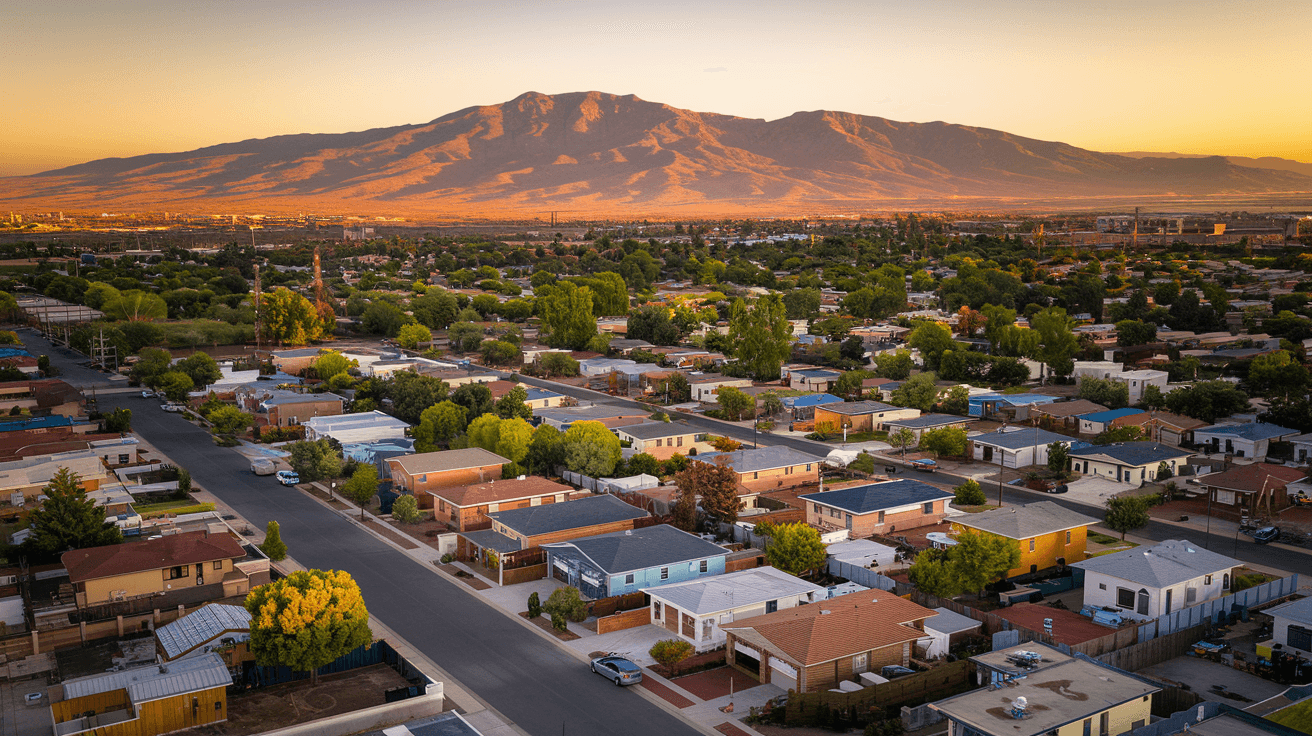
Albuquerque Housing Inventory: Still Compressed, Slightly Looser Than Last Year
Active Listings and Months of Supply
As of the end of June 2026, the Albuquerque metro carried 102 active listings across all price points — a figure that sounds impossibly low until you understand that this represents a specific snapshot of a market where properties are moving before many buyers even schedule a second showing. Months of supply sits at 3.92, which is the most breathing room the market has offered since early 2023, but still sits comfortably in seller's territory. A balanced market — one where neither buyers nor sellers hold structural leverage — requires five to six months of supply.
New listings coming to market in June were absorbed quickly, with a list-to-sale price ratio of 98.3%. That figure tells a precise story: sellers are pricing with discipline, buyers are not dramatically overbidding, and the market is finding equilibrium efficiently. Compare that to June 2024, when list-to-sale ratios in the Northeast Heights were routinely touching 101% and 102%, and you get a sense of how the market has recalibrated without collapsing.
The Lock-In Effect Is Real and Measurable
The inventory constraint is not random. It is structural. Roughly 62% of Albuquerque-area homeowners with mortgages carry a rate below 4.5%, according to regional lending data. For a household that bought a $320,000 home in 2020 at 3.1% and now owns a property worth $410,000 or more, the math of trading up is genuinely painful. Moving into a $480,000 home at today's prevailing rates near 6.75% means a monthly payment increase that can exceed $900, even after applying the equity gain as a larger down payment. That is a real deterrent, and it is keeping would-be move-up sellers on the sidelines.
“"The homeowners most likely to list in the $400K–$550K range are also the buyers most needed to create move-up inventory below $350K. When they stay put, the whole chain stalls."
Albuquerque Home Prices by Tier: Where Competition Is Hottest
Under $300,000: A Vanishing Tier
The sub-$300,000 segment in Albuquerque proper has effectively become a distressed-property market or a geographic outlier story. Homes priced below $300,000 in the city limits are predominantly older stock in the South Valley near Bridge Boulevard, fixer-uppers in Barelas, or properties with deferred maintenance that require cash or renovation financing. This tier is not disappearing — it is bifurcating into investor purchases and first-time buyer opportunities that require patience and a strong lender relationship.
$300,000–$400,000: The Entry Point With the Most Velocity
This is where Albuquerque's first-time buyers and downsizing empty nesters are colliding most directly. Homes priced between $300,000 and $400,000 are moving in an average of 22 to 26 days and frequently drawing multiple offers within the first weekend. The competition is particularly fierce for updated single-family homes in Taylor Ranch west of Coors Boulevard and in established Rio Rancho subdivisions near Unser. Buyers in this range who are pre-approved and prepared to move quickly are winning; those waiting to see a second showing are often finding the home under contract.
$400,000–$550,000: The Move-Up Segment Under Pressure
This is the tier that defines June's market story. Homes priced between $400,000 and $550,000 represent the largest concentration of buyer demand but are constrained by the lowest relative inventory growth. Average days on market in this range runs 28 to 35 days — slightly longer than the tier below, not because demand is weaker, but because buyers here are making larger financial commitments and conducting more thorough due diligence. Inspection contingencies are being used, not waived. Appraisal gaps are being negotiated rather than absorbed wholesale.
The homes selling fastest in this range share common characteristics: updated kitchens, primary suites with modern finishes, and locations within 10 minutes of I-25 or Paseo del Norte. A well-priced four-bedroom in High Desert's lower elevations or a renovated adobe on a half-acre in the North Valley near Rio Grande Boulevard is still generating strong interest within days of listing.
$550,000 and Above: Patient Money in a Selective Market
Above $550,000, the market slows considerably and becomes more idiosyncratic. Days on market in this tier average 45 to 60 days, and buyers are doing serious comparative analysis. Corrales acreage properties, custom homes in High Desert's upper reaches near the Sandia foothills, and luxury infill along the Bosque in the North Valley all compete for a relatively thin buyer pool. Pricing precision matters enormously here — an overpriced listing above $700,000 can sit for 90 days without a showing, while a well-positioned home at $625,000 with mountain views and a guest casita will find a buyer in three to four weeks.
Days on Market: What 29 Days Tells You About Offer Strategy
The metro-wide average of 29 days on market is a blended figure that conceals important variation. Below $400,000, effective DOM is closer to 18 to 22 days. In the move-up tier, it stretches to 30 to 38 days. Above $600,000, you are looking at 50-plus days as a realistic expectation.
For buyers, this data should directly inform offer strategy. In the $300,000–$400,000 range, submitting an offer two weeks after a listing goes live is often too late. The competitive window is the first four to seven days. In the move-up segment, buyers have more time to be deliberate, but should not mistake a 30-day DOM average for a soft market — it reflects thoughtful buyers making large decisions, not a lack of interest.
Sellers in the $400,000–$550,000 range should not panic if they do not receive an offer in the first week. The buyer pool is real but deliberate. Overreacting to early silence with a price reduction can signal weakness in a segment where pricing confidence matters.
Neighborhood-by-Neighborhood Breakdown: June 2026 Data
Northeast Heights
Median price: $368,000 | Average DOM: 21 days | YoY price change: +4.1%
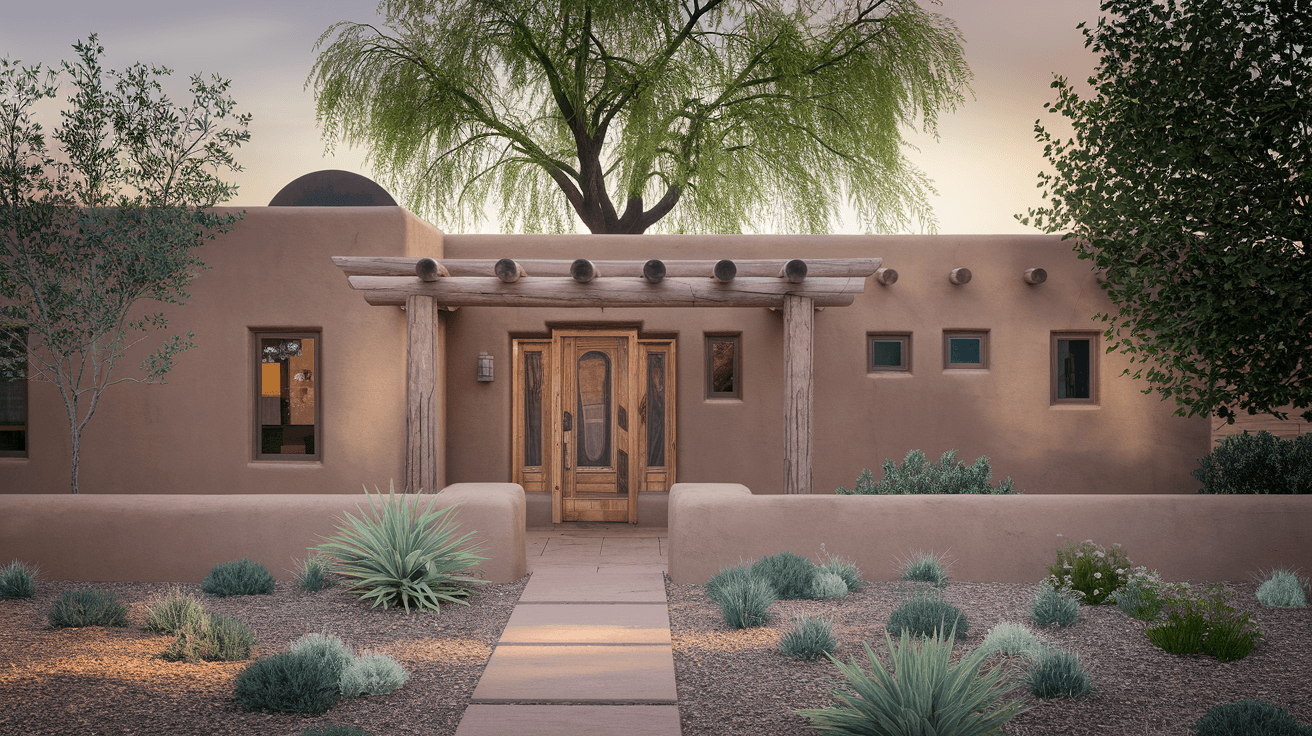
The Heights remains the engine of Albuquerque's move-up market at its lower end. Homes in the Sandia Heights adjacent corridors near Tramway and Academy are holding value well, while properties closer to Menaul and Wyoming — older ranch-style homes from the 1960s and 1970s — are trading at a modest discount to the neighborhood median. The Foothills area near the Elena Gallegos Open Space commands a premium of 8 to 12% over the broader Northeast Heights median.
Nob Hill and the UNM Corridor
Median price: $412,000 | Average DOM: 26 days | YoY price change: +3.8%
Nob Hill's proximity to Central Avenue's restaurant and retail corridor, combined with its walkable, historic character, continues to attract buyers willing to pay for location. The renovation premium is real here — updated craftsman bungalows near Girard and Silver are selling above ask, while unrenovated properties in similar locations are sitting longer as buyers correctly price in the cost of updates.
North Valley
Median price: $447,000 | Average DOM: 31 days | YoY price change: +3.2%
The North Valley's median sits squarely in the move-up segment, and its inventory is among the tightest in the metro. Properties along Rio Grande Boulevard and the streets feeding toward the Bosque Nature Preserve rarely come to market, and when they do, they attract buyers from across the metro who have been waiting. Acreage properties here are essentially a separate micro-market — a one-acre irrigated lot with a functional guest house near Corrales Road will draw buyers from Santa Fe and beyond.
Rio Rancho
Median price: $322,000 | Average DOM: 19 days | YoY price change: +4.6%
Rio Rancho continues to offer Albuquerque's most accessible entry point for buyers seeking new or newer construction with suburban amenities. The areas around Unser and Northern Boulevard, particularly the subdivisions developed after 2015, are seeing the strongest velocity. Intel's ongoing presence in the area, combined with the city's expanding commercial base along Paseo del Norte, provides an employment anchor that keeps demand steady. First-time buyers who have been priced out of the Heights are finding Rio Rancho a viable and increasingly desirable alternative.
Corrales
Median price: $598,000 | Average DOM: 48 days | YoY price change: +2.4%
Corrales operates by its own rules. The village's strict zoning, agricultural character, and limited inventory create a market where patience is required on both sides of the transaction. Buyers here are not in a hurry, and neither are sellers. A well-maintained property on a half-acre with an irrigated orchard and mountain views will find its buyer — but that buyer is specific, and rushing the process with aggressive pricing rarely works. The YoY gain of 2.4% reflects this deliberate pace rather than weakening demand.
High Desert
Median price: $641,000 | Average DOM: 44 days | YoY price change: +2.1%
High Desert's position against the Sandia foothills, with trails connecting directly to the Elena Gallegos and Embudo Canyon open spaces, gives it a lifestyle premium that holds even in softer rate environments. The community's HOA and architectural standards maintain property quality, which supports values. The slowdown in YoY appreciation reflects the broader luxury market dynamic rather than any neighborhood-specific weakness.
Downtown Albuquerque and EDo
Median price: $334,000 | Average DOM: 33 days | YoY price change: +5.2%
The Eastside Downtown (EDo) corridor and the blocks surrounding the Kimo Theatre and Central Avenue arts district are showing the strongest YoY appreciation in the metro — a 5.2% gain that reflects genuine neighborhood transformation. The film industry's footprint in Albuquerque, including productions based out of Albuquerque Studios and Netflix's local operations, has brought a creative class of buyers who prize walkability and character over square footage. Infill development and adaptive reuse projects are adding inventory, but slowly.
Taylor Ranch
Median price: $358,000 | Average DOM: 22 days | YoY price change: +3.9%
Taylor Ranch, anchored west of Coors Boulevard between Paseo del Norte and Montaño, offers the metro's best combination of price accessibility and suburban infrastructure. Schools, parks, and quick freeway access keep demand consistent. This is a neighborhood where a well-priced, move-in-ready three-bedroom generates multiple offers reliably, and where sellers who invest in pre-listing cosmetic updates consistently net more than those who list as-is.
What This Market Means If You Are Buying or Selling in Albuquerque Right Now
For Buyers: Precision Over Speed, But Do Not Sleep on Listings
The instinct to wait — for rates to drop, for more inventory, for a better moment — is understandable but risky in Albuquerque's current environment. With only 3.92 months of supply, the market is not going to suddenly become a buyer's paradise. Rate relief, if it comes, will likely bring more buyers off the sidelines before it brings meaningful new inventory, which means competition could intensify before it eases.
Buyers in the $300,000–$400,000 range need to be fully pre-approved — not pre-qualified — before submitting offers. Sellers in this tier are evaluating financial strength as carefully as price. In the move-up segment, use the slightly longer DOM to your advantage: conduct thorough inspections, negotiate seller concessions on closing costs where possible, and do not waive appraisal contingencies unless you have the cash reserves to absorb a gap.
For buyers targeting the Northeast Heights, Nob Hill, or Taylor Ranch, set up automated listing alerts and be prepared to schedule showings within 24 to 48 hours of a new listing appearing. The homes that sit are the exception, not the rule.
For Sellers: Price With Confidence, Not Wishful Thinking
The 98.3% list-to-sale ratio is your benchmark. It tells you the market is paying close to asking price — but not dramatically above it. The days of pricing 5% above market and expecting a bidding war to cover the gap are largely over in the move-up segment. Sellers who price accurately are closing in 29 days or fewer. Sellers who test the ceiling are watching their DOM stretch past 60 days and then reducing, often netting less than if they had priced correctly from the start.
“"In Albuquerque's move-up segment, the sellers winning right now are not the ones asking the most — they are the ones who priced to sell in week one and let the market confirm their value."
If you own a home in the $400,000–$550,000 range and have been hesitating because of your existing mortgage rate, run the actual numbers with a lender before deciding. For some households, the equity gain over the past four years is substantial enough that the payment increase on a move-up purchase is more manageable than the psychological weight of the rate number suggests.
Looking Ahead: What to Expect in July and August 2026
Seasonal patterns in Albuquerque typically show a slight softening in new listings and buyer activity through July and August as families wrap up summer plans before the school year. That said, the Albuquerque market's seasonal swings are less dramatic than national averages suggest — the city's employment base is less seasonal than coastal markets, and Kirtland Air Force Base and Sandia National Laboratories provide a steady cadence of relocation buyers that does not follow a traditional school-year calendar.
On the rate front, the Federal Reserve's posture through mid-2026 has kept mortgage rates in the 6.5% to 7.0% range. Any movement toward 6.25% or below would likely unlock a meaningful wave of move-up activity as the rate differential between existing and new mortgages narrows enough to make the math more palatable for locked-in sellers.
Locally, the continued expansion of Kirtland-adjacent defense contracting, Sandia Labs' sustained research budget, and the film industry's ongoing production calendar in Albuquerque all support demand from high-income buyers. The UNM medical and research corridor along I-25 continues to generate professional household formation. None of these demand drivers are showing signs of contraction.
Expect July's median price to hold near or slightly above $401,000. Active listings may tick up marginally as summer sellers who missed the spring window make their move, but do not expect a supply surge. The structural lock-in dynamic will not resolve without a meaningful rate shift.
Key Takeaways: Albuquerque Housing Market, June 2026
- •The metro median crossed $401,000 for the first time, a 3.5% year-over-year gain that reflects persistent demand against constrained supply rather than speculative pricing.
- •Inventory at 3.92 months remains in seller's territory, with the $400,000–$550,000 move-up tier experiencing the sharpest tension between buyer demand and seller hesitation driven by the mortgage rate lock-in effect.
- •Days on market averaged 29 days metro-wide, but this number varies significantly by price tier — buyers below $400,000 need to act within days of a listing going live, while move-up buyers have slightly more time to be deliberate.
- •Downtown/EDo led all neighborhoods in YoY appreciation at 5.2%, reflecting the film industry's influence on the creative buyer demographic and the ongoing transformation of Albuquerque's urban core.
- •The 98.3% list-to-sale ratio signals a market in efficient equilibrium — sellers pricing accurately are being rewarded with fast, clean closings, while overpriced listings are sitting long enough to require reductions that erode net proceeds.
Want more insider intel?
Subscribe to get market updates and new articles delivered to your inbox.