Albuquerque Housing Market Report: August 2026 — New Listing Volume vs. Pending Sales Ratio as Monsoon Season Ends and the Fall Market Begins to Take Shape Across Bernalillo County
Albuquerque Housing Market August 2026: Headline Numbers and the Story Behind Them
The monsoon clouds that roll over the Sandia Mountains each July and August do something predictable to the Albuquerque housing market: they slow foot traffic, push some buyers to the sidelines, and give sellers a moment of uncertainty. But the August 2026 data tells a more complicated story than seasonal caution alone can explain.
The metro median home price settled at $385,000 in August 2026, unchanged from July but representing a 3.5% gain year-over-year — the fourteenth consecutive month of positive annual appreciation. That number is holding, but it is holding in a market that is quietly shifting underneath it. New listing volume rose 8.2% month-over-month, the largest single-month supply injection since March. At the same time, pending sales — the leading indicator that most agents watch more closely than closed data — softened by 4.1% from July's pace.
The result is a pending-to-active ratio of 0.61, down from 0.67 in July and 0.74 in June. That ratio is still firmly in seller's market territory. But the directional trend matters. When that ratio compresses over three consecutive months, as it has done here, experienced buyers and sellers both need to recalibrate their expectations before the fall market accelerates.
Active listings across the metro stand at 3,850, representing 3.9 months of supply — up from 3.6 months in July and 2.8 months in August 2025. The list-to-sale ratio of 97.8% confirms that sellers are still achieving near-asking prices when priced correctly, but the days of automatic overbids on every listing in the Northeast Heights are behind us for now.
Albuquerque Housing Inventory: New Listings vs. Closed Sales and What the Gap Means
The most analytically important relationship in the August data is the widening gap between new listings entering the market and the closed sales absorbing them.
In August 2026, 1,104 new listings came to market across Bernalillo County — a figure that includes everything from entry-level condos near Central Avenue to custom builds in the foothills above Tramway. Against that, closed sales totaled 847, leaving a net surplus of 257 units added to standing inventory. Compare that to August 2025, when new listings were 1,021 and closed sales were 834 — a surplus of just 187 units. The pipeline is filling faster than it is draining.
This is not a flood. Three-point-nine months of inventory is still below the 5-to-6-month threshold that economists typically define as a balanced market. But the trajectory over the past 90 days is worth watching carefully. Inventory has increased 39% year-over-year, which is a meaningful shift in negotiating leverage even if the absolute numbers still favor sellers.
Where New Listings Are Coming From
The uptick in new supply is not uniform across the metro. The $300,000 to $400,000 price band — the most contested segment of the Albuquerque market — saw the sharpest increase in new listings, up 11.4% from July. Many of these are long-term homeowners in the Northeast Heights and Taylor Ranch who purchased pre-2020 and are now sitting on significant equity. Life events — relocations tied to Kirtland AFB rotations, retirements, and workforce transitions at Sandia National Laboratories — are driving a meaningful share of this supply.
The $400,000 to $500,000 tier also saw increased activity, up 9.1% in new listings, with a concentration in the High Desert and Corrales submarkets. The $200,000 to $300,000 range remains critically undersupplied relative to demand, with new listings in that band actually declining 3.2% month-over-month — a structural reality that continues to frustrate first-time buyers and entry-level investors alike.
Albuquerque Home Prices by Tier: Where Competition Is Hottest in August 2026
Median price figures tell one story. Price tier analysis tells the real one.
The $200,000 to $300,000 segment remains the most competitive bracket in the metro by a significant margin. Homes in this range — concentrated in the South Valley, parts of the West Side along Coors Boulevard, and select pockets of the International District — are averaging just 19 days on market and receiving offers within 1.5% of list price on average. Multiple-offer situations, while less common than in 2022 and 2023, still occur regularly in this bracket. Buyers targeting this range should expect to move within 48 to 72 hours of a listing going active.
The $300,000 to $400,000 range — where the bulk of Northeast Heights and Taylor Ranch inventory lives — is showing 28 average days on market, up from 23 in June. This is the price band where the inventory increase is most visible to buyers in real time. Sellers here are still achieving strong prices, but the window for a quick, clean sale at full ask has narrowed. Overpricing by even 3% is now generating 45-plus-day market times and price reductions.
At $400,000 to $500,000, days on market stretch to 38 days, and the list-to-sale ratio drops slightly to 97.1%. This tier includes a significant portion of the Nob Hill renovation market, North Valley properties with acreage, and newer builds in the Rio Rancho Cabezon and Lomas Verdes communities. Buyers here have options and they know it.
The $500,000-and-above segment — covering High Desert, Corrales, and the custom foothills market east of Tramway — is operating on its own timeline. At 52 average days on market and a list-to-sale ratio of 95.9%, this is a buyer's market within a seller's market. Luxury inventory has grown 22% year-over-year, and properties that are not staged, photographed professionally, and priced with precision are sitting.
“"The Albuquerque market in August 2026 is not one market — it is four markets layered on top of each other, each operating by different rules depending on where you are on the price spectrum."
Average Days on Market: What 34 Days Actually Means for Offer Strategy
The metro-wide average of 34 days on market is a number that requires context before it becomes useful. Averages are pulled upward by luxury inventory that lingers; the median days on market — a more representative figure — sits closer to 24 days for homes priced under $450,000.
For buyers, 24 to 34 days does not mean you have a week to think about it. It means the market has decelerated enough that a same-day offer is no longer mandatory in most cases, but a 72-hour deliberation window is still the outer edge of reasonable. Homes that are well-priced, well-presented, and located in high-demand corridors — think the Tramway corridor in the Northeast Heights, or the blocks between Girard and Washington north of Lomas — are still generating urgency.
For sellers, the deceleration in DOM is an important signal. Homes that went under contract in under 10 days accounted for 38% of August closings, down from 47% in May. The fast-turn environment is not gone, but it is no longer the default. Pricing strategy and presentation quality are doing more work in August than they were doing in the spring.
Albuquerque Neighborhood Breakdown: August 2026 Data by Submarket
Northeast Heights
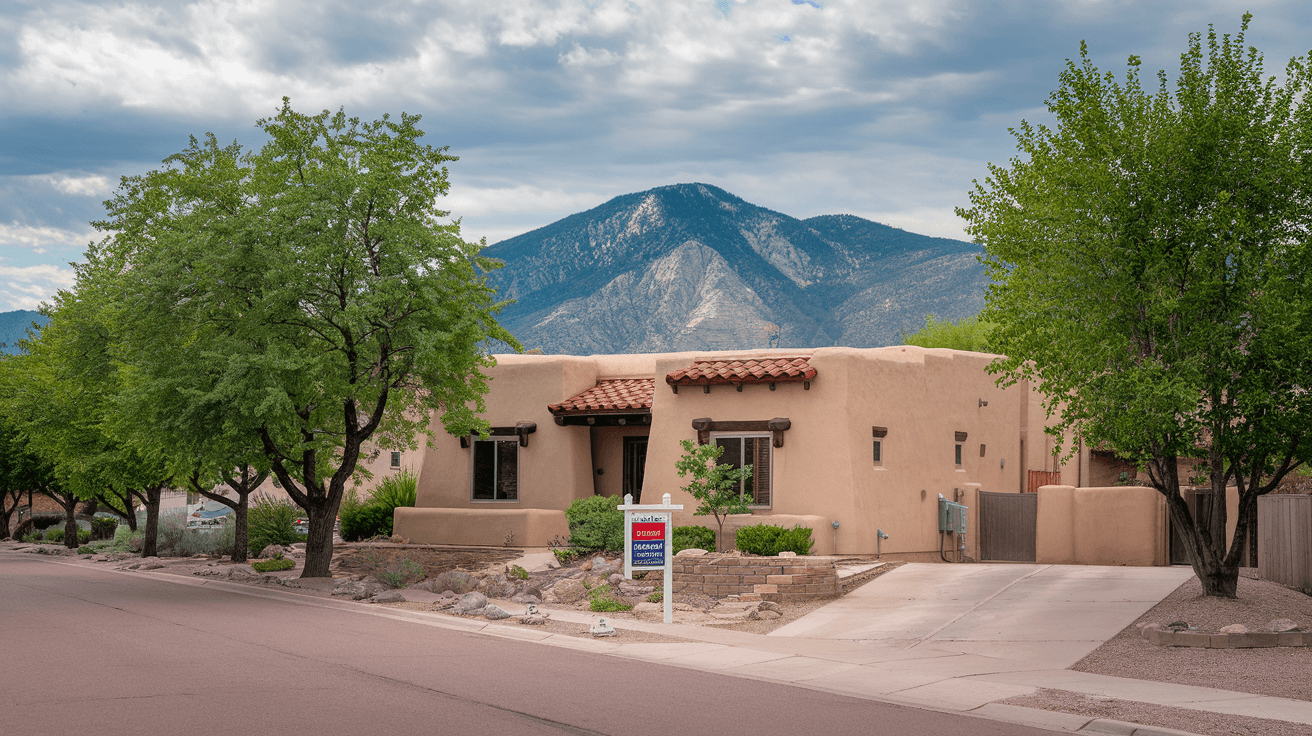
The workhorse of the Albuquerque market. Median price: $362,000, up 4.1% year-over-year. Average days on market: 27 days. The stretch along Academy Boulevard and the neighborhoods feeding into Eldorado High School's district continue to draw consistent demand from Kirtland and Sandia Labs employees. Inventory is up 18% from a year ago, which is giving buyers slightly more options — but well-priced homes in the $320,000 to $370,000 range are still moving in under two weeks.
Nob Hill
Albuquerque's most walkable urban neighborhood continues to perform. Median price: $398,000, up 3.5% year-over-year. Average days on market: 31 days. The Nob Hill renovation market — bungalows and 1950s ranch homes being updated and relisted — is active, though buyers are more discerning about finish quality than they were 18 months ago. Properties within walking distance of Central and Carlisle, and those with detached casitas for rental income, are commanding premiums of 5% to 8% above standard comps.
North Valley
One of the most distinctive submarkets in the metro, defined by its mature cottonwood bosque, horse properties, and adobe architecture along Rio Grande Boulevard and Guadalupe Trail. Median price: $435,000, up 3.2% year-over-year. Average days on market: 41 days. The North Valley moves at its own pace. Buyers here are typically not in a hurry, and sellers who understand that patience is part of the equation tend to achieve stronger final prices than those who chase quick offers.
Rio Rancho
Sandoval County's largest city continues to attract price-sensitive buyers priced out of Bernalillo County. Median price: $318,000, up 4.9% year-over-year — the strongest annual appreciation rate among the major submarkets tracked this month. Average days on market: 22 days. The Mariposa and Lomas Verdes master-planned communities are seeing the most activity, with new construction from local builders competing directly with resale inventory. Rio Rancho's relative affordability and proximity to Intel's Rio Rancho campus continues to drive demand.
Corrales
The village of Corrales — sandwiched between the Rio Grande and the West Mesa — remains one of the most sought-after lifestyle addresses in New Mexico. Median price: $598,000, up 2.2% year-over-year. Average days on market: 48 days. Corrales Road properties with irrigated land and mountain views are holding value well, but the pace of appreciation has moderated as the pool of qualified buyers at this price point is inherently limited. Sellers should expect longer market times and should not interpret 45-plus days as a problem — it is simply the nature of a specialty submarket.
High Desert
The premier master-planned community in the Albuquerque foothills, High Desert sits east of Tramway and offers some of the most dramatic Sandia Mountain views in the metro. Median price: $648,000, up 1.9% year-over-year. Average days on market: 54 days. High Desert is experiencing the inventory growth common to the luxury segment — active listings are up 28% year-over-year. Buyers in this community have leverage they have not had in several years. Sellers who price based on 2024 comparable sales rather than current market conditions are the ones generating the extended DOM figures dragging the average upward.
Downtown Albuquerque / EDo (East Downtown)
The urban core is a tale of two products. Renovated lofts and modern condos in the EDo corridor — the blocks between the Rail Runner station and the Albuquerque Museum — are finding buyers, particularly among remote workers and UNM-affiliated professionals. Median price: $285,000, up 2.8% year-over-year. Average days on market: 38 days. The ongoing Albuquerque Rapid Transit infrastructure along Central Avenue and continued investment in the Rail Yards district are slowly building the long-term case for downtown appreciation, but this submarket still requires patience and a buyer who understands urban density living.
Taylor Ranch
The established West Side neighborhood between Coors and Unser remains a reliable, family-oriented market with strong school district appeal. Median price: $345,000, up 3.8% year-over-year. Average days on market: 25 days. Taylor Ranch benefits from its proximity to Cottonwood Mall, the Paseo del Norte interchange, and the growing commercial corridor along Unser. First-time buyers and move-up buyers from the South Valley and International District are the primary demand drivers here.
Buyer vs. Seller Strategy: What August 2026 Actually Means for You

If You Are Selling in Albuquerque Right Now
The window is open, but it is not as wide as it was. The sellers who are winning in August 2026 are the ones who price with precision, not ambition. The 97.8% list-to-sale ratio is a market average — it masks the reality that overpriced homes are sitting 45 to 60 days and then selling at 94% to 95% of original list price after reductions. The sellers achieving 99% to 101% of list are those who came to market correctly priced from day one.
Presentation matters more than it did a year ago. Professional photography, staging, and pre-listing inspections are no longer optional differentiators — they are table stakes in a market where buyers have enough options to be selective. If your home is in the Northeast Heights or Taylor Ranch and priced between $330,000 and $390,000, you are in the sweet spot of demand. Price it right and it will move. Price it aspirationally and you will be reading next month's report wondering what happened.
If You Are Buying in Albuquerque Right Now
This is the best buying environment Albuquerque has offered in three years — not because prices are falling, but because the frantic, waive-everything, no-inspection offer culture has meaningfully receded. Buyers under $300,000 are still in a competitive environment and should be prepared to move quickly. Buyers between $400,000 and $600,000 have room to negotiate, request inspections, and in some cases ask for seller concessions toward rate buydowns — a strategy that has gained traction as mortgage rates remain in the mid-6% range.
For buyers considering the High Desert or Corrales luxury market, the current inventory levels represent a genuine opportunity. Homes that were selling at ask or above in 2024 are now accepting offers 3% to 5% below list after reasonable negotiation. That is not a distressed market — it is a normalized one.
“"For the first time since 2021, buyers in Albuquerque's mid-to-upper price tiers can afford to ask questions, request repairs, and negotiate without automatically losing the deal. That window may not stay open through the winter."
Looking Ahead: What the Fall 2026 Albuquerque Market Will Look Like
The seasonal transition from monsoon summer to fall is historically one of the most reliable inflection points in the Albuquerque market calendar. September and October typically bring a second wave of serious buyers — those who paused during the summer heat and are now motivated to close before year-end. That demand pulse, combined with the current inventory levels, suggests the fall market will be active but measured.
Several local economic factors will shape the trajectory. Sandia National Laboratories continues its multi-year expansion under Department of Energy contracts, with workforce additions expected to continue through 2027 — a steady supply of high-income buyers in the $400,000 to $650,000 range. Kirtland Air Force Base assignment cycles typically generate a surge of relocation buyers in September and October as new personnel arrive and seek permanent housing. The New Mexico film industry, which has established Albuquerque as one of the top three production markets in the country, continues to bring well-compensated production professionals who tend to favor the Nob Hill and North Valley submarkets.
On the rate environment: mortgage rates in the mid-6% range have become the new normal for Albuquerque buyers, and the market has largely priced around them. A meaningful rate reduction — anything approaching 6.0% or below — would likely trigger a demand surge in the $300,000 to $450,000 range that current inventory levels are not prepared to absorb. Sellers who are considering listing in Q4 2026 should not wait for that scenario to materialize before preparing their homes.
The Intel Rio Rancho campus remains a wildcard. Any announcements related to production expansion or workforce additions before year-end would have an immediate and measurable effect on Rio Rancho and West Side Albuquerque demand — a market that is already showing the strongest year-over-year appreciation in the metro.
Key Takeaways: Albuquerque Real Estate Market August 2026
- •Median price holds at $385,000, a 3.5% year-over-year gain, but the pending-to-active ratio has compressed for three consecutive months — signaling a gradual shift in market dynamics heading into fall that both buyers and sellers should factor into their strategy.
- •Inventory at 3.9 months is the highest level since early 2024, driven by an 8.2% month-over-month surge in new listings — particularly in the $300,000 to $400,000 price band where buyers now have more options than at any point in the past two years.
- •Rio Rancho leads the metro in year-over-year appreciation at 4.9%, driven by affordability relative to Bernalillo County, proximity to Intel, and continued new construction activity in master-planned communities like Mariposa and Lomas Verdes.
- •The luxury market above $500,000 is operating in buyer's market conditions, with High Desert and Corrales both showing 50-plus average days on market and list-to-sale ratios below 96% — buyers in this tier have negotiating leverage not seen since 2020.
- •The entry-level segment under $300,000 remains critically undersupplied, with new listings in that band declining 3.2% month-over-month and average days on market of just 19 days — first-time buyers targeting this range should be pre-approved, prepared, and ready to act within 48 hours of a new listing going active.
Want more insider intel?
Subscribe to get market updates and new articles delivered to your inbox.